While most Republicans in Congress have consistently supported President Trump, one has repeatedly voted against critical portions of the president’s agenda. U.S. Sen. Rand Paul, a self-described libertarian and proponent of small government principles, often opposes Trump on issues including appropriations and the exercise of executive power.
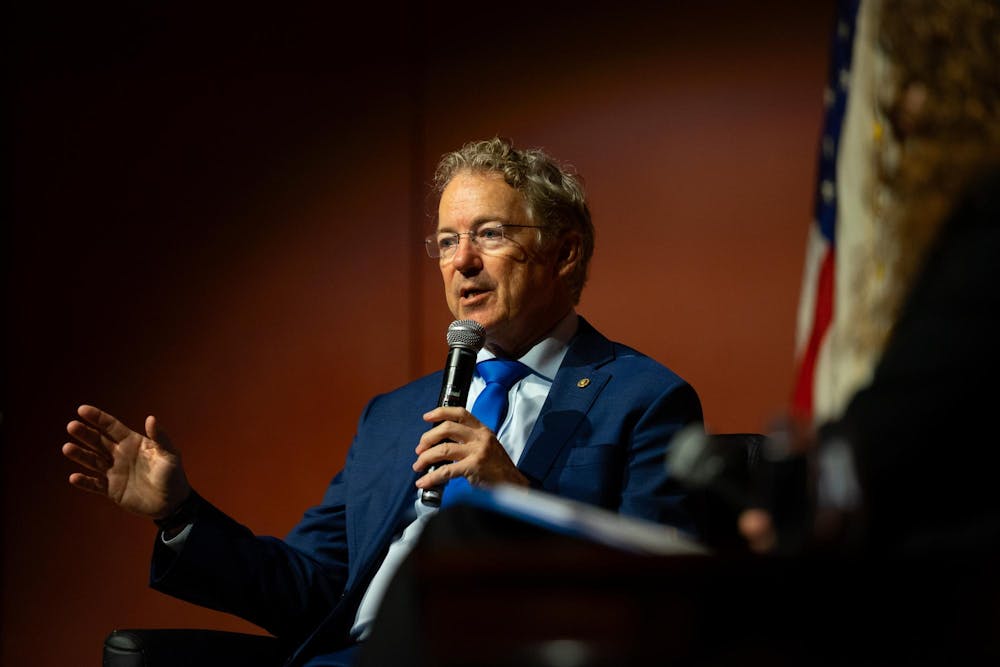
On Thursday night, the Kentucky Republican and current chair of the Senate Committee on Homeland Security and Governmental Affairs addressed about 400 Brown students, faculty and community members at a Brown Political Union event titled “Liberty and Democracy in America.”
Before the event, The Herald sat down with Paul to discuss his view on the power of the federal government and the role of the Republican congressional caucus in the age of Trump.
Speaking out against Trump
Paul pointed to the importance of checks and balances to “limit the accretion or development of one power in one person,” he told The Herald. He said that while his Republican colleagues in the Senate often spoke out against emergency executive orders during the Biden administration, they hesitate to do so now.
“It’s hard to legislate against hypocrisy,” Paul told The Herald.
Although Paul has publicly criticized Trump’s use of emergency executive power for tariffs, he predicted “it would take a dramatic economic downturn” before his Republican colleagues would “begin to challenge their president,” he told The Herald.
During the event, Paul critiqued Trump’s tariffs, stating that “the trade deficit is a statistic that means absolutely nothing,” rejecting Trump’s claim that other countries are “ripping us off.” To Paul, “freedom” and “an economic system that includes trade” are at the root of U.S. economic success.
“You can’t make America great again if you don’t understand what made America great in the first place,” Paul said at the event.
During his interview with The Herald, the senator also discussed congressional Republicans’ hands-off approach to the president’s war powers.
In recent weeks, the Trump administration has launched attacks on boats in international waters as part of an ongoing campaign against the Venezuelan government. Drawing on his anti-interventionalist foreign policy views, Paul said Republicans are “going to eventually regret” their lack of pushback against these actions.
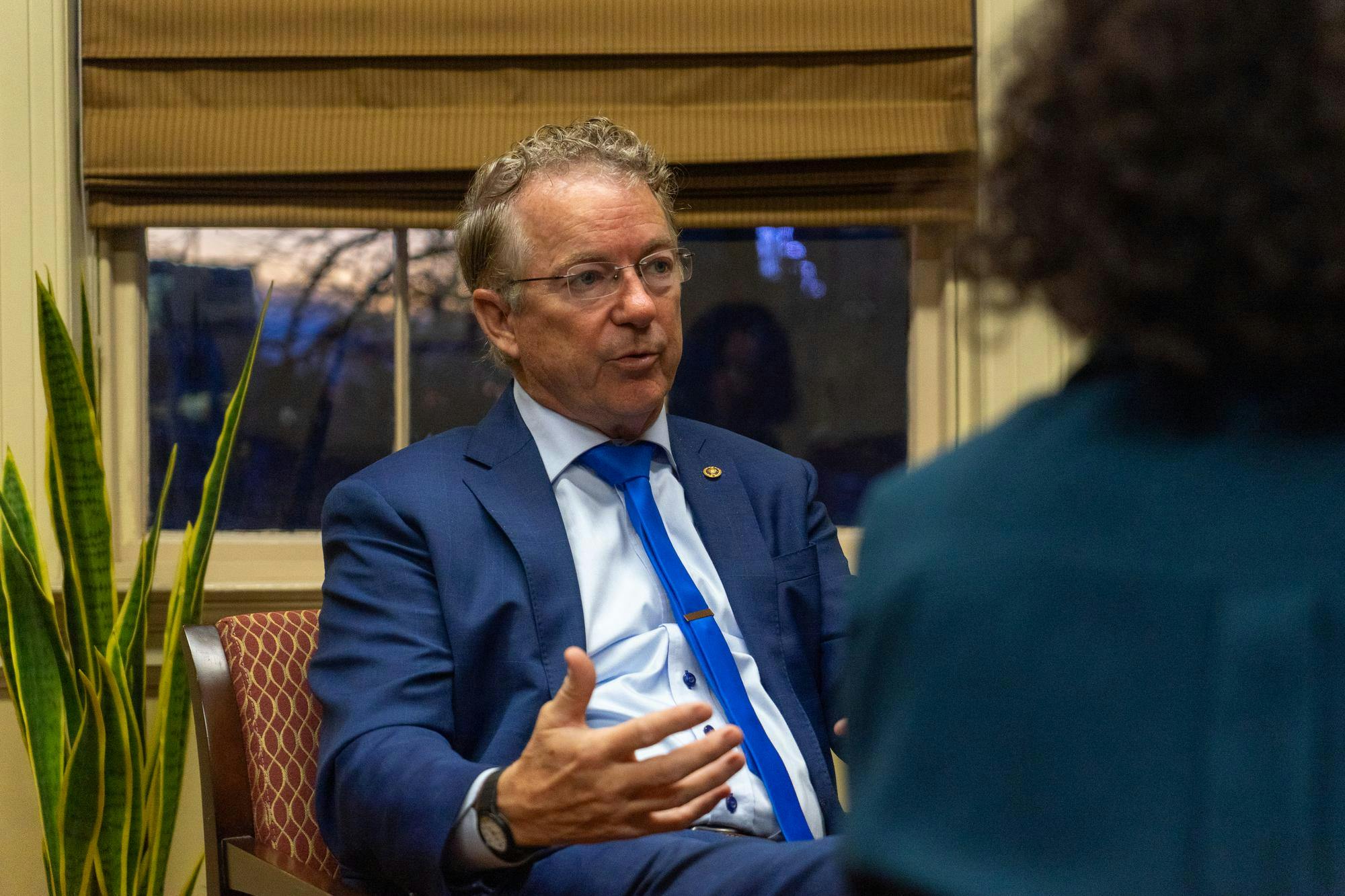
Before the event, The Herald sat down with Paul to discuss his view on the power of the federal government and the role of the Republican congressional caucus in the age of Trump.
Role of the government in higher education
Wielding federal funding as leverage, Trump has taken aim at institutions of higher education, including Brown, in his second term.
When asked about the government’s role in supporting institutions of higher education, Paul told The Herald that “the federal government really shouldn’t be involved for the most part.”
But if “universities are more than willing to line up to take money from the federal government,” the government should be allowed, in some cases, to control the allocation of these funds, he said.
Under the Trump administration, the withholding of federal funds hinged on allegations of antisemitism in pro-Palestinian campus protests and wasted spending on diversity, equity and inclusion initiatives.
But in Paul’s view, there is a “danger of getting too involved with the speech of students and protests.” Instead, he said it should be the responsibility of universities to “do a better job” of addressing alleged discrimination.
Where Paul finds — and lacks — common ground between the parties
This week, the Senate took action to end a historic 43-day shutdown with the passage of a spending package to reopen the government. Paul was particularly critical of the package and wanted to remove a stipulation he saw as harmful to Kentucky’s hemp industry.
While differing from his colleagues on many issues, Paul said there are still “common areas of agreement between people with widely disparate views.”
“In some ways, I may be the most conservative member of the Senate, but in other ways, I can also be the most progressive member,” Paul said. “Being a libertarian means that you’re both conservative and progressive at the same time.”
During the event, Paul was particularly critical of 2020’s widespread mask mandates — a policy that aimed to prevent the spread of COVID-19.
“I don’t care if you wear a mask or don’t wear a mask,” Paul said. “It’s not my business.”
His condemnation of the mandates as “authoritarian” was accompanied by the distribution of his 2023 book, “Deception: The Great Covid Cover-Up,” to attendees.
‘The best of times or the worst of times’
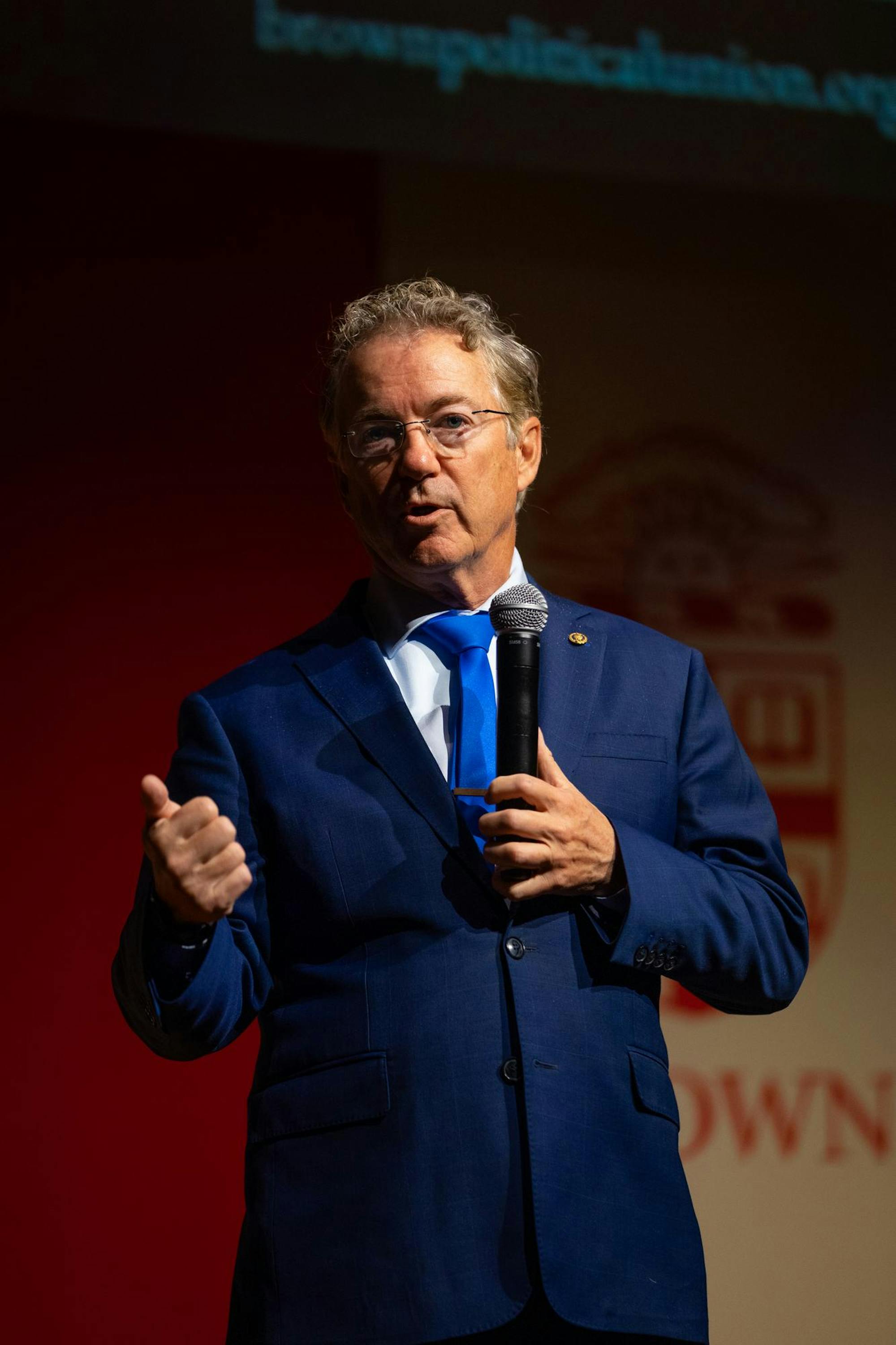
The senator began his lecture by taking a poll of the crowd, asking attendees whether “we live in the best of times or the worst of times.” Not one audience member raised their hand to vote that “we live in the best of times.” In response, Paul asserted that the United States is currently thriving, as “productivity and increased wealth is beyond our wildest dreams.”
The event was meant to “spur further dialogue in the Brown community,” Malcolm Furman ’27, president of BPU, wrote in an email to The Herald.
Furman saw the event as part of BPU’s goal as a nonpartisan political organization “to bring speakers to campus from a wide range of intellectual and ideological perspectives,” he wrote.
“I was really excited to see what others, who I don’t necessarily agree with, have to say to see if there’s any common ground that we can find,” attendee Tiziano Pardo ’28 said. After attending the lecture, Pardo said he disagrees “vehemently” with Paul’s claim that we are living in the “best of times.”
“I just think that he’s failing to address the increasing concentration of wealth in the highest earners in America,” Pardo said.
Given Brown’s majority liberal student population, attendee Lillian Gale ’28 said she was surprised that Paul, a more conservative speaker, was invited to campus.
As an economics concentrator, she was particularly “shocked by his economic takes” during the event, she said. “He doesn’t account for as many metrics as there are in a complicated world.”

Sophia Wotman is a University news editor covering activism and affinity & identity. She is a senior from Long Island, New York concentrating in political science with a focus on women’s rights. She is a jazz trumpet player, and often performs on campus and around Providence.