
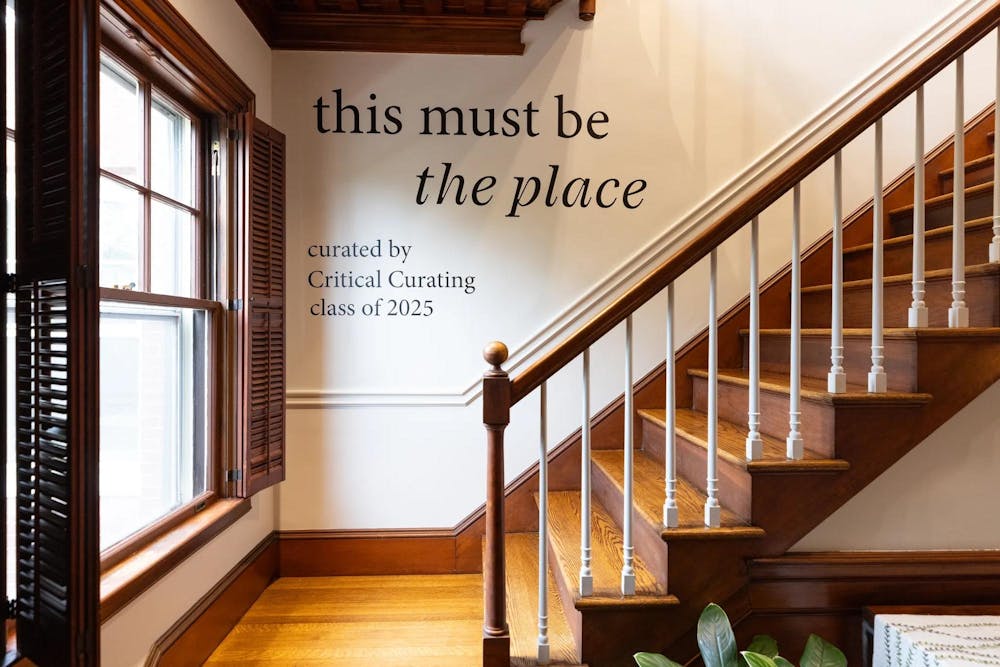
In May, the Rhode Island School of Design unveiled its student-run exhibition titled “this must be the place.” The exhibit, which focuses on the idea of home and features works ranging from paintings to furniture to light fixtures, will be on display in the Bowen Suite Gallery in the President’s House through May 2026.
From selecting the artists to promoting the show, students in the course “Critical Curating” — which was offered by RISD’s painting department last spring — led every aspect of the exhibition’s curation. The Herald spoke to course instructor Kathy Battista and students who took the course to learn more about the curation process.
According to Pavol Roskovensky, a current RISD graduate student and chief curator of the project, the exhibit takes its name from the eponymous track by rock band Talking Heads. As all three of the band’s original members met at RISD, the name and content of the exhibition intends to pay “homage to RISD being a home to all of us” and illustrate the larger theme that “there is no place like home,” Roskovensky said.
All of the art selected “exemplifies the idea of home, whether that has to do with identity, a physical place (or) a feeling,” said Avalon Lafosse, who graduated from RISD after taking “Critical Curating” last spring and who served as the general exhibition curator.
According to Battista, students in “Critical Curating” learned how to curate a show like professional curators through “tough decision making.” In addition to leading efforts in piece selection and show promotion, students decided on the exhibit’s theme and installed all the works themselves.
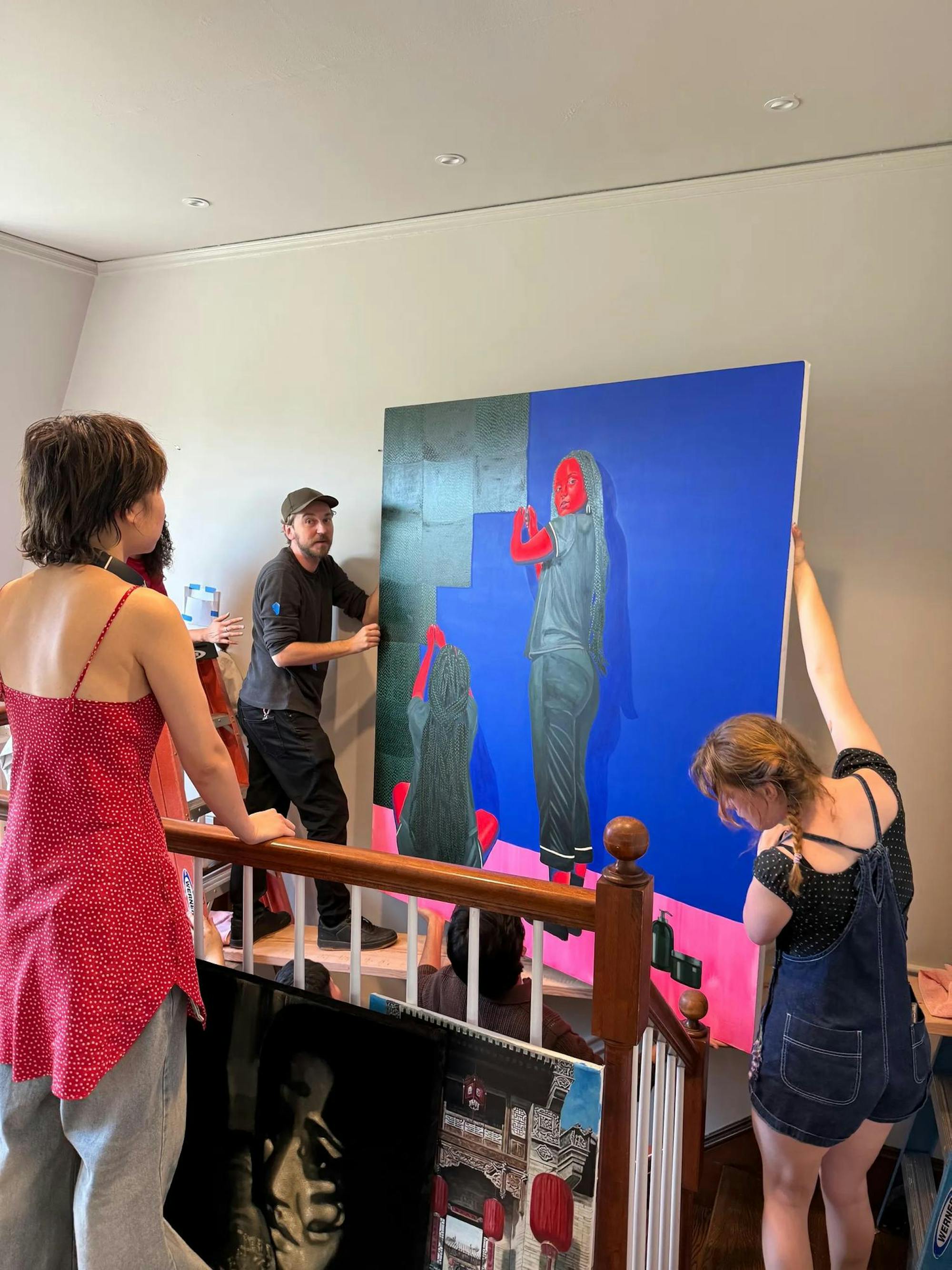
In addition to leading efforts in piece selection and show promotion, students decided on the exhibit’s theme and installed all the works themselves. Courtesy of Kathy Battista
For Lafosse — who began painting when they were five — the curation process was “really fun.”
Lafosse credited Battista’s class for helping “push (her) interest and passion forward” in the curation field. The curating experience, she added, served as a great ending to her academic journey at RISD.
Roskovensky hopes exhibit viewers take away a “sense of calm (and) stillness,” he said, adding that home nourishes the body and soul.
He wants viewers to have the “same reaction (to the exhibit) as they would to a sunset.” Instead of evoking specific feelings, he hopes the exhibit simply provides “an experience that is satisfying on (the viewer’s) terms.”
One of Roskovensky’s own works — titled “Breath Drawing” — is on display in the exhibit. Using his breath and charcoal to create what he describes as an “airy, ghostly residue,” his piece consists of three white panels that explore the “abstract nature of language, where the medium is our breath.”
Roskovensky gained inspiration for the piece when he saw his newborn son take his first breath. He focused on breath as the medium to depict this experience, which he finds “more intimate than just externally touching and manipulating.”
Battista reiterated this sense of intimacy when explaining the intentions behind the exhibition. The show illuminates the “idea of the domestic space as a space for contemplation (and) healing,” functioning as refuge from the “polarization and conflicts” that define the outside world, she said.
Given the exhibit’s location inside the President’s House — a home of its own — Battista hopes it can function as a “safe space” for people to enjoy.Although the President’s House was built in the colonial style, “much of the art is a critique of colonialist systems” and challenges “architecture and history,” she added.
The exhibition, Battista said, represents RISD’s position as “a place for freedom of expression” and “for experimenting — and maybe also for failure.”
Laila Posner is a senior staff writer covering business and development.


