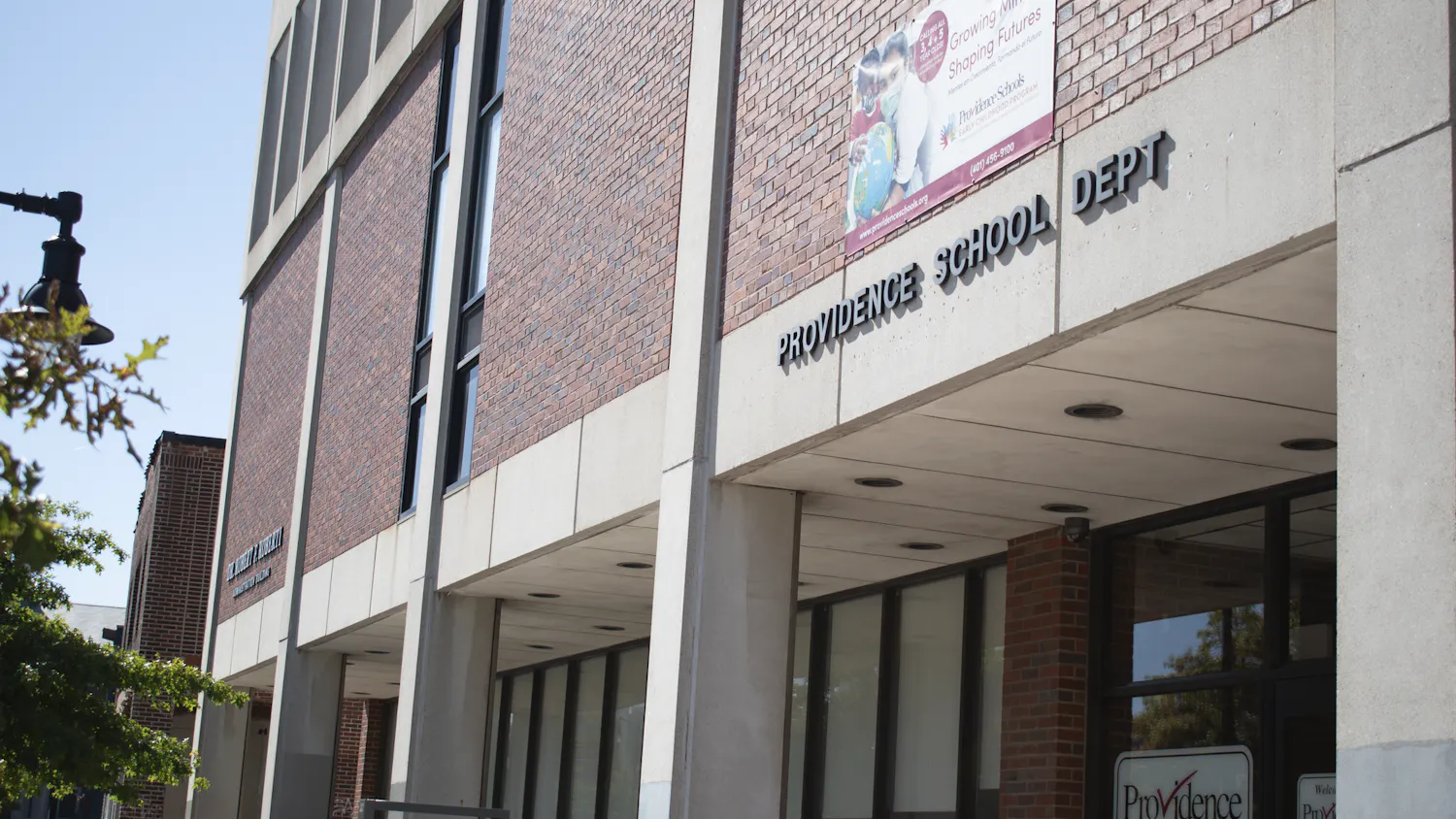
On Friday, Chief Judge John McConnell Jr. ’80 of the Rhode Island District Court ordered the Trump administration to deploy billions in contingency funding toward issuing benefits as part of the Supplemental Nutrition Assistance Program.
The ruling — made in response to a lawsuit filed against the U.S. Department of Agriculture by the City of Providence, several other municipalities and a variety of nonprofits and unions — marks one of the latest updates in a national battle to maintain SNAP amid the ongoing government shutdown.
Last month, the USDA warned relevant state agencies that SNAP would not receive full funding for the month of November due to the government shutdown. Every year, SNAP helps more than 40 million Americans afford groceries. In 2024, around 144,000 Rhode Island residents — 13% of the state’s population — relied on the program.
The suit is one of several actions that state and local officials have taken to prevent a federal suspension of benefits and retain support for Rhode Islanders facing food insecurity.
On Oct. 28, R.I. Attorney General Peter Neronha P’19 P’22 joined 22 other attorneys general and three governors in filing a separate lawsuit against the USDA in Massachusetts federal court. In a Friday ruling on the case, a federal judge determined that the USDA is legally required to dip into its emergency funds to support SNAP, but gave the government until Monday to decide whether it would actually do so.
Following both rulings, the Trump administration confirmed Tuesday that it would comply with the court order. In a post on X, Agriculture Secretary Brooke Rollins noted that sending payments will be a “cumbersome process” and that “if the government opens, families get their FULL benefit much more quickly.”
According to a press release from Neronha’s office, the threatened suspension of benefits “is both contrary to law and arbitrary and capricious under the Administrative Procedure Act,” which governs how federal agencies propose and develop regulations.
“Despite USDA’s claim of insufficient funds, the agency has access to billions of dollars in SNAP-specific contingency funds appropriated by Congress for this very purpose,” the press release reads. “It is clear the federal government is making a deliberate, illegal and inhumane choice not to fund this crucial program.”
In an email to The Herald, a spokesperson for the USDA pinned the blame on the Democratic Party, writing that mothers, infants and other vulnerable populations are unable to receive benefits due to the shutdown.
Rhode Island officials have turned to other avenues to support those struggling with food security.
On Oct. 28, Gov. Dan McKee declared a state of emergency and deployed up to $6 million in Temporary Assistance for Needy Families funding, which aimed at helping around 65,000 individuals compensate for the loss of SNAP benefits, according to a press release.
McKee is also providing the Rhode Island Community Food Bank with $200,000 of funding from the Social Services Block Grant in hopes of increasing its capacity.
“Rhode Island will not stand by and allow families to go hungry,” McKee said in the release. “We’re taking decisive action to protect food access wherever possible and strengthen our local food banks.”
RICFB CEO Melissa Cherney said that McKee’s office has been in “constant contact” with the food bank, which has “purchased around 800,000 pounds of food in the last 10 days.”
Every month, the food bank serves about 89,000 Rhode Islanders, while SNAP serves over 140,000, Cherney said. But while “both SNAP and food banks are set up to be supplemental and to work together,” she added, “neither one of them could replace an entire family’s nutritional needs.”
Two days after McKee declared the state of emergency, Providence Mayor Brett Smiley announced that the city is initiating its Emergency Food Plan in an attempt to relieve the 25,000 Providence households that receive SNAP benefits.
“The federal inaction right now is leading to a serious threat to families and children in our community,” Smiley said in the press release, adding that affected individuals often have “limited resources to fill this financial gap.”
Smiley added that, despite the city’s efforts to assist those who rely on SNAP benefits, “we need congressional leadership to take action.”
In a statement sent to The Herald, Sen. Sheldon Whitehouse (D-R.I.) said that the partial distribution of SNAP benefits by the federal government is “the bare minimum.”
“Holding food assistance hostage and using hungry children as bargaining chips is senseless and cruel,” Whitehouse said. “Families deserve better, and I urge Trump to fully fund SNAP during an already painful Republican government shutdown.”
In an Oct. 29 press release backing two bills that aim to retain SNAP funding, Sen. Jack Reed (D-R.I.) said that “time is of the essence and bipartisan action is required.”
“This is about helping low-income children, seniors on a fixed income and disabled Americans who depend on SNAP to make ends meet,” Reed said.
The offices of U.S. Rep. Gabe Amo (D-R.I. 1) and U.S. Rep. Seth Magaziner ’06 (D-R.I. 2) did not respond to a request for comment. Reed did not respond to an additional request for comment.
Annika Melwani is a metro senior staff writer covering state politics and justice. She is from New York City and plans on concentrating in English and International and Public Affairs. In her free time, she can be found reading or drinking an iced vanilla latte.