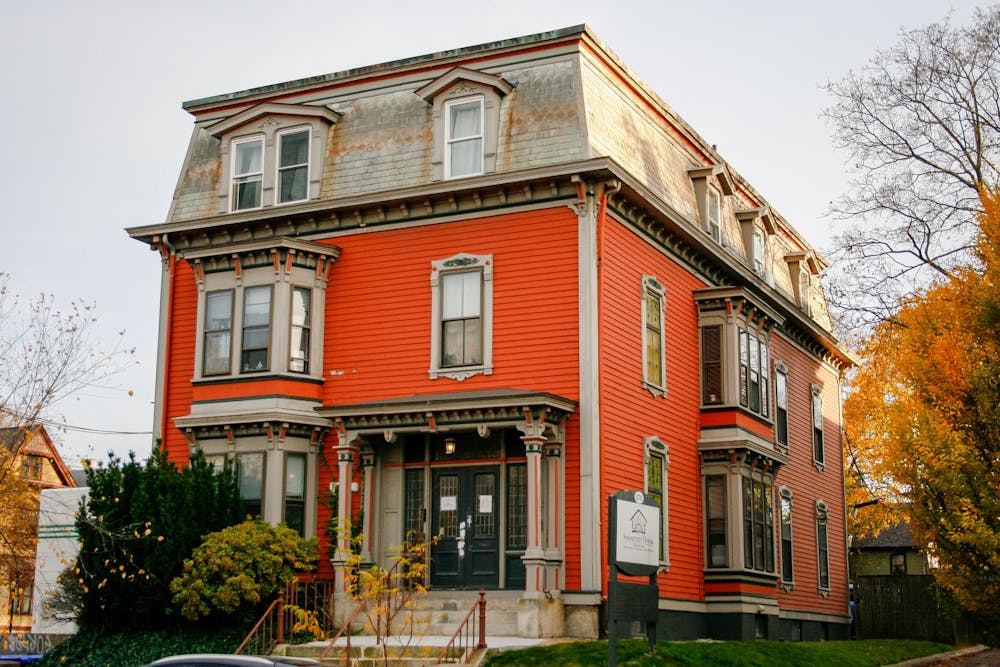
Supported by $1 million in federal funds, Sojourner House, a Rhode Island-based organization that supports victims of domestic and sexual violence, has purchased and renovated a multi-family building that can be leased to survivors of domestic violence, sexual assault and human trafficking.
The $1 million federal earmark was announced by U.S. Sens. Sheldon Whitehouse (D-R.I.) and Jack Reed (D-R.I.) on Oct. 31.
The organization’s Affordable Housing Development program seeks to create affordable housing units for those who have been impacted by abuse, according to President and CEO of Sojourner House Vanessa Volz.
“It is impossible to really recover from an abusive situation if you don’t have safe, secure housing,” Volz said. “We really see housing as a pathway out of an abusive cycle.” Volz said Sojourner House was uniquely positioned to assist survivors, given that few agencies are able to offer both victim services and housing development.
Through a grant application process, Sojourner House submitted a proposal for funding to continue their work in housing development, according to Volz. She said the organization is “very grateful to both senators for advocating for us.”
In the press release following the announcement, Reed said he was “proud to team up with Senator Whitehouse to support Sojourner House’s work.”
In the release, Whitehouse also described the organization’s work as “heroic,” adding that it helps “survivors of domestic violence, sexual assault and human trafficking when they need somewhere to turn.”
“Even with the impact we have, there are still so many people who are not served,” Volz added. Although the organization owns or leases over 150 apartments in R.I., she added, “we really have hundreds of families that would like to benefit from our services, but we don’t have the resources.”
Sojourner House served 1,852 Rhode Island residents last year and provided 78 survivors with permanent housing.
In the face of a changing federal landscape, Sojourner House, which is set to celebrate its 50th anniversary next year, plans to diversify their funding sources, Volz said. Federal funding makes up “more or less 80%” of their operating budget, she said, which includes grants from the U.S. Department of Housing and Urban Development.
The Trump administration recently proposed a cut in housing grants.“If we lose some of that money, then it’s going to be difficult to replace it,” Volz said.
The organization is now looking to “family foundations, corporate foundations (and) individuals who are willing to support our work,” she said. “We’re really going to be spending time cultivating those relationships and making those asks so that we can continue to provide the level of support our clients need.”