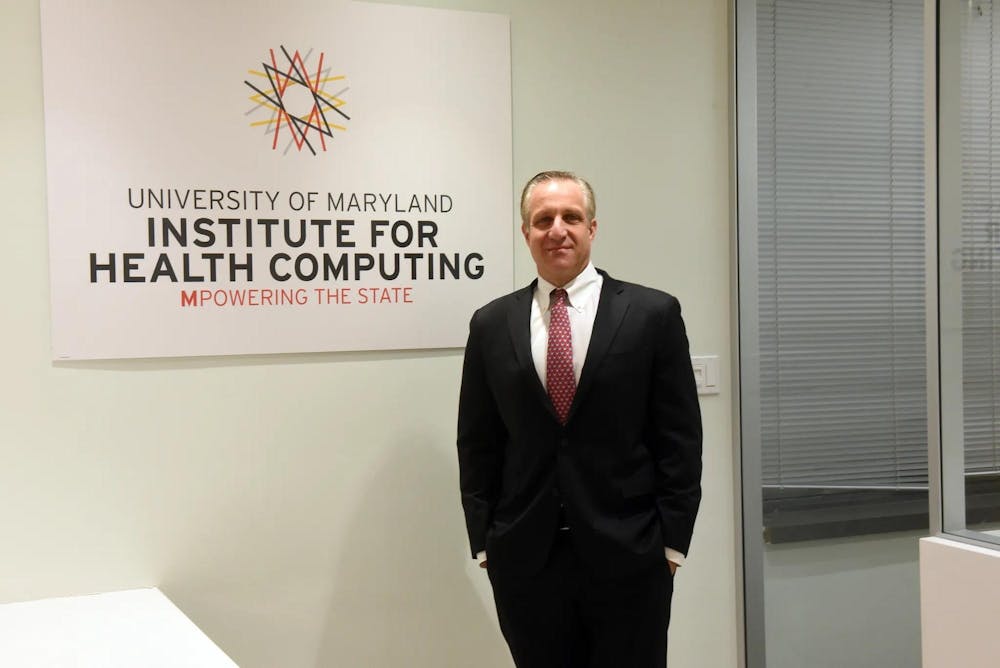
In 2026, Bradley Maron MD’03 will assume the role of editor-in-chief of Circulation, one of the leading cardiovascular medicine research journals. Maron’s appointment was announced at an American Heart Association conference in November.
Maron’s “commitment to combining advanced research with clinical care (supports) the association’s mission to improving health outcomes and quality of life for all people,” Mariell Jessup, chief science and medical officer of the AHA, said in a statement to The Herald.
Maron is the co-executive director of the University of Maryland Institute for Health Computing and a physician-scientist in cardiology — a field he says his father, a cardiologist formerly at the National Institutes of Health, inspired him to pursue.
“My older brother — who’s about four years older — and I are very close to one another, and we had a shared resolve to pursue a career in medicine, in part based on what we saw with our father,” Maron said. “My mother was also an important positive force in ensuring that we had the confidence and the self esteem and the emotional support to pursue these challenging endeavors.”
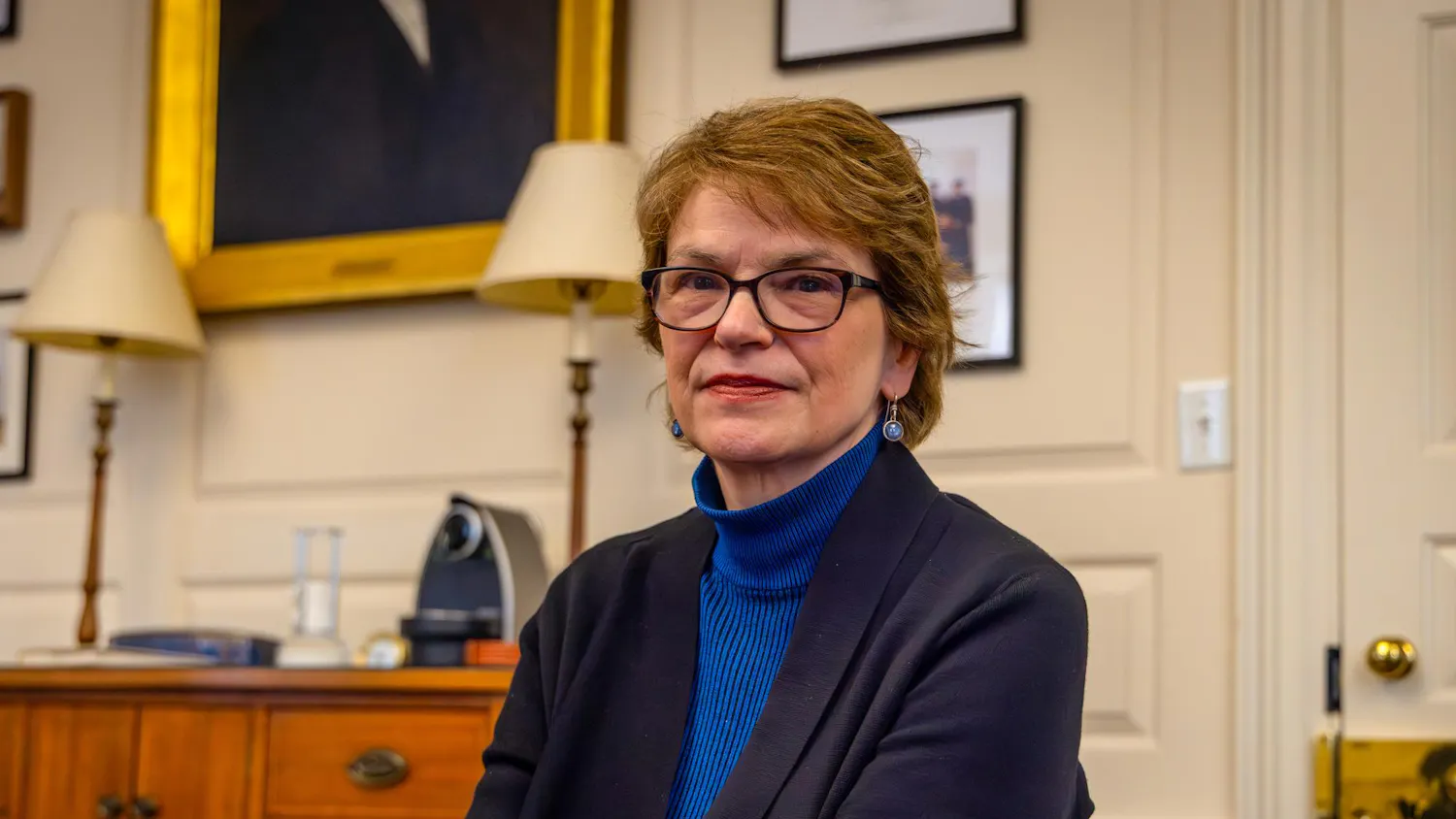
Maron said he was also inspired to enter a research-related medical career through interactions with physician-scientists while attending Warren Alpert Medical School. At Brown, Maron conducted research under Professor of Neurosurgery, Pathology and Laboratory Medicine Suzanne de la Monte, examining the effects of nitric oxide synthase on neurodegeneration in patients with Alzheimer’s Disease.
De la Monte was one of “the first mentors outside of my own immediate family who taught me the powerful importance and implications of research for understanding how to interact with patients,” Maron said. “This was a period of enlightenment.”
In an interview with The Herald regarding Maron’s new position, de la Monte said her goal as a mentor is to encourage her students to learn the “enjoyment of discovery” while approaching medicine in a scholarly manner.
“Physician-scientists and scientists in general are not meant to be robots,” she said. “They have to learn how to do it, and they need to assess data and be critical.”
De la Monte said that during his time at Brown, Maron learned he could “do his own thing.”
“I was pretty happy that he learned that, rather than worrying about what his siblings or his father was doing, because that’s a tough act to follow,” she added.
After graduating from Brown and pursuing his residency and fellowship at Brigham and Women’s Hospital, Maron also had a significant impact on others as a mentor himself, said Bruno Lima, a cardiologist and the associate director of the Advanced Cardiovascular Imaging Fellowship Program at Vanderbilt University Medical Center.
“Brad was always a great role model and somebody that was able to navigate between clinical and basic science,” Lima said.
Lima was training for a month at Brigham and Women’s Hospital as an international medical student when he first met Maron in October 2009. During Lima’s month at Brigham and Women’s, Lima said Maron encouraged him to pursue a career as a physician-scientist.
Lima said Maron also provided him with guidance as Lima committed to complete his residency in the United States, a process he says is difficult for international medical student graduates.
“Brad pretty much became kind of a big brother to me,” Lima added.
Upon completing his fellowship, Maron stayed at Brigham and Women’s until 2023 to practice cardiology professionally as a physician and researcher. He also practiced within the Boston Veterans Affairs health care system, where he helped start a comprehensive care program for patients with pulmonary hypertension, a condition identified by high blood pressure in the blood vessels leading to the lungs.
“Most people were fighting for opportunities to stay at Brigham and Women’s as the primary clinical site for their work,” he said. “I chose to go to the VA because I wanted to get a better opportunity to learn firsthand clinical program building.”
Maron also pursued research projects within the national VA database, collaborating with Director of Cardiovascular Research at Warren Alpert Gaurav Choudhary to study the relationship between pulmonary artery pressure and mortality. The team of researchers found that even levels under the typical diagnostic threshold for pulmonary hypertension were associated with mortality and hospitalization.
“This created a new framework for understanding how to diagnose pulmonary hypertension, and we would later go on to repeat that work, focusing on other hemodynamic parameters,” Maron said.
In 2023, as the University of Maryland embarked on new efforts to take advantage of artificial intelligence developments and apply them in the clinical research setting, Maron was recruited to lead the Institute for Health Computing at the University of Maryland by Mark Gladwin, the dean of University of Maryland School of Medicine.
Gladwin knew Maron through their shared work researching pulmonary hypertension, including a co-editorial they wrote redefining the range of mean pulmonary artery pressure that should trigger a diagnosis.
“He’s inspirational to a lot of people because he’s so nice and down-to-Earth even though he’s so accomplished and smart,” Gladwin told The Herald.
In his current role, Maron spearheads efforts to improve clinical diagnoses and outcomes using large language models and AI technology. This has included building AI algorithms that can anticipate the development of unstable cardiac rhythms in the intensive care unit setting, he added.
With Maron’s broad experience in the clinical and research field, Gladwin says he is excited to see his colleague as Circulation’s editor-in-chief.
“He’s got probably the greatest breadth of science knowledge that I’ve seen,” Gladwin said. “It’s very few people that are really good at science across that broad domain plus still practice medicine, so he’s very unique.”
The current editor-in-chief of Circulation, Joseph Hill, wrote in an email to The Herald that he is looking forward to watching Maron in his new position amid a critical time in research and clinical practice.
“As Dr. Maron knows well, this is a position of leadership — leading an international team of thought leaders, sculpting the future of cardiovascular science and medicine and serving as a gatekeeper of scientific truth,” Hill wrote. “In the present times in which we see science being questioned and sidelined, this is more important than ever.”
Jonathan Kim is a senior staff writer covering Science and Research. He is a second-year student from Culver City, California planning to study Public Health or Health and Human Biology. In his free time, you can find him going for a run, working on the NYT crossword or following the Dodgers.