
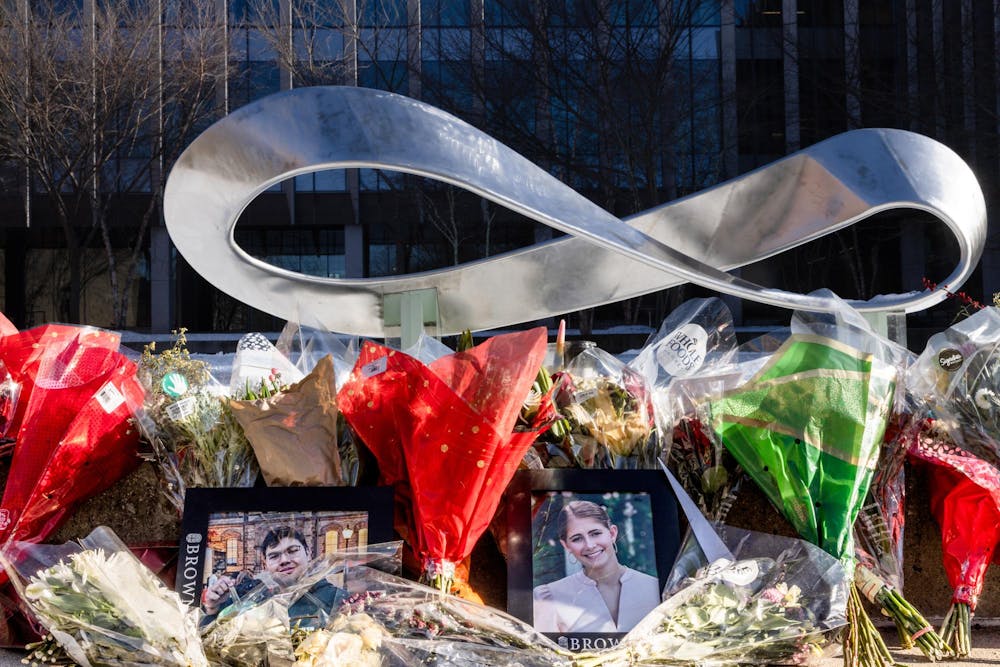
The first day of the spring semester on College Hill was an unsettling one. After the shooting that took the lives of two of our classmates and injured nine others, most of the Brown community promptly fled campus. We were left scattered across the world, away from the site of some of our fondest, and now most devastating, memories.
Upon returning, we were faced with a profoundly conflicting reality. Despite the weight of Dec. 13, the usual semesterly procedure unfolds: we unpack our suitcases and shopping period commences. This procedural normalcy can feel disorienting. What does it mean to move forward when the place itself now holds such a profound wound?
To grapple with the difficulty of moving forward with trauma in her novel “Beloved,” Toni Morrison invents the concept of “rememory.” While the trauma in the novel and the trauma caused by the events of Dec. 13 are incredibly different, the framework of rememory can help us make sense of returning to campus after the shooting.
Morrison’s rememory is the physical manifestation of trauma — the way in which the past persists in the present by lodging itself in places, objects and bodies. Throughout the novel, sensory and physical triggers pull the protagonist back into experiences that she cannot leave behind, even as her life progresses.
The protagonist’s house at 124 Bluestone Road carries rememories in its walls and its creaking floors. Now College Hill functions similarly. Grief — our rememory — is spatially anchored. Over break, we honored our classmates and processed our own experiences of Dec. 13 from the comfort of our homes. To return to Brown, classes and homework is not to leave the weight of the shooting in the past, but honor it in every step.
Our reactions, our fear and our sorrow are tied to this place — to the classrooms that we barricaded in and the quads we crossed in the early morning hours of Dec. 14 after being released from the Olney-Margolies Athletic Center. The joyful shrieks of reunion that we heard across campus yesterday echoed with something else: relief. Relief to return to our community, to our second home, and to the buildings and pavements that will always stand as memorials to Ella Cook ’28 and Mukhammad Aziz Umurzokov ’29.
Rememory explains how the shooting will linger even as we go on with our studies. On College Hill, the past is not something we need to revisit intentionally. Like rememory in “Beloved,” it takes hold of us. It’s something we bump into, walking across the Main Green or taking notes in a lecture.
But rememory is not paralysis. Morrison does not suggest that life stops because the past persists, but rather that moving forward requires acknowledging that the past will move with us. Returning to Brown means accepting that this campus will now hold both grief and joy, rupture and continuity. The task is not to erase one in favor of the other, but to live honestly with both.
Isabella Gardiner ’28 can be reached at isabella_gardiner@brown.edu. Please send responses to this column to letters@browndailyherald.com and other opinions to opinions@browndailyherald.com.


