
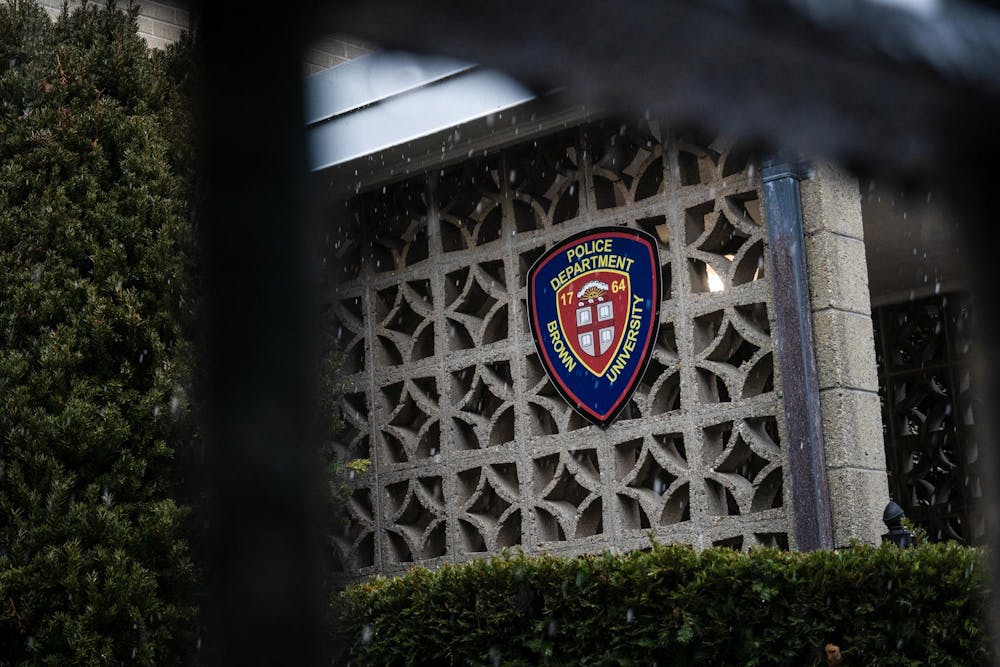
In December 2006, I finished my last semester as a student at Brown and made a career choice that made me unpopular on campus: I went to work for the University’s Department of Public Safety. Overnight, longtime friends became distant, and the group of alums I’d planned to live with pulled their lease offer at the last minute, leaving me scrambling for housing. It was a vivid lesson in how complicated perceptions of policing can be at Brown.
When I was an undergraduate, I noticed few students on campus went out of their way to interact with the police. That is precisely why, in my role as special assistant to the chief, I worked specifically on community outreach. Unfortunately, many of the projects we pioneered, such as holding office hours for students to communicate with DPS officers, are no longer in place. As students return to a grieving campus, the University should promote regular interactions between DPS and the rest of the Brown community to make College Hill a safer place for all.
When I visited campus this past November, only weeks before the tragic events of Dec. 13, I was surprised by the absence of uniformed officers or marked DPS vehicles. Perhaps this is because in late 2020, Brown administrators began shifting student-facing duties away from DPS, following campus-wide demands for systemic change amid the national protests over policing in 2020. For example, tasks like daytime dorm lockouts and wellness checks were reassigned to the Office of Residential Life instead. Campus leaders believed it was best to reduce students’ interactions with DPS officers.
I don’t doubt the intentions behind this approach — for some students, any encounter with law enforcement feels high-stakes. But eliminating low-stakes interactions means that we end up with a department that many students encounter only during emergencies, investigations or other uncomfortable situations. Good policing relies on community ties, and these relationships must be built on habitual interactions.
The recent shooting investigation underscores this point. State and national authorities could not identify the shooter until an anonymous Reddit user known as “John” posted that he recognized the suspect, which led the police to contact him about what he saw. The details he shared “blew the case right open,” according to Rhode Island Attorney General Peter Neronha P’19 P’22. That bombshell tip, however, could have similarly come from any of the students who frequent the Barus and Holley area. Investigators believe the gunman had been lurking around campus for multiple days before the shooting. We may never know if the distance between DPS and the student body prevented any tips from reaching the authorities, but it is certainly possible.
Closing this distance requires facing criticism head-on. In 2007, DPS leadership and I quickly learned that inviting students to come to us with feedback was ineffective. Instead, we decided to bring DPS to them. We held regular office hours in student spaces, bringing pizza to affinity centers like the Brown Center for Students of Color and Stonewall House. We also started social events like “Cocoa with the Cops.” Interim Vice President for Public Safety and Police Chief Hugh Clements would be wise to similarly take conversations about safety directly to those least likely to speak to DPS. Not everyone will be receptive to these efforts, but this is the point: Without sincere outreach efforts, many students may never share their feedback with DPS leadership.
In addition to these outreach programs, I was a founding undergraduate member of Brown’s Public Safety Oversight Committee — a group of students, faculty and staff who reviewed DPS practices. I can see the impact of the committee’s efforts today: One officer hired during my tenure was one of the first to respond on Dec. 13. Unfortunately, the PSOC’s last recorded meeting was in 2018, and by late 2021, the group was described as “inactive.” Brown convened an ad hoc Campus Safety and Security Working Group a year after the 2020 reforms that decreased regular interactions between students and DPS officers began, but it, too, appears to have closed shop. Without an active PSOC-like body or regular outreach programming, campus members have lost the only dedicated venue to voice concerns and share thoughts about campus safety.
As part of the review of Brown’s safety policies and procedures following the shooting, President Christina Paxson P’19 P’MD’20 and Clements must revisit these outreach efforts to better unify students and DPS officers. Ultimately, safety is something a police department can produce only in partnership with its community. Security cameras and keycard locks are part of what keep us safe, but it is community relationships that truly matter.
Benjamin Boas ’06.5 was the Special Assistant to the Chief of the Department of Public Safety in 2007. He can be reached at benjamin@benjaminboas.com. Please send responses to this op-ed to letters@browndailyherald.com and other opinions to opinions@browndailyherald.com.


