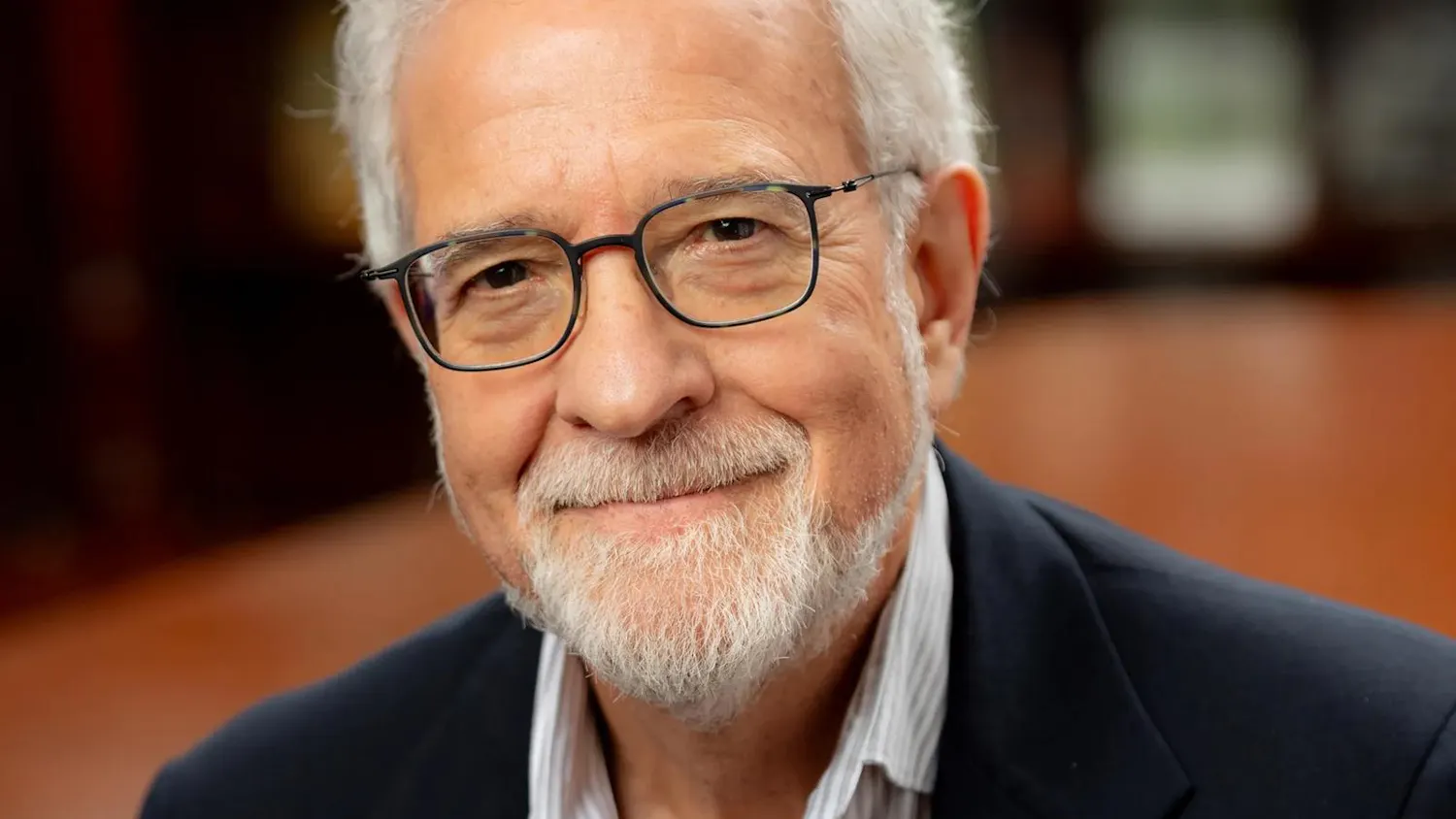
Last month, the Trump administration officially withdrew from the Paris climate agreement for the second time. As the federal government continues to roll back many Biden-era environmental policies, Jeffrey Colgan, a professor of political science and international studies and director of the Climate Solutions Lab, is thinking about how global climate politics may be reshaped.
In a November paper, co-authored with Federica Genovese, a professor of political science and international relations at Oxford University, Colgan weighs the merits and drawbacks of “climate realism.”
According to the paper, “climate realism” recognizes the threat of climate change, and instead proposes prioritizing long-term climate solutions over short-term mitigation.
The framework is a “loose family of ideas that different people use slightly different ways” that proposes long-term mitigation efforts can appeal to “both sides of the aisle,” Colgan said in an interview with The Herald.
The framework saw increased interest following environmental policy changes in the second Trump administration, according to the paper.
“There is this huge gap between the two major political parties in the United States about climate change and whether it’s real and what to do about it,” Colgan said. “That makes any kind of bipartisan solution hard.”
The researchers proposed climate realism as a viable way to account for this polarization while mitigating the serious risks of climate change.
According to Colgan, President Trump’s victory in the 2024 presidential election spurred a lot of rethinking in the field of climate politics.
“It’s very unlikely that the U.S. will do anything positive on climate change,” he added.
The Trump administration’s “continued assault on the energy transition” is “discouraging,” Associate Provost for Sustainability and Ecology, Evolutionary and Organismal Biology and Environment and Society Professor Stephen Porder, who was not affiliated with the paper, wrote in an email to The Herald.
The White House did not respond to The Herald’s request for comment.
Colgan explained that the framework comes with the tradeoff that “climate advocates give up today on any kind of action in terms of reducing pollution and reducing greenhouse emissions.”
“Then, perhaps in the future, we can have better climate action and wider support, meaning bipartisan support for better climate solutions in the long term,” he said.
But “the long-term might be years, decades” Colgan said.
Because of this, the framework is not likely to be “acceptable” to people who want to advocate for climate policies in the short-term.
Climate realism “is unlikely to become the dominant framework,” Colgan said.
The paper proposed that further research should examine three key topics: anti-green coalition political strategies, current national economic strategies and how the shift of powerful nations away from climate mitigation may affect international relations.
Porder added that individual U.S. states and many other countries are also enacting their own green policies, pointing to the banning of internal combustion cars in Ethiopia and China’s electrostate investments, among other countries.
“It’s important to understand that the (United States) is playing a smaller and smaller role” in the global transition to clean energy. Porder added. “Solar, wind, grid-scale batteries and EVs are being deployed very rapidly around the world.”
Correction: An earlier version of this article misspelled Stephen Porder’s name. The Herald regrets the error.
Amrita Rajpal is a senior staff writer covering science and research.