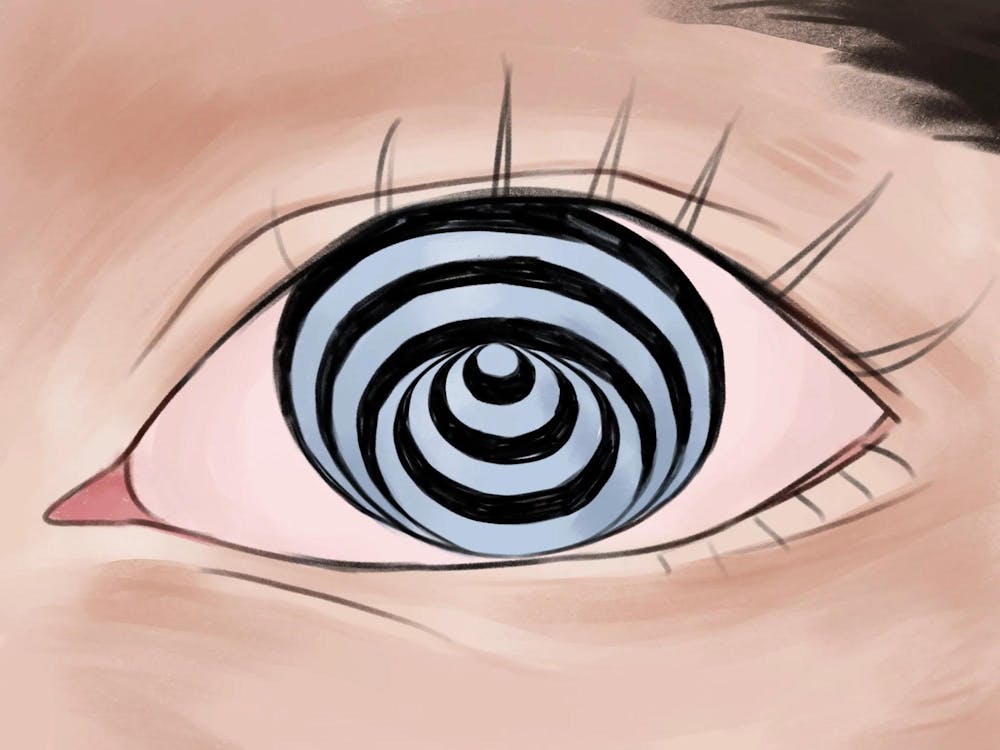
Optical art — also known as Op art — caused what Assistant Professor of History of Art and Architecture Lindsay Caplan described as a “critical panic around art’s illusionistic quality” when it emerged in the 1960s. But Op art, which includes geometric abstraction and illusions, may tug on the same anxieties in the art world as new technologies like using computers to generate images.
Caplan’s recently published paper, which is titled “The Lie of the Eye: Op Art and Doubt,” focuses on how viewers reacted to optical art — the public and critical response to seeing “things that aren’t there.” Analyzing two 1965 exhibitions — an Op art exhibit and an exhibition of computer-generated images — Caplan points out similarities between the two exhibitions, as well as the art world’s responses to them.
“We need to think about Op art’s relationship to new technologies and this moral panic about people’s manipulability all together at once,” she said.
The two exhibitions, which were called “The Responsive Eye” and “Computer-Generated Pictures,” launched around the same time and featured some striking similarities formally. Some artists were considered members of both movements — employing new technology and optical illusion to challenge conventions.
Op art was critiqued at the time of its rise because it caused the viewer to fall into a “trick of the eye,” Caplan noted, describing that nature of the art as an “illusionistic quality.”
“I was interested in the fact that everyone kind of loved to hate on Op (art) and what that tells us about art history,” Caplan added, noting that her work examines art of the ’60s and ’70s that questions the autonomy of individuals.
Op art invokes a “phenomenological experience of perception” — more based on the embodied experience of viewing the work than language or content, Caplan told The Herald. Because this is a more “non-conscious” way to interact with art, “people are kind of rendered stupid and passive.”
Colby Chamberlain, a lecturer in the department of art history and archaeology at Columbia, wrote in an email to The Herald that Caplan’s article makes a strong case for looking more closely at Op art’s implications in art history. But, he added, he is unsure if Caplan’s research can fully “upend” the consensus that Op art is its “own little cul-de-sac.”
According to Kerry Greaves, associate professor in the department of arts and cultural studies at the University of Copenhagen, Caplan’s article serves as a “critical and timely intervention into our understanding of post-World War II art.”
Associate Professor of Visual Art Paul Myoda described Caplan as “able to tease out and frame past contradictions in a way that brings them to life and creates a sense of opportunity, if not exigency, in the present” in an email to The Herald.
Caplan’s research fits into a time when artificial intelligence is an especially hot topic.
“I am really invested in kind of thinking about how this longer history, especially artists engaging with the relationship between technology and people, might contribute to those conversations,” Caplan told The Herald.

Alice Xie is a section editor for Science and Research from Los Angeles, California. She studies Applied Mathematics and Biology, and enjoys reading gut wrenching literature in her free time.