
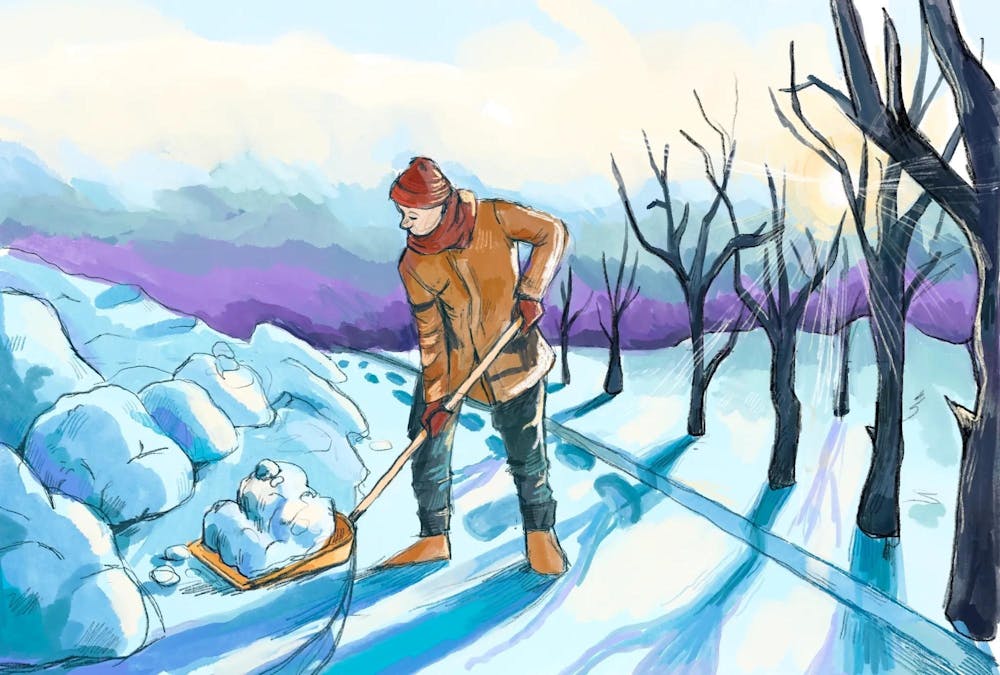
With over an inch of snow coating the ground every day for the past month, Providence has been feeling the effects of extreme winter weather. Sidewalks still blocked by snow endanger pedestrians who must walk in the roads alongside cars. And this isn’t the only problem sludgy sidewalks pose for residents —the sludge can refreeze and become black ice, creating a highly dangerous ground for residents navigating through the city. Providence, like most major cities, puts the responsibility on property owners to shovel the public sidewalk adjacent to their property. Unfortunately, not every sidewalk ends up shoveled, leaving some completely cleared while others remain buried under snow.
Mayor Brett Smiley’s administration has unfortunately neglected to fully enforce sidewalk shoveling mandates through fines. Landlords must of course comply with the law — but in the meantime, as they fail to do their part, us students can step in and help pedestrians. Creating a comprehensive system for post-blizzard volunteer labor would make a lasting impact.
While city leadership may not be doing its job to enforce sidewalk snow shoveling and save Providence from the slush, Brown students have the time, energy and talent to step in and lead the charge against this threat to public health. Developing a system to help our neighbors dig out their sidewalks would be a concrete way to assert that Brown loves Providence.
Crowdsourced services are nothing new, and Brown students are uniquely positioned to connect those who can provide snow-clearing services with uncleared sidewalks. It’s easier for a volunteer effort to grow on a college campus, where students are likely to have many friends within a ten-minute walking radius willing to join in. Students also have the technical skills to come together and build something great — we’ve done it before. We brainstormed potential software for the mailroom and developed Brown Dining Wrapped. Students can utilize this technical knowledge to create an online crowdsourcing software that connects volunteers with shoveling opportunities.
Creating such a system would help with snowstorms to come. Its core functionality would allow community members to report unsafe pedestrian conditions and let volunteers post updates on snow-clearing progress. This could be as simple as a shared spreadsheet, but could be improved upon and incentivised using the tools which make social media so effective: photo and video posting, as well as commenting and “liking.” If the unpleasant task of snow shoveling was turned into a social platform like Sidechat, even non-volunteers could keep up with it and become more engaged with efforts to help the community.
To all the Brown students who crave “real-world experience” and impact, as announced on dozens of LinkedIn profiles, this is your calling! Many of us already volunteer — there are hundreds of Brown volunteers at Rhode Island’s hospitals and scores of BRYTE tutors. But truly caring about our community means giving back even if the work may not seem prestigious. To the over 200 students waitlisted from the Rhode Island Hospital’s volunteering program, shoveling snow is your chance to impact public health for the better! For the one in nine Providence residents who are over 65, as well as others with disabilities, clearing the sidewalk in a timely manner may not be feasible. While you may not be able to save the world yet, you can save a sidewalk.
Arya Vishwakarma ’29 can be reached at arya_vishwakarma@brown.edu. Please send responses to this column to letters@browndailyherald.com and op-eds to opinions@browndailyherald.com.
Arya Vishwakarma is a columnist for the Brown Daily Herald. She is from Belle Mead, New Jersey and studies pure math. She likes playing in the orchestra, taking the RIPTA, and enjoying dry noodle bowls.


