
On Sundays, I send an undeniably important text to various friends: “meal this week?” College dining serves a special purpose outside of nutrition — it is a means of social connection and community. But, I, along with many other Brunonians, have let my dining experience be defined by the status quo, exclusively eating meals with those already in my circle. Brown students span a diverse range of interests and experiences, and it is easy to get siloed into these academic or social niches, especially when the Open Curriculum enables students to solely interact with those inside of their academic niche. While these focused identities and passions can provide tight-knit communities, they also can limit the peers an individual interacts with on a day-to-day basis.
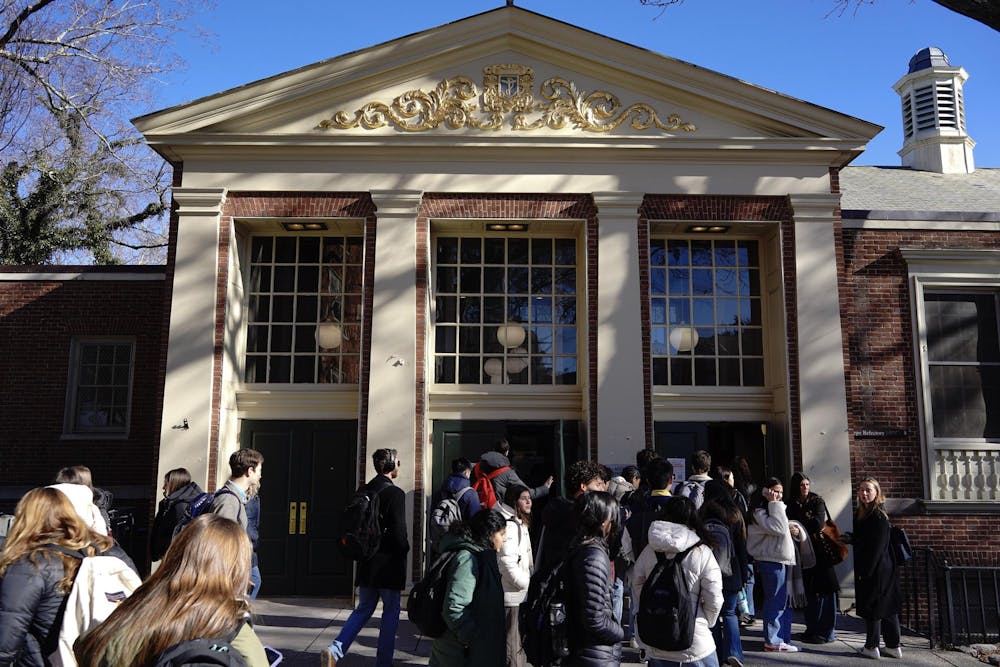
But dining halls have the opportunity to serve as a form of social equalizer, allowing students to meet and learn from those outside of their routine communities. Whether it’s convening around wooden tables at the Sharpe Refectory or snagging a coveted booth outside the Blue Room, muffin in hand, Brown dining is a central part of all Brunonians’ college experience. As the school year comes to a close and we prepare to spend our summers without our classmates, we should look at Brown’s dining halls as more than just sources of nutrition — they can be creative outlets for students to strengthen connections with those in the greater Brown community.
Students have expressed grievances that Brown has a deficiency of third spaces, a term coined by sociologist Ray Oldenburg that refers to refuges outside of home and work that foster connection and community. But Brown’s numerous dining halls fill this niche perfectly. Each dining hall is a space dedicated to commensality — the practice of eating together — which encourages connection, discourse and belonging. These spaces are not only a place of sustenance, but they serve as Brown’s social hall and marketplace of ideas.
But Brown students don’t consciously treat the space as such. Our interactions with dining halls often consist of swiping in to eat and then leaving once we’re satiated. But our relationship with Brown Dining doesn’t have to be utilitarian. Rather, dining halls can be spaces for creativity and community.
In February, an Instagram account called “ucla.tiramisu.guy” went viral for its attempts to make tiramisu out of meager dining hall ingredients. This trend quickly swept college campuses, including our own. While the end result is unconventional, each innovative tiramisu crafted from sugar packets and cocoa puffs can lead to something larger. On the journey to create a dining hall culinary masterpiece, other diners will likely take an interest in this unusual undertaking, as already proven by the social media success of each viral tiramisu. Bringing a bit of whimsy to the monotony of the Ratty can help build new communities. Not only do student chefs get to enjoy their alimentary creations but cooking together creates a sense of camaraderie between students and builds a jovial sense of pride for the entire student body.
The infamous “Ratty Challenge” is another ingenious way to take advantage of our dining halls. The challenge — in which one spends 12 hours in the Ratty, from open until close — has been described as a joyful way to bond with friends. Intentionally spending time — maybe too much time, one could argue — in the dining hall capitalizes on the unique experience of communal campus living. To be able to spend a dozen hours in one space with the capability to be social, studious and nourished throughout it all is rare, and if you notice someone has been in the Ratty for almost as long as you have, the experience can be a great icebreaker.
Treating the dining hall as an open social space is not a new concept. Previously, Brown’s dining halls have been more than just another monotonous part of the college routine. Over the decades, the Ratty has housed numerous whimsical events, including a birthday party for President Gregorian, alumni-sponsored themed dinners and even required men to wear ties for the dining hall’s anniversary in 2001. The idea of utilizing our dining halls as creative and social spaces is a tried and true success.
While not all of us may pursue such creative faux-Italian creations or choose to spend double-digit hours in the Ratty, recognizing the unique role of the dining hall, and being willing to prioritize the value shared meals present — especially with those outside of your normal circle — is crucial.
As the nostalgia for the past year creeps in and the departure from the joys of College Hill living feels imminent, the University’s dining experience should be reframed to include a bit of ingenuity and spontaneity. Dining halls are meant for more than just food — there is no better place to curate your creativity or foster community than with a fork in hand.
Talia Berkwits ’29 can be reached at talia_berkwits@brown.edu. Please send responses to this op-ed to letters@browndailyherald.com and other opinions to opinions@browndailyherald.com.
Talia Berkwits is a staff columnist. She is from Chicago, IL and undecided on her concentration. She loves cooking (but not cleaning up) and one of her goals is to visit all 50 states.


