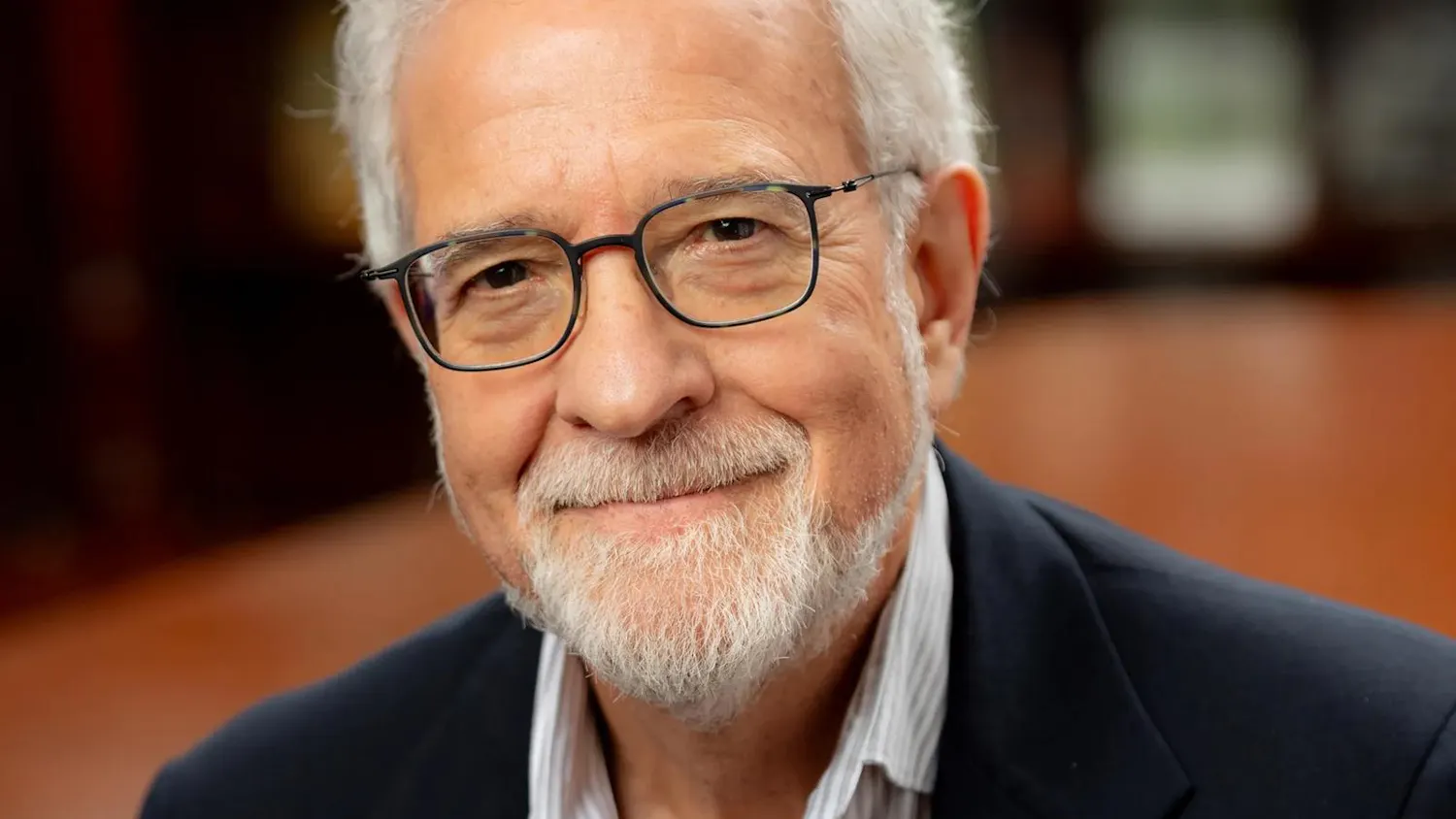
A few years ago, the way that Americans were receiving health care had remained almost unchanged for decades. “You’d go to the doctor’s office, sit in the waiting room, read an old ‘People’ magazine,” Professor of Health Services, Policy and Practice Ateev Mehrotra said in an interview with The Herald.
But the COVID-19 pandemic transformed the health care industry as more appointments moved online via telemedicine. Still, the modern appointment method may not be equitable for “disadvantaged communities,” according to Mehrotra.
Mehrotra and other researchers from Brown, Harvard Medical School, Mass General Brigham and McLean Hospital recently published a paper investigating the accessibility of mental health telemedicine by looking at the correlation between the number of telehealth appointments delivered and the location of the patient.
The study specifically looked at mental health specialists serving a Medicare “fee-for-service” population.
Many rural communities struggle to access health care because there is no nearby clinician, according to Mehrotra, who has been researching issues surrounding telemedicine for about a decade. “People have hoped that telemedicine could be that solution to really reach rural communities,” Mehrotra said.
But the study found that virtual healthcare did not significantly expand to new geographies and demographics, said Adjunct Assistant Professor of Health Services, Policy and Practice and co-author Andrew Wilcock.
Though there was a slight increase in the geographic scope of certain specialists’ practice, a lot of that shift could be attributed to “their current patients moving locations,” which is “not really expanding new access,” Wilcock said. “That’s keeping in touch with people over time.”
The use of telemedicine is not new, even though it was used infrequently prior to the COVID-19 pandemic, according to Wilcock. But in the post-pandemic world, telemedicine became widely used, with some physicians transitioning fully to virtual practice. This created a “natural experiment,” he said, allowing researchers to analyze the impact of telemedicine retrospectively.
The researchers studied data from over 17,000 mental health specialists spanning between 2018 and 2023, according to postdoctoral research fellow at Harvard Medical School and first author of the paper, Jacob Jorem. The researchers used data from 2021 as a benchmark to measure the change in telemedicine post-pandemic, Jorem added.
But there could be confounding variables contributing to the study’s findings. Mehrotra noted that some rural communities lack broadband internet availability, which is “critical for health care.”
“If we’re going to expand telemedicine and lots of other stuff into rural communities, we need to have broadband, but we still haven’t figured out how to do it from just a logistics perspective,” Mehrotra said.
Jorem said that unequal access to health care may also be a result of doctor licensure policies, where laws may limit providers’ ability to legally treat patients across state lines.
The findings suggest that telemedicine has not yet reached its “potential,” Jorem said. He added that we need “tailored policy intervention” to effectively provide mental health care for communities that are unable to reach these services.
According to Wilcock, in order for telemedicine to reach disadvantaged populations more effectively, providers need to be offered incentives to expand their patient base.
The use of artificial intelligence may have the potential to “fix the problem” of limited mental health care access, Mehrotra said, citing increased use of large language models by younger people. But the potential of AI in telemedicine is still “a really open question right now,” Mehrotra said.
Mehrotra emphasized that the study does not imply that telehealth cannot reach disadvantaged communities. Instead, the researchers aimed to show that “it hasn’t” reached these communities due to systemic issues, he said. “So, it opens this question of, ‘how do we change things?’”
Elizabeth Rosenbaum is a senior staff writer covering science and research.