
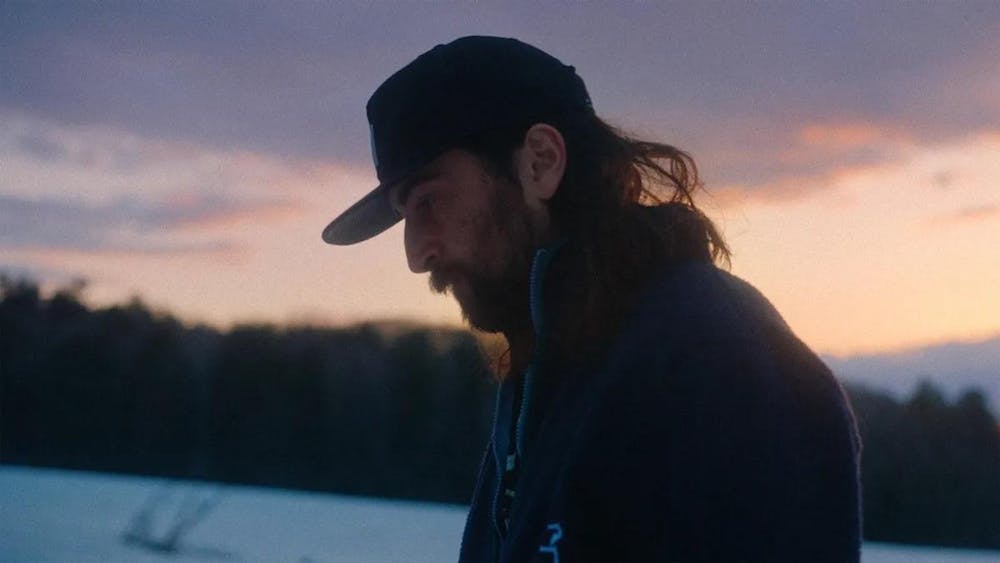
Released on April 13, “Noah Kahan: Out of Body” is a masterfully crafted film that establishes how the star found his way in the music industry. Available to stream on Netflix, the documentary follows Noah Kahan as he returns to his hometown to reflect on his music, which is heavily influenced by his time growing up in rural Vermont.
Through interviews with Kahan, his wife, siblings and parents, viewers learn more about the stories behind his discography, which is heavily influenced by moments in his childhood and his struggles with mental health. The interviews, which were filmed in the two homes Kahan grew up in, took on a personal tone that made the documentary feel truly authentic to the star’s upbringing.
Fittingly for a film with the name “Out of Body,” Kahan talks openly about his struggles with body dysmorphia and the immense pressure he places on himself to achieve perfection. His interviews portray a level of honesty beyond superficial vulnerability.
One of the more touching moments of the documentary is when he meets Zuza Beine, who would later pass away at 14 years old after a battle with cancer. Kahan meets Beine backstage and gives her a private performance of her favorite song, “Forever.” The scene with Beine beautifully demonstrates the impact of Kahan’s music and its power to help people through hardship.
The documentary also captures the messier bits of the Kahan family’s life. Viewers learn about his father’s traumatic brain injury and many of the other hardships that inspired Kahan’s songwriting.
When talking about his father, who suffered the injury when he was in middle school, Kahan explains that “after the accident, this brilliant guy who was always a little weird and embarrassing, and maybe sometimes short-tempered, became slightly more weird, slightly more short-tempered.”
These moments of vulnerability offered through the stories of personal family experiences serve multiple purposes. While they humanize the artist, they more importantly destigmatize discussion of these topics — a clear goal of the documentary.
In an interview with Netflix, Nick Sweeney, the film’s director, explained that “when we started filming, I had no idea what we’d capture, only that Noah was determined to be honest about everything, especially the messy bits.”
When his mother is asked how she feels about having personal information about their family — including the various divorce trials they’ve gone through — made public, she answers that “Noah makes our dirty laundry just seem like being human.”
The film was also a perfect homage to the first stage of his career prior to the release of his highly anticipated fourth studio album, “The Great Divide.” Kahan describes how, across his body of work, he intentionally includes enough details for listeners to resonate, but not so many that his entire life story is exposed. His music is candid yet refined, much in the same way the documentary is.
Kahan is also refreshingly honest, which is rare for celebrities today. He explains that listeners often believe that his ability to skillfully narrate his painful experiences means he is able to overcome them as well, but this is not the case.
“They think that, because you know how to say what’s real, you know how to solve that pain,” Kahan says. “I don’t. I never have. I can’t solve it myself.”
Closing with this statement of uncertainty, “Noah Kahan: Out of Body” leaves viewers with a thought-provoking exploration of the role of art in society, which reiterates that it’s okay to not always have the answer.

Talia LeVine is a section editor covering arts and culture. They study Political Science and Visual Art with a focus on photography. In their free time, they can be found drinking copious amounts of coffee.


