
Brown and Providence are fundamentally intertwined. The University’s successes benefit the city, and the city’s culture benefits Brown. Brown supports Providence with millions of dollars annually through direct community contributions, by employing locals and investing in the city’s workforce development. In turn, Brown students and professors learn from the city around them and take advantage of the city’s valuable cultural and educational institutions. But since the University and city are so interconnected — with academic buildings right next to residential homes and local businesses — it is easy for our shared space to feel crowded. When Brown expands, we inevitably step on the city’s toes.
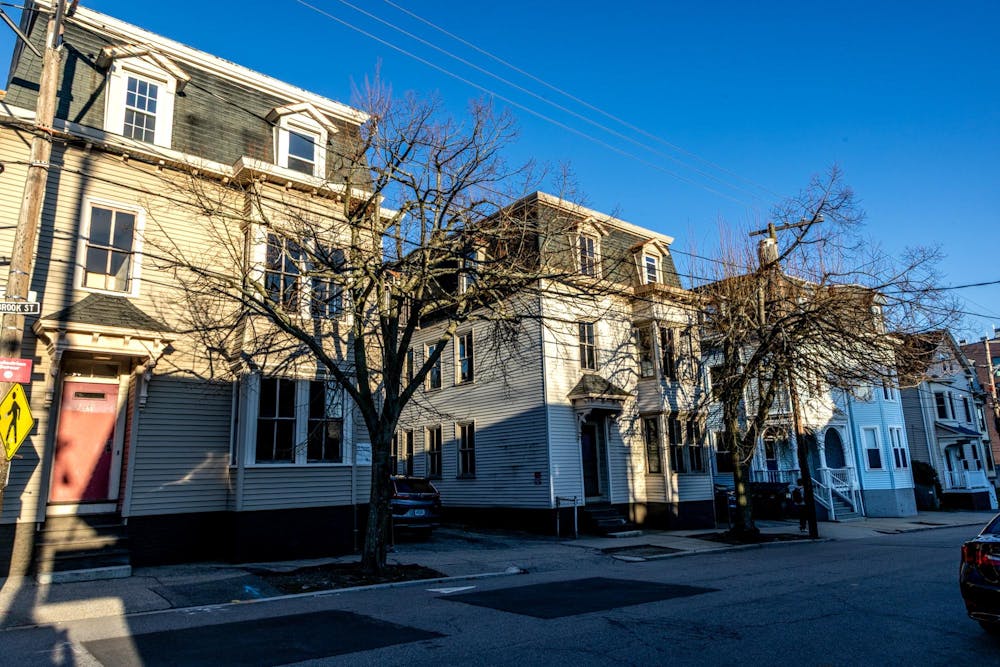
Currently, Brown is facing such tension. The University has proposed the construction of a new economics building on a Brown-owned lot on Brook Street between Benevolent and Charlesfield streets. Current tenants of these University-owned houses would be forced to move out to make room for the development, and representatives of the broader Providence community, such as City Councilor John Goncalves ’13 MAT’15 (Ward-1), have expressed disapproval over the impact of the project on the neighborhood. We understand such concerns — Brown’s history of controversial expansion looms large over this development. But the University is going about this development as respectfully as possible, taking proper measures to ensure the expansion acknowledges the interests of our neighbors while addressing the physical needs of our campus to fulfill its institutional goals.
Goncalves, in a video posted on Instagram, stated that “Providence is not a playground for institutions to experiment with their expansions.” Speaking directly to the University, he said, “If you really love Providence, prove it. Neighbors come first.” In framing the construction as trivial experimentation, Goncalves implies that Brown is not acting out of necessity.
This is profoundly misleading. Currently, the economics department lacks a single, designated space for students and professors to learn and conduct research. Economics is one of the largest concentrations at Brown, yet faculty and graduate students are scattered across five separate campus buildings. The proposed construction aims to fill this gap, ultimately increasing the University’s academic output and the educational resources it can offer its students and faculty.
To make matters worse, Brown as a whole is in dire need of classroom space. While the recent closure of multiple rooms and lecture halls in Barus and Holley has exacerbated the issue, Brown has struggled with limited class space for years. As a result, the University has been forced to implement unpopular enrollment caps on classes for the fall semester. Even when the classrooms in Barus and Holley reopen, the issue of minimal class space will persist. There simply is not enough room on campus for every student to enroll in every class they want to take. The proposed academic building would help alleviate these space requirements. Assuming that it would include auditoriums and lecture space, the new construction will help address the campus space shortage.
Goncalves twists the University’s own Brown Loves Providence campaign against it. Of course, the University must consider our impact on the surrounding community when expanding, but University administrators have attempted to do so throughout this planning process by holding meetings with locals to explain their goals and seek feedback. While Brown does love its neighbors, it is unreasonable to ask the University to wholly subordinate its fundamental academic mission to the will of the city.
We understand that the University’s controversial history with development has resulted in calls for greater transparency surrounding this development. Most notably, the development of Wriston Quadrangle caused the destruction of 51 historic homes, causing several conflicts with College Hill residents. The resultant destruction even led to the development of the Providence Preservation Society — a current opponent of the proposed building. It should be understood, though, that the project has only just begun. The University’s community meeting was held in advance of the proposal being submitted to the Providence City Plan Commission, and as of now, no architect has been selected to design the building.
Ultimately, it is natural for College Hill residents to be upset about changes being made to their neighborhood and to want to provide their input to the University. However, not all input can be actionably taken into account as construction begins. Brown must act in its own interests while still working to maintain good faith with Providence. This undertaking will require difficult decisions that may not please all parties. The University is not carelessly expanding — it is actively working with the community to reach a conclusion that is best for Providence and Brown.
Editorials are written by The Herald’s editorial page board, and its views are separate from those of The Herald’s newsroom and the 136th Editorial Board, which leads the paper. A majority of the editorial page board voted in favor of this piece. Please send responses to this column to letters@browndailyherald.com and other opinions to opinions@browndailyherald.com.


