
Moments after he was sworn into office in 2017, President Trump stated that “from this day forward, it’s going to be only America first.”
“America First” — a pithy, decisive and arguably narcissistic phrase — helped define Trump’s 2016 presidential campaign. And this January, as his second term began, he plowed forward even more forcefully with this same public-facing ideal — the American nation must, and will, come before all else. Through this rhetoric, the Trump administration is pitting the American people against the rest of the world, encouraging us to lose our compassion for the citizens of other nations. However, our ignorance doesn’t prevent our policies from shaping lives overseas. In fact, this attitude of apathy is lethal. To combat this impeding sentiment of callousness, we should grip fiercely onto universal respect— specifically by consuming global news.
The America First ideal existed long before President Trump embraced it. The slogan first gained national prominence in 1915 under former President Woodrow Wilson, but grew in the 1920s as numerous nativist groups, including the Ku Klux Klan, used the phrase to push for policies opposing immigration. In 1940, the America First Committee was established in an effort to promote isolationism and keep the U.S. out of World War II. One notorious speech given by AFC spokesperson Charles Lindbergh stated that the Jews, whose “greatest danger to this country lies in their large ownership and influence in our motion pictures, our press, our radio and our government,” were pressing the nation towards war, and that these “natural passions and prejudices … (will) lead our country to destruction.” America First has historically been a vehicle for fascist agendas, encouraging extreme nationalism and consequently diverting attention away from foreign affairs. Its resurgence should be an alarm for us all.
In an era where political figures are weaponizing our identity, we must make a concerted effort to stay educated and empathetic towards events that do not directly involve us. We — the people, the citizens, the students — exist under many spheres of news consumption: The Herald caters to us as Brunonians and Rhode Island residents, and the New York Times caters to us as Americans. But, we must cultivate a personal stake in the greater global public, a larger, yet essential part of each of our identities. We can take the first step towards this lofty goal by following global news.
Global news spans anywhere from political uprisings and environmental advances to arts and culture. It is incredibly diverse, yet highly applicable to the social and political trends we see in our cities, states and nation. To educate oneself about the triumphs, suffering, advances or adversities of other nations is to give it magnitude, which can lead to not only financial or material support, but also celebrate, condole or validate the experiences and events depicted.
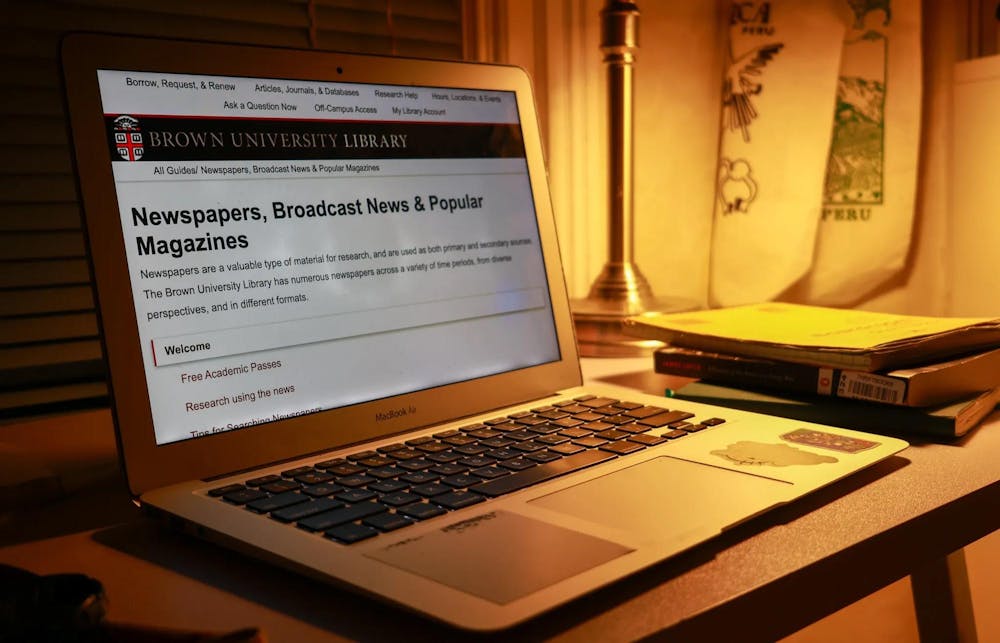
And, global news is abundant. While numerous free global news outlets exist, such as the BBC, Brown students, faculty and staff are also provided free access to Foreign Affairs, as well as full article and text access to the Economist through the Brown Library. Additionally, for those interested in news curated by the Brown undergraduate community, the Brown Journal of World Affairs publishes biannual issues featuring articles by world leaders and politicians. There are many global news resources subsidized or sourced by the University — all we need to do is use them.
To endure the rest of Trump’s second term, we must cultivate radical compassion. In an interview a couple of weeks after being sworn in as Vice President, JD Vance stated that “you love your family, and then you love your neighbor, and then you love your community, and then you love your fellow citizens in your own country and then, after that, you can focus and prioritize the rest of the world.” Let us use this as a wake-up call to the danger of the federal government’s harmful rhetoric. Let us remember that love is not mutually exclusive. Empathy should not reach capacity. Care can extend from our next-door neighbors to our peers across the globe. As American citizens we must combat this sentiment by learning about others with fervency. May we read with the hope of rebuilding bridges, sensitivity and humanity.
Talia Berkwits ’29 can be reached at talia_berkwits@brown.edu. Please send responses to this column to letters@browndailyherald.com and other opinions to opinions@browndailyherald.com.
Talia Berkwits is a staff columnist. She is from Chicago, IL and undecided on her concentration. She loves cooking (but not cleaning up) and one of her goals is to visit all 50 states.


