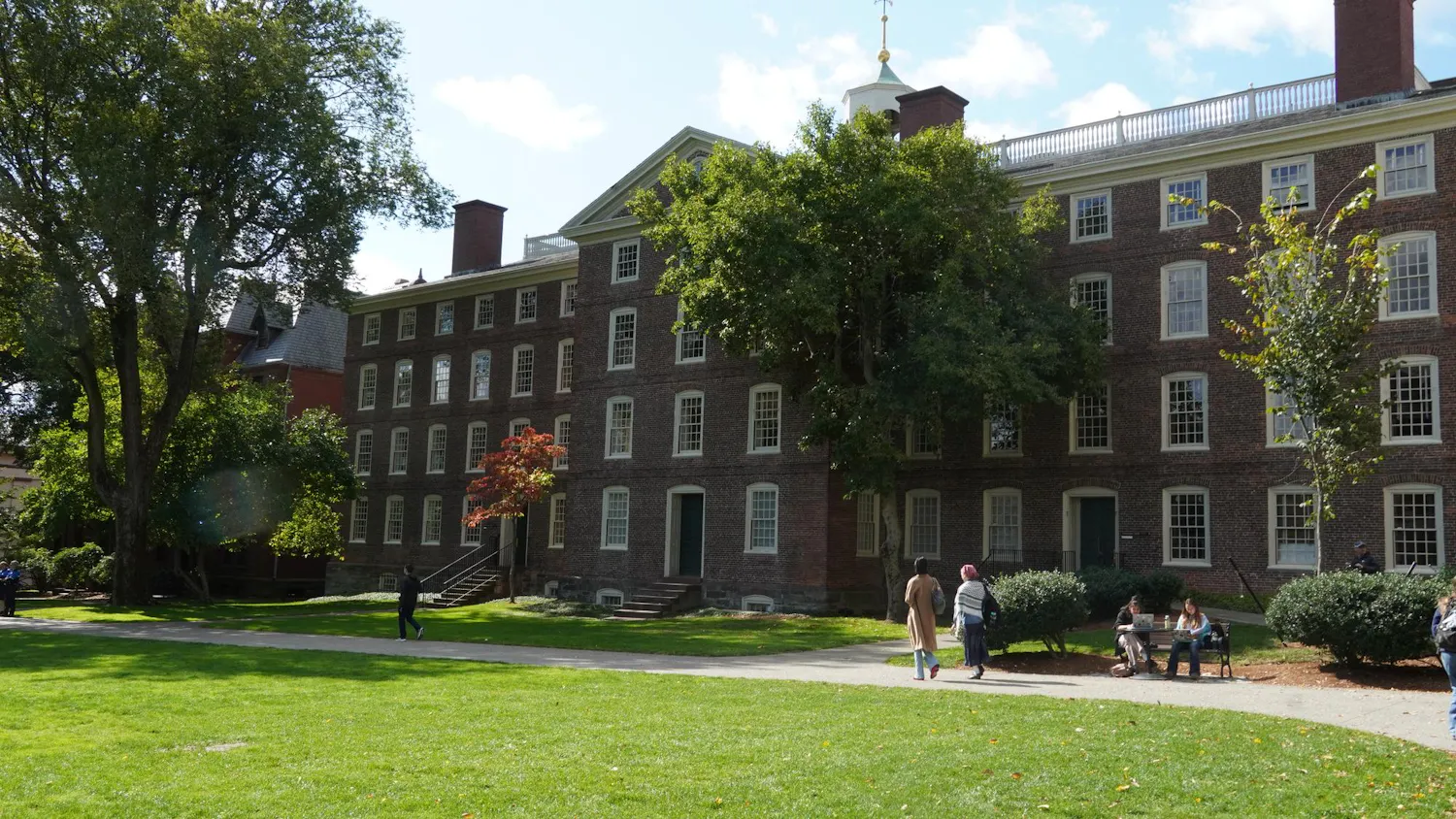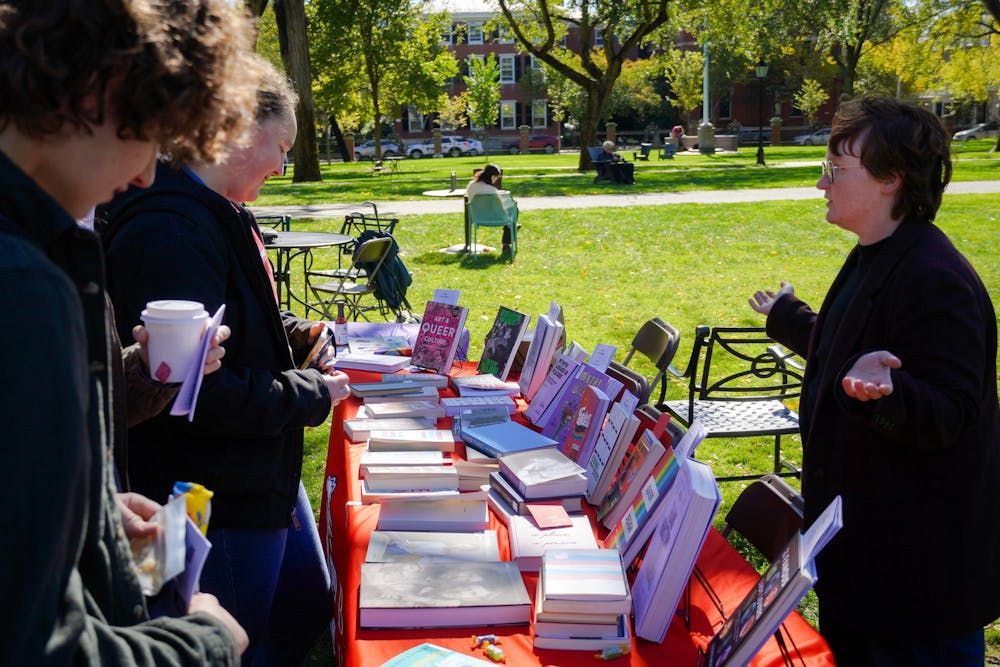
On Thursday, the University Library and the LGBTQ Center hosted a National Coming Out Day celebration on the Main Green.
The event showcased LGBTQ+ materials available at the Library, while organizers distributed zines about how students can access queer materials offered by the Library and other resources. Attendees took photos with a rainbow-painted closet door, referring to the idea of “coming out of the closet.”
“There’s a lot of disparity between coming out stories, and I feel that it’s important to acknowledge every single one, so I’m glad that there’s a day especially for it,” said Aimee Gutierrez Carmona ’28, an event attendee.
Assistant Director of the LGBTQ Center Keri McDonough celebrated their first National Coming Out Day in college. “It was the first time I had the opportunity to be part of a community with other LGBTQ peers,” McDonough wrote in an email to The Herald. “It is really fun to see here at Brown. We celebrate with a physical door, just as I did 20 years ago.”
Coming out “can be messy,” said Leo Lovemore, Brown’s librarian for history, society and culture. “It can happen over and over and over again in different places and different ways.”
The zines that were distributed highlighted a number of databases accessible to students, such as the Queer Pasts collection — which includes materials on global queer history — and the John Hay Library’s Global Lavender Voices collections.
During the event, passersby could also interact with books on gender and sexuality that are typically found in the John D. Rockefeller Jr. Library, such as Susan Stryker’s “Transgender History: The Roots of Today’s Revolution” and adrienne maree brown’s “Pleasure Activism: The Politics of Feeling Good.”
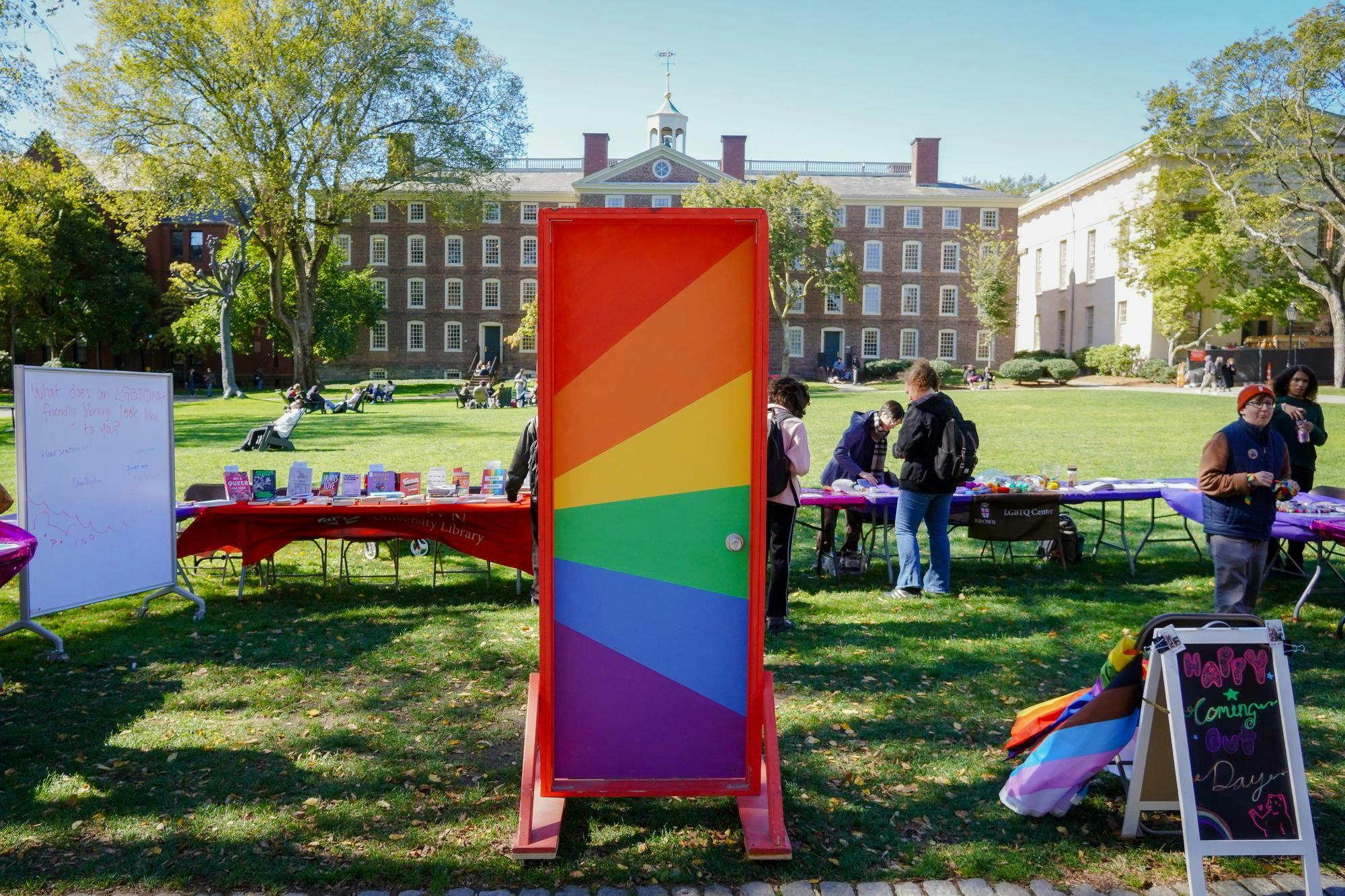
Attendees took photos with a closet door painted rainbow, referring to the idea of “coming out of the closet.”
When Anthony Boss ’25 worked as an archivist for the LGBTQ Center and the Hay during his time at Brown, the commonplace books used by queer Brown students in the ’80s and ’90s often stood out to him.
“It’s just such a really unique and important resource because a lot of queer histories are not told through our own voices,” Boss said. “So the fact that these exist — that it’s people actually speaking about their own experiences directly — is really cool.”
Director of the LGBTQ Center Caitlin O’Neill emphasized the importance of collaborating with the Hay to make campus archives more available to students. “In fact, we began the process of turning over our center archive to the Hay in order to better preserve what we had collected and to make the collection more accessible,” they wrote in an email to The Herald.
“Making this history accessible and then sharing it is super important for queer people to know what we’ve been through and know what we fought for,” Boss said.
Outside of Brown, queer resources can also be found in the Providence Public Library and the Wanderground Lesbian Archive/Library located in Cranston, Lovemore noted.
Lovemore is excited for the Brown community to engage with these materials and “develop new research methods.” Currently, Lovemore is collaborating with Associate Professor of History Emily Owens to explore gay and lesbian studies at Brown, using the collections “to amplify that potential work.”
The Library also plans to host an exhibition on the Global Lavender Voices collections in spring 2027 to display the “broadness of these collections” and “highlight the global aspect,” Lovemore added.
“I know we can commit to leveraging our resources … toward both the issues that affect queer people right now, as well as the networks of care that queer people are already building,” Lovemore said. “I really hope that the work we’re doing at the Library will help people discover new methods for finding that connection at Brown.”

Ivy Huang is a University News and Science & Research editor from New York City. Concentrating in English, she has a passion for literature and American history. Her favorite authors include Marilynne Robinson, Vladimir Nabokov, and Toni Morrison. Outside of writing, she enjoys playing basketball, watching documentaries, and beating her high score on Subway Surfers.