Two weeks ago, a Rhode Island judge ruled that a policy instituted by the National Endowment for the Arts violated the First Amendment. The NEA policy, which determines the amount of federal funding that artists receive, disfavors artists who express or promote “gender ideology” in their works. According to the lawsuit, projects that fall under this category would be less likely to receive funding.
The American Civil Liberties Union of R.I. filed the lawsuit in early March on behalf of Rhode Island Latino Arts, National Queer Theater, The Theater Offensive and the Theater Communications Group, The Herald previously reported. The lawsuit came after President Trump issued an executive order describing gender ideology as a “false claim” that “replaces the biological category of sex with an ever-shifting concept of self-assessed gender identity.”
Since the policy was instituted, the ACLU has been concerned with potential First Amendment violations, prompting the group to file a lawsuit, wrote Steven Brown, executive director of the ACLU of R.I., in an email to The Herald.
“The First Amendment generally prohibits the government from discriminating against speech on the basis of viewpoint, but that is precisely what this grant restriction did,” Steven Brown added.
In their prosecution, the ACLU argued that “without Congressional sanction, artistic projects that express a message the government does not like will be disfavored, no matter how excellent or meritorious they are.”
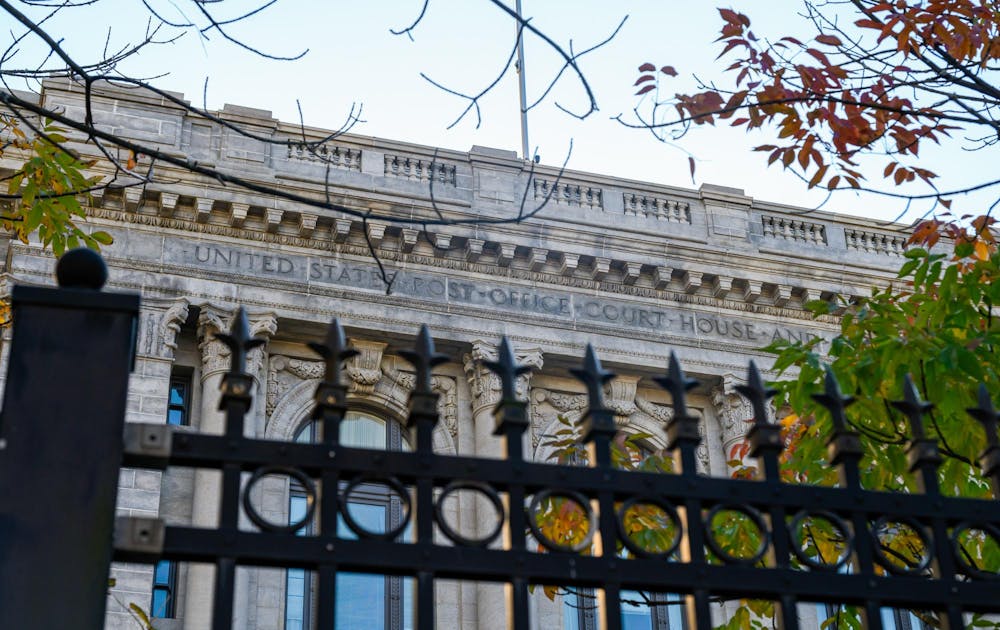
This was echoed in the decision of U.S. Senior District Court Judge William Smith, who ruled that the NEA’s funding allocation process violated both the First Amendment and the Administrative Procedure Act, which governs how federal agencies create regulations.
Following the ruling, “the NEA is barred from considering gender ideology in making its grants” and can no longer require organizations to certify that they will not promote gender ideology, Steven Brown noted.
The arts organizations involved in the suit expressed relief after the ruling was announced.
This development “sends a powerful message … on restrictions around gender ideology,” said Emilya Cachapero, co-executive director of national and global programming at the TCG. “We hope the courts will continue to uphold artists’ rights to tell the stories they choose.”
An NQT statement shared with The Herald conveyed a similar sentiment: “As artists we are redoubling our commitment to protecting our First Amendment right to free expression and standing firm against any form of censorship.”
Marta Martínez, executive director of RILA, told The Herald that the decision “affirms that artistic and cultural expression cannot be censored or penalized based on identity.”
“This ruling protects the freedom to tell (those) stories authentically,” she added.
Still, many of the organizations expressed apprehension about the future of artistic freedom, given the government’s ability to appeal the ruling.
Steven Brown stated that a decision in favor of the NEA would have a “chilling effect on artists and artistic freedom.” Many arts organizations are still afraid of this outcome, he said, adding that organizations “have to wait and see” if the government will appeal.
Cachapero explained that the government’s definition of gender ideology is part of a larger ongoing attack on initiatives relating to diversity, equity and inclusion, and that the TCG’s “concern is that the government may introduce new restrictions in future cycles.”
While hesitant, the TCG hopes that “this ruling creates long-term protections for artists and organizations, and that it emboldens (theaters) to tell their stories fully,” Cachapero added.
“We work with artists from countries that imprison their citizens who speak freely about gender and sexuality,” the NQT wrote. “To face such infringement here at home is deeply un-American.”

Alice Xie is a section editor for Science and Research from Los Angeles, California. She studies Applied Mathematics and Biology, and enjoys reading gut wrenching literature in her free time.