
Eight years ago, I first encountered the writings of Jhumpa Lahiri. Last Monday, Lahiri visited Brown to lead an undergraduate seminar and participate in a public conversation. My experience that afternoon felt circular: The author whose work had once shaped my early understanding of creativity had returned to expand it.
The world has persistently defined Lahiri in narrow terms. She has been cast as the voice of the Indian-American experience, the representative of a “community” and a symbol of diversity within the literary field. Those labels, though well-intentioned, are also reductive. They treat her writing as a cultural phenomenon rather than an act of imagination.
During her seminar, Lahiri commented on the idea of “relatability.” Though she’s often told that her stories resonate with children of immigrants, she doesn’t see relatability as central, or even relevant, to the project of literature, she said. If she had only read books she could recognize herself in, she added, she might never have discovered personal meaning in fiction at all. Literature, for her, is not a mirror but a bridge that allows one to cross into another life, another consciousness or another world. What makes Lahiri’s writing compelling is not its relatable nature, it is her ability to capture the human mind and soul beyond exterior labels.
Listening to Lahiri speak about the criticism she faced for choosing to write in Italian rather than English, I was struck by how selfishly the Anglosphere has treated her. The public has tried to interpret her, to box her in and to claim ownership over her stories. Again and again, she’s been asked to explain herself. And no answer she gives ever seems to satisfy, because people aren’t looking for truth: They’re looking for confirmation of their own idea of who she’s supposed to be, not who she actually is as a writer. Creativity often becomes political whether the artist intended it or not. But writing should not have to serve anyone’s agenda.
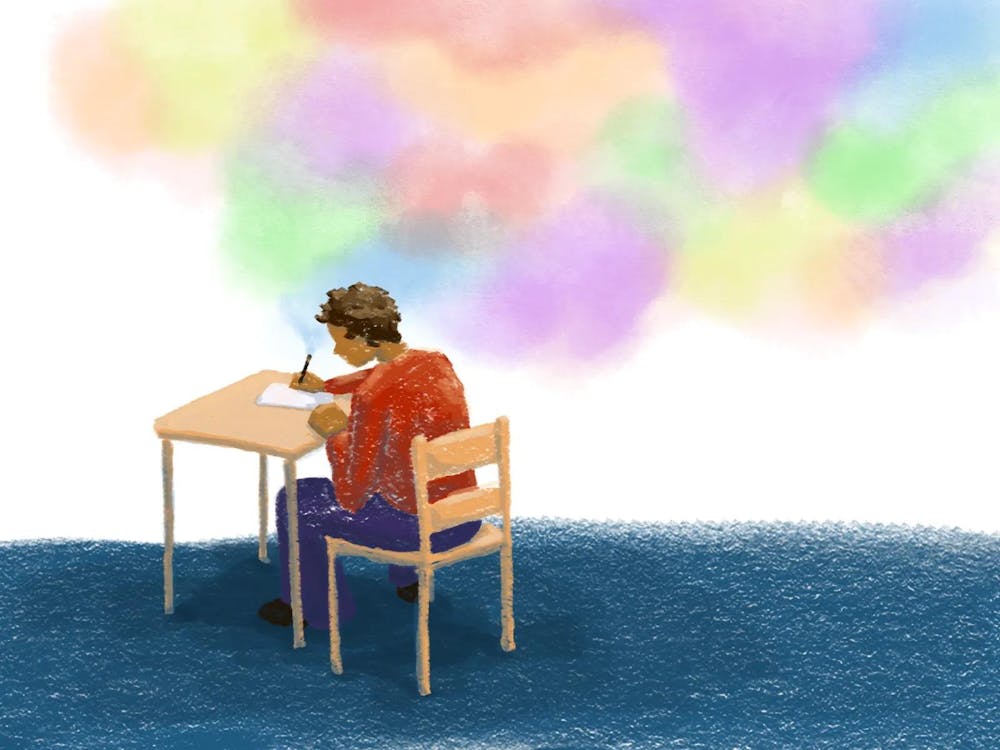
In its truest form, the act of writing is one of the few human activities that can exist outside of validation, approval or consensus. Writing begins in solitude, before the audience enters the room. It requires no permission to begin and no justification to continue. It is an act of autonomy where one can decide for oneself what deserves attention, what deserves language and what deserves permanence.
To write is to be radically free. It is to insist that expression itself, not its reception, is the point. And in that freedom, we come closest to what it means to be fully sentient, alive beings.
Radical freedom is not rebellion, which remains dependent on what it resists. Radical freedom is quieter and more difficult because it is the decision to think, live and create without defining oneself against anything at all. It’s the ability to exist outside the frameworks that require explanation or conformity.
That kind of total freedom can feel intimidating. To live or write authentically often means stepping away from what is recognizable. It requires faith that meaning does not need to be understood to be real. That ambiguity also holds immense possibility. Every time I write, I rediscover that I can begin again. I can transform, contradict myself and still remain whole.
The world will always try to make sense of us, to assign categories and determine intentions. But creative writing offers a refuge from that. Lahiri’s bravery and resistance sets an example that is both inspiring and promising for writers everywhere.
Meher Sandhu ’25.5 can be reached at meher_sandhu@brown.edu. Please send responses to this column to letters@browndailyherald.com and op-eds to opinions@browndailyherald.com.


