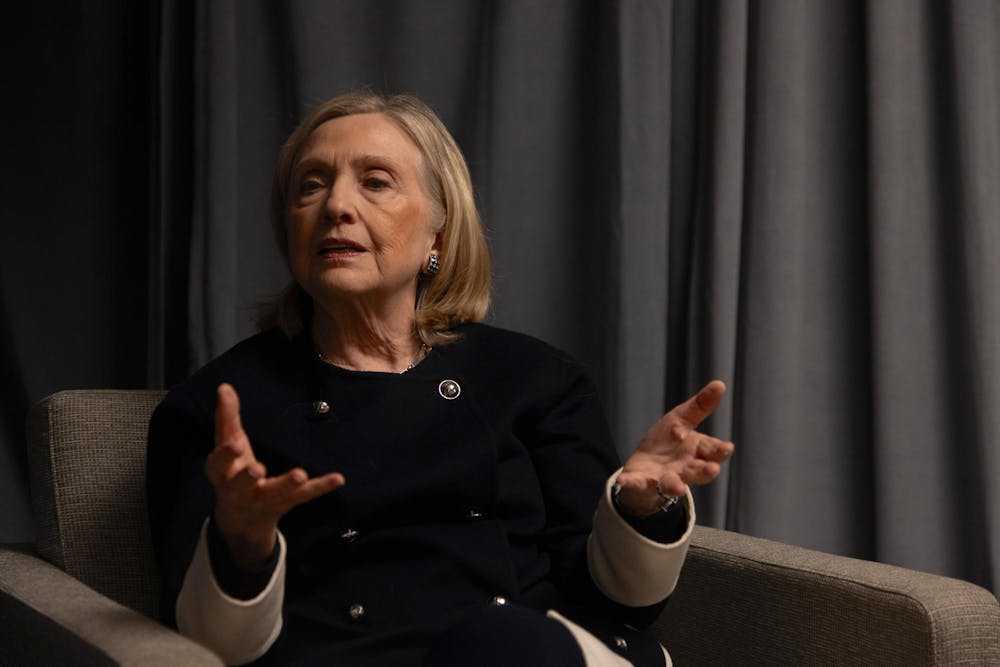
In the last few weeks of her 2016 campaign against Donald Trump, then-presidential candidate Hillary Clinton delivered a stark warning to a Florida crowd: Trump’s “final target is democracy itself.”
Now, nine years later — and nine months deep into President Trump’s second term — Clinton and other prominent Democrats are decrying the president’s actions, many of which the Democratic Party views as eroding American democracy.
Before delivering the 104th Stephen A. Ogden Jr. ’60 Memorial Lecture on International Affairs, the former secretary of state sat down with The Herald to explain her perspectives on the state of higher education, the future of the Democratic Party and the role young voters play in preserving democracy.
The tumultuous landscape of higher education
Since Clinton last visited Brown, the state of higher education has changed significantly, she said.
“We’re in an entirely different world, and I don’t say that lightly,” Clinton told The Herald.
In the first nine months of his second term, Trump has launched a barrage of attacks against Brown and other higher education institutions.
To Clinton, the original goal of higher education “was not just to create scholars, but to create good citizens, to create productive members of society.”
But now, as colleges increasingly emphasize students’ career prospects, Clinton said higher education has “gone so far in the direction of utilitarianism,” pointing to the rising costs of pursuing a college degree. “It reflects the churn in society and the economy.”
Clinton hopes that instead of just preparing students for the workforce, higher education institutions can find a balance between their scholarly and practical aims and cultivate students’ intellect.
Her visit comes shortly after the University rejected the Trump administration’s “Compact for Academic Excellence in Higher Education.”
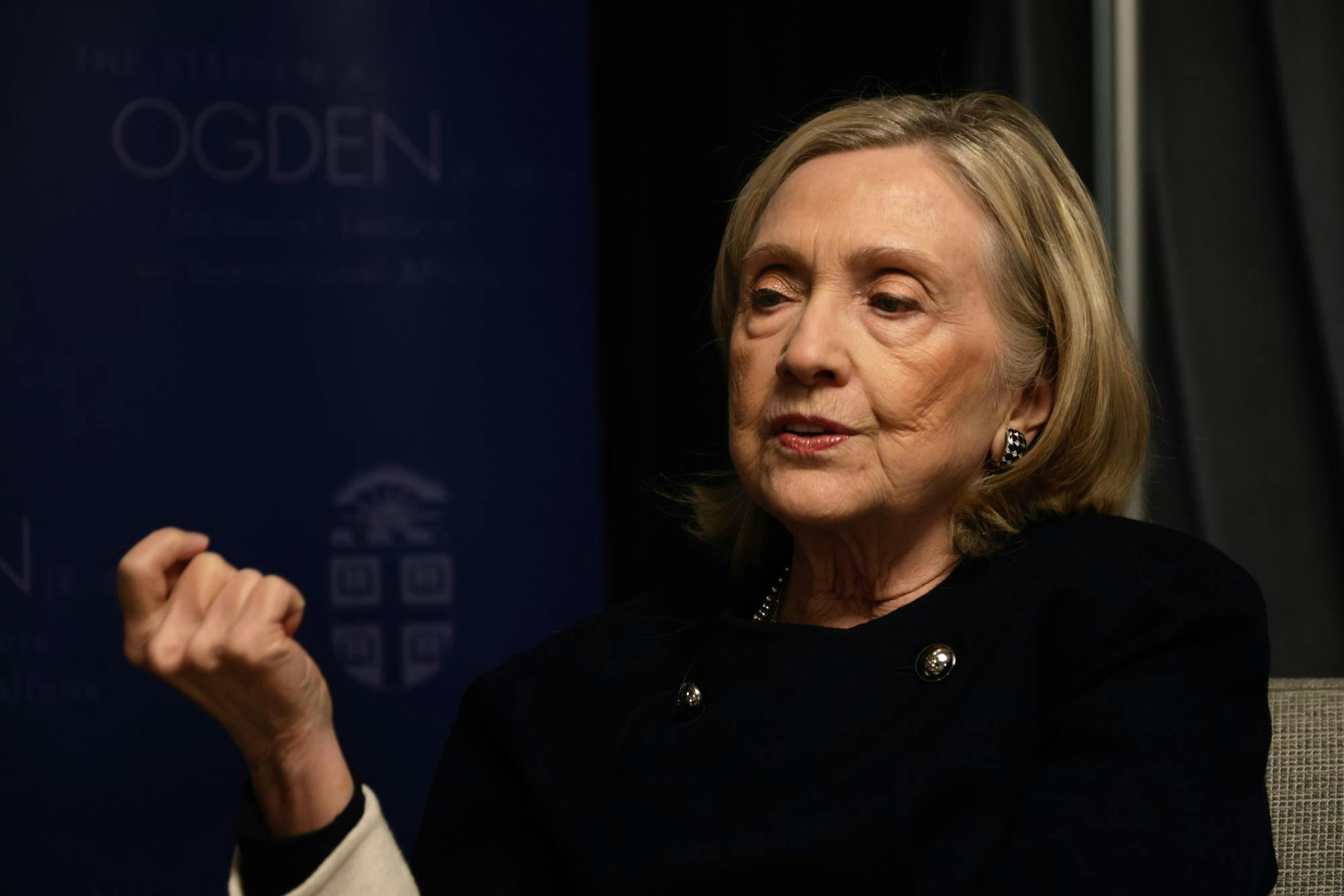
“In order to protect (academic freedom), we have to do a better job explaining and defending it,” Clinton said.
While Clinton praised the decision, she encouraged Brown and other universities to partake in a “time of reflection” on what has made institutions “vulnerable” to attacks from the federal government, as well as what academic freedom truly means.
“In order to protect (academic freedom), we have to do a better job explaining and defending it,” Clinton said.
College as a time of change
During her first year as an undergraduate student at Wellesley College, Clinton was president of the Young Republicans club, strongly influenced by her family’s Republican views.
In high school, “those of us that were sitting in the classroom were largely … parroting what our parents said,” Clinton recalled.
But for her, college was different.
“I changed my political affiliations, so by the time I voted, I began voting for the people who I thought more represented the country I wanted to live in,” Clinton told The Herald.
Clinton’s four years at Wellesley pushed her to learn “to articulate (her) point of view,” she said. As she grew to understand the political context behind the Civil Rights Movement and the Vietnam War, Clinton was compelled to reevaluate her political alignment.
She urged students, now more than ever, to be “smart consumers of information.” This, she believes, cannot happen on social media platforms which she said contain “mis- and disinformation.”
“Sadly, the Trump campaign is quite effective in sowing mistrust and sowing divisiveness,” she added, “and people get sucked into that.”
The White House did not immediately respond to a request for comment.
Why voting is crucial
As a current professor of international and public affairs at Columbia, Clinton has witnessed firsthand the protests and upheaval on college campuses, as students have objected to the Israel-Hamas war and federal attacks on higher education.
But Clinton believes that voting is the most effective way students can spark political change.
“If young voters don’t vote in high percentages, nobody will pay attention to them,” Clinton told The Herald. “They can protest, they can write angry letters and columns or do whatever they want to do. But people in politics are going to say, ‘That’s really nice, but it doesn’t matter.’”
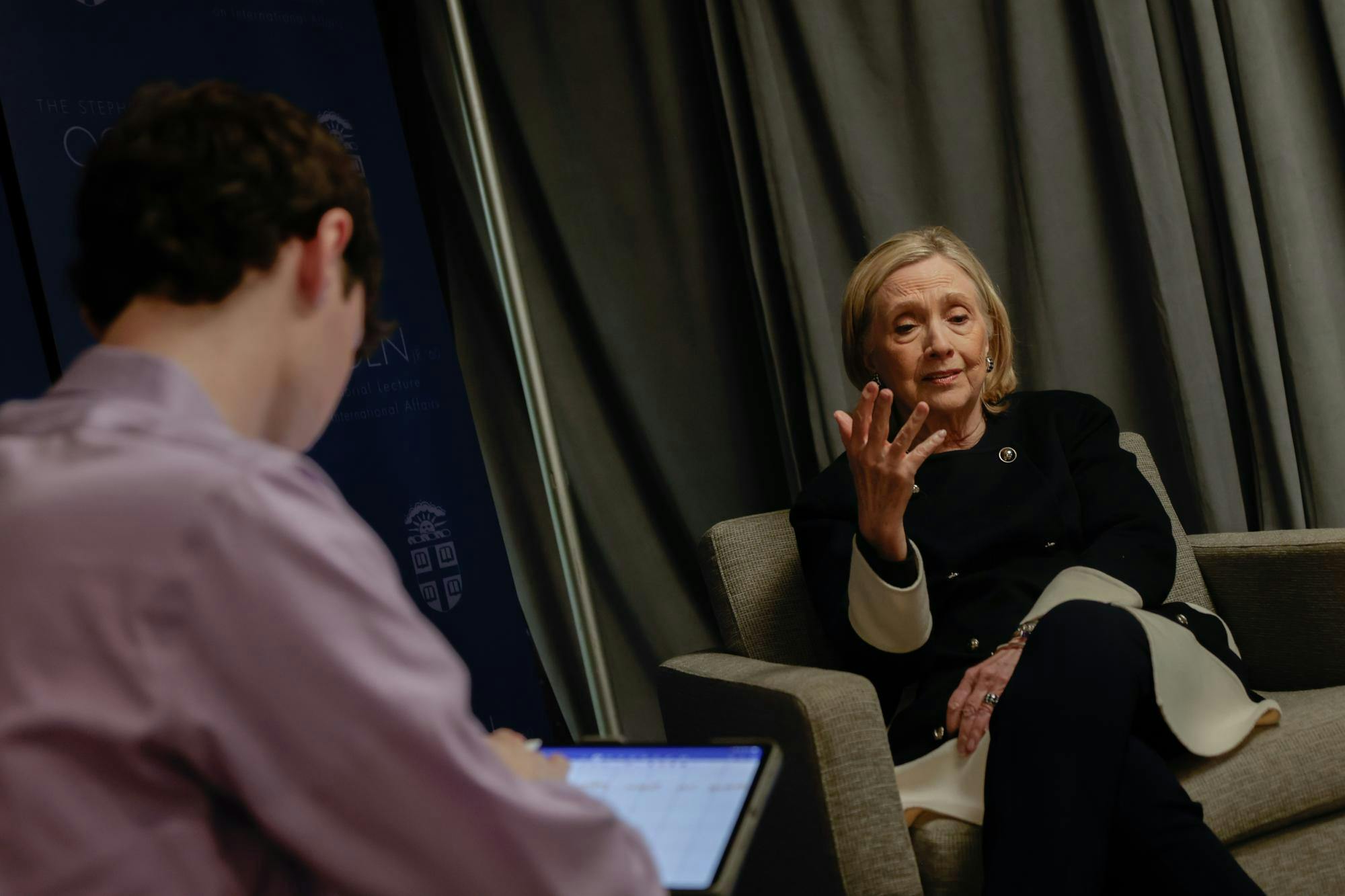
Clinton believes that students now, more than ever, must be “smart consumers of information.”
Young voters, who used to be a historically reliable bloc for Democrats, shifted rightward in the 2024 election. Now, Democrats are grappling with how to win them back.
To Clinton, the solution is clear: The party and its supporters must return to grassroots organization.
“I think we’ve gotten away from organizing by place — and of course we have to organize online, that is essential — but we need much more personal involvement, not just on campuses, but everywhere,” Clinton said.
How Americans can make a difference
During Clinton’s tenure as first lady, she championed health care reform, playing a large role in proposing the Health Security Act of 1993 that hoped to establish universal health care coverage.
But the plan was never passed — a fact she attributed to the work of special interest groups.
“Organized groups that know what they’re talking about will always have more influence,” Clinton said. But “even if they don’t know what they’re talking about — if they act like they know what they’re talking about — they can have outsized influence.”
Still, Clinton believes that incremental progress can be made toward reform if advocates just “stick with it.”
After the Health Security Act failed to pass, Clinton pivoted to supporting the Children’s Health Insurance Program, which was successfully established and still provides medical coverage to Americans to this day.
“Making change in American politics is supposed to be hard,” Clinton said, citing the separation of powers and the checks and balances embedded in the Constitution. “What we’re seeing with Trump, who is blowing through all of these constitutional and legal safeguards, is someone who wants to impose their own views on people.”
In her conversation with President Christina Paxson P’19 P’MD’20 during the lecture, Clinton discussed the value of building relationships with hostile foreign governments and how citizens can combat online misinformation and disinformation.
As the lecture closed, Clinton encouraged attendees to educate themselves and vote on their values to protect an important tenet of America’s political system: democracy.
“Reform it, yes. Modernize it, yes. Figure out how to better run it, yes. But don’t lose it, and most importantly, don’t give it up,” Clinton said at the event. “So, vote — for people who will look out for your interests, but also to protect our incredible democratic experiment.”

Ian Ritter is a university news and science & research editor, covering graduate schools and students. He is a junior concentrating in chemistry. When he isn’t at The Herald or exploding lab experiments, you can find him playing the clarinet or watching the Mets.