
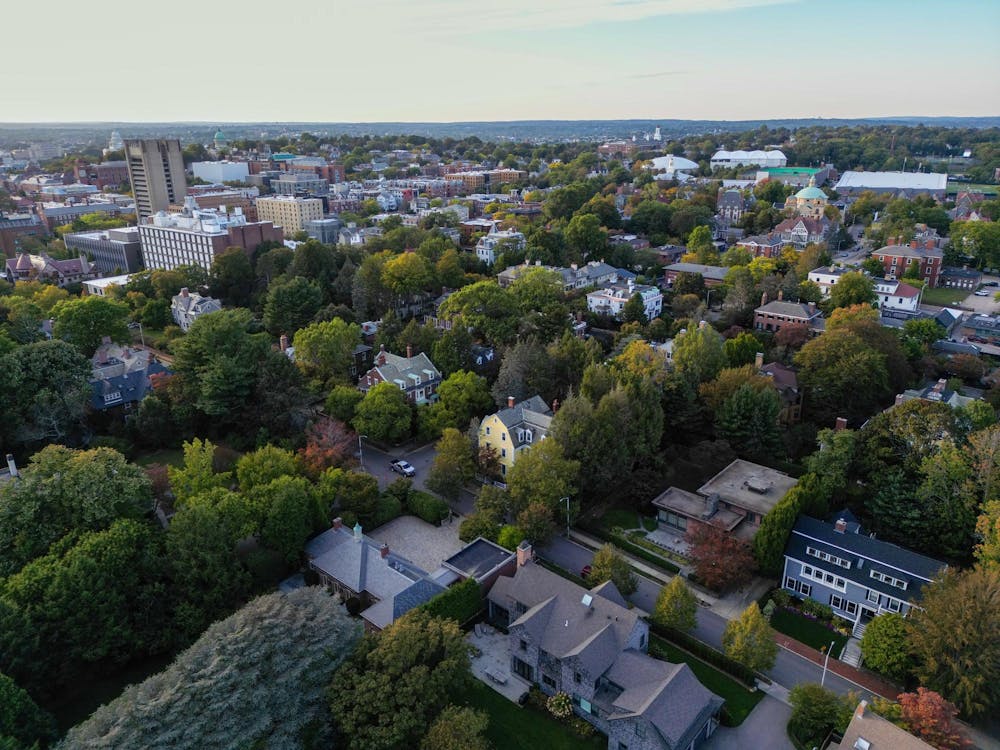
Providence was recently ranked the least affordable city for renters in America. To address the cost-of-living crisis, the Providence City Council plans to embark on an ambitious housing and affordability agenda. One proposal on the table is a Student Impact Fee, which would require college students living off-campus to pay a $300 annual tax to the city. Such a fee, the City Council says, would represent students’ contribution to “essential city services” such as emergency response and street maintenance. In reality, though, the tax is a discriminatory policy that scapegoats college students for the city’s affordability crisis and would fail to meaningfully lower housing prices. Students and the University must oppose this proposal.
Proponents of the ordinance argue that college students benefit from public services, yet don’t pay their fair share of taxes. However, this argument fails to consider that all renters, including students living off-campus, pay property taxes to the city indirectly via their rent. But the fee is only applied to student renters. Furthermore, by paying tuition, students also indirectly support the city through the University’s voluntary commitment to pay Providence $175 million over the next 20 years. Students and the University are a vital part of Providence; the proposed tax is an insult to this collaboration.
The difference between students and other residents, some councilors argue, is that students burden their neighbors with rowdy parties. While it is true that some college students throw parties that are shut down by the police, if the City Council is concerned about specific renters who violate the city’s noise ordinance, then individual fines should be administered rather than creating a blanket policy for all students. The proposed fee amounts to a poorly targeted collective punishment. If a Brown student subject to the fee were to drop out of college, they would then be exempt from the tax, despite still living in Providence and utilizing the same city services. Why should individuals choosing to further their education be penalized?
City council members are not entitled to decide which residents are valued members of our city. However, because students have the option to vote in their home states, council members may have less electoral incentive to consider student interests, making us uniquely vulnerable to attack by the City Council. This makes it especially important that the University stand up for its students and take a strong position against the ordinance.
Instead of targeting those who are seeking to earn their degree, the City Council should go after the corporate landlords who are buying up an increasingly large portion of the local housing market. In recent years, real estate firms buying single-family and multifamily homes have become a major driver of deteriorating housing affordability nationwide. These corporate acquisitions reduce competition, driving rents upward. If the City Council is serious about solving the affordability crisis, it should pursue measures that address the housing market’s underlying issues — market consolidation and an inadequate supply of new housing.
The Student Impact Fee does none of these things, but rather further alienates students from the rest of the city. The interests of Providence and its students are not in conflict — both groups are being priced out in the same market. We urge students and the University to oppose this proposal, and hope the council finds more effective ways to address affordability.
Editorials are written by The Herald’s editorial page board, and its views are separate from those of The Herald’s newsroom and the 135th Editorial Board, which leads the paper. A majority of the editorial page board voted in favor of this piece. Please send responses to this column to letters@browndailyherald.com and other opinions to opinions@browndailyherald.com.


