
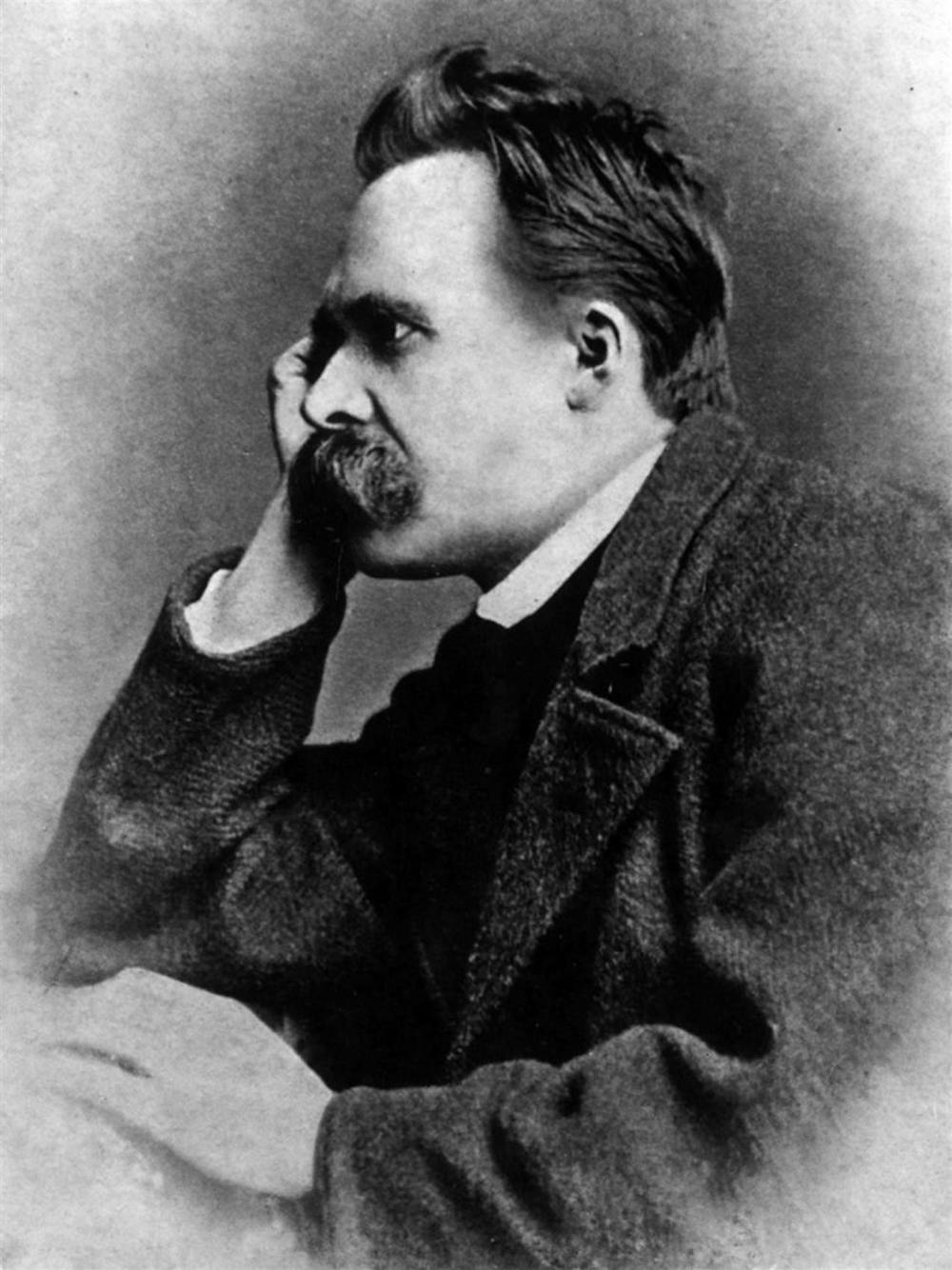
Few philosophers have been more misunderstood than Friedrich Nietzsche. While his more flamboyant assertions — like his claim that God is dead — are crucial to understanding his work as a whole, discussion about Nietzsche is often limited to these statements alone. Among his more profound teachings, his claims about the “will to power” — what the philosopher sees as the driving force in humans — stand as a poignant and uniquely relevant guide for Brunonians navigating the Open Curriculum. We are taught by Nietzsche to “live dangerously.” At Brown, we have the opportunity to do just that.
Brown itself asserts a commitment to a “spirit of free inquiry” in its mission statement. The Open Curriculum is explained as pushing students to be “intellectual risk-takers.” President Christina Paxson P’19 P’MD’20, in her first convocation, urged students to demonstrate “constructive irreverence,” which she praises as Brown’s “distinctive approach to learning and to life.” Taken holistically, Brown is a university where students have the opportunity to cast aside tradition and discipline to instead pursue knowledge for the sake of knowledge itself. By exploring a breadth of approaches to intellectual study, Brown advocates that education should be useful as well as pleasing.
No one better advocated for this approach to knowledge than Nietzsche. Embedded throughout his work is a deep commitment to contradiction, questioning and exploration. To Nietzsche, it is essential that we “send [our] ships into uncharted seas,” and question the discipline which we may find so worthy of praise. We must not slip into blind faith of “good and evil,” for these are only created values of history: Instead we must define our own values of what “good and evil” are in study. To exert a will to power is to liberate ourselves from both internal and external constraints, including the limitations we place on our abilities. By emphasizing academic exploration through the Open Curriculum and the Satisfactory/No Credit option, Brown not only pushes students beyond the limits of a core curriculum, but also allows them to transcend pre-professional pursuits.
However, Brown students are failing to live up to the freedom afforded by the Open Curriculum. A quarter of students are not taking courses outside of their intended concentration. Despite learning within a system designed to foster curiosity and exploration, one in four students have instead approached the Open Curriculum as a tool to refine “enduring habits.” Typically, a concentration cannot exceed 20 total concentration courses. For a Bachelor of Arts, the total number of concentration courses cannot exceed 10. A student who has 20 concentration credits to complete and takes 32 courses at Brown should still have space in their schedule for one or two non-concentration courses per semester.
Nietzsche, too, emphasized the importance of doctrine and discipline found in the student who limits themselves to only their concentration courses. This is what he outlines as the spirit who “kneels down like a camel wanting to be well loaded” with knowledge. They feed “on the acorns and grass of knowledge” before entering into the desert. However, it is only through the process of questioning, which broad exploration offers, that the spirit can metamorphosize into the lion who opposes the discipline of pedagogy the camel once took up. The lion takes classes on the basis of “‘I will,’” not “‘thou shalt.’” Finally, when one overcomes even their own beliefs — those “I wills” of the lion — can they embody the innocent spirit of the child. Only in this innocent self overcoming, made possible living dangerously, is one able to play “the game of creation.”
To best live up to the promises of a Brown education, it is essential that we envelop the spirit of the child. The best way to live up to this maxim is by nurturing brief habits: small undertakings that strengthen our muscles to question our immediate areas of study. For an applied mathematics concentrator, this may mean taking a course on moral philosophy. In the case of those who study comparative literature, perhaps a class on computer science would be best advised — an unassuming language to master. What is essential is that you are acting as the architect of your education: one who commands themself to study broadly.
As pre-registration begins, there is no better time to question whether we are studying dangerously. While shopping period gives you the chance to test out what classes you find interesting, it is now that you decide which classes will fall on that list. Skim through the entirety of Courses@Brown at least once, and think deeply about what courses you are willing to entertain. Once you are certain, doubt — for one must always doubt themselves to avoid living with regret. Only by preventing yourself from being comfortable can you truly claim to have willed yourself to master your educational freedom.
Avery Kaak ’29 can be reached at avery_kaak@brown.edu. Please send responses to this column to letters@browndailyherald.com and other opinions to opinions@browndailyherald.com.
Avery Kaak is a columnist for the Brown Daily Herald. He is from Orlando, Florida and is planning on concentrating in philosophy. In his free time he enjoys reading and running.


