As winter approaches and temperatures drop, Rhode Island residents using the bus may encounter longer wait times as a result of the Rhode Island Public Transport Authority’s service cuts.
On Sept. 27, RIPTA decreased service on 45 routes, and months later, many local riders are feeling the impacts of these cuts.
“The cuts were really drastic,” said Amy Glidden, co-chair of Rhode Island Transit Riders, a public transit advocacy group. “There are 10 routes that lost some or all of their weekend service,” she added.
“The top complaint that I've been hearing from riders is overcrowding on buses, even to the point where they are not getting picked up because a full bus is driving by them,” Glidden said.
The service reductions have had an “almost unilateral” impact on Rhode Islanders, Glidden added, but she mentioned that unhoused populations are disproportionately impacted due to a reliance on public transit.
RIPTA is reviewing data on how the service reductions have impacted ridership and revenue ahead of 2026, RIPTA Spokesperson Cristy Raposo Perry wrote in an email to The Herald.
According to Glidden, “RIPTA has received the most complaints about the 69 and the 66,” due to overcrowding and reduced service.
“RIPTA has said they’re looking at the issues with (these routes),” she told The Herald.
Beyond overcrowding, the service cuts have also required residents to change their schedules.
The fixed route bus “no longer lines up with when I get out of work, so either I have to leave early or stay late, generally anywhere between a half an hour and an hour and a half,” said Christopher Bove, who rides the RIPTA every day.
Bove, an advocate with the National Federation of the Blind of Rhode Island, has been legally blind since birth and relies on the RIPTA to go to work, see friends and family and attend medical appointments.
“I use both the paratransit service for people with disabilities — the RIde program — as well as the fixed route bus transportation,” Bove added.
“I have not seen any major impacts on the paratransit side,” Bove said.
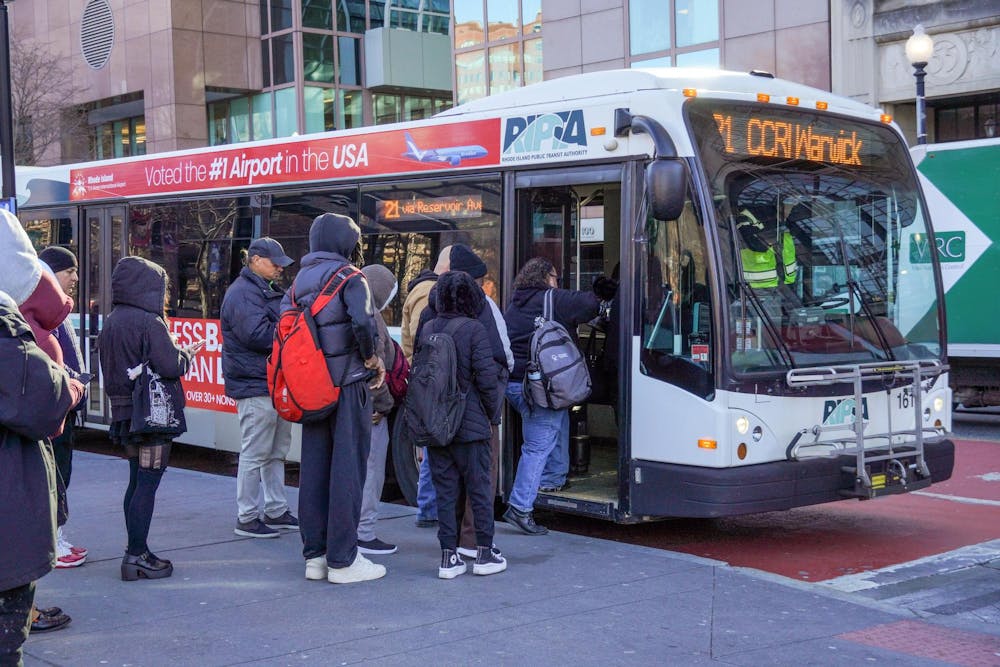
Despite low temperatures and high-speed winds, people still waited for their bus at Kennedy Plaza on Monday.
One of these RIPTA riders was Wyatt Keough, a student at Rhode Island College. Keough said he takes the RIPTA four times a week to get to class, and sometimes on the weekends for work or if it’s too cold to bike.
His regular RIPTA routes have “not really” been disrupted by the service reductions, he said.
But Keough said that “the 92 runs a lot less now,” and if he misses the bus or if the bus gets held up, he has to wait longer for a different route.
The impact of the RIPTA cuts is “definitely going to get worse in the winter because people are having to wait longer for their buses,” Glidden said. “Many RIPTA passengers transfer, and that really compounds the problem.”
Riders who take the RIPTA often take it out of necessity, Bove explained. “Who would choose to sit on the bus for two plus hours when you could take an Uber or a Lyft and get there in nine or 10 minutes?” he said.
“If RIPTA is going to be the transit agency that the state and its people deserve, it’s going to require an upfront investment in RIPTA so that they can build a network that makes taking a bus a tenable option for people,” he added.
At Brown, student group Sunrise Brown — a local chapter for the national environmental justice organization — is fundraising to improve access to public transportation and support the RIPTA.
Peter Brueggemann ’29, a member of Sunrise’s Creative Communications task force, said the group has three main tasks: “fill the hole in RIPTA’s budget and restore service cuts; win free RIPTA rides for non-college students; and guarantee fast, free and reliable public transit for all Rhode Islanders.”
Sunrise Brown is also selling posters, stickers, t-shirts and other merchandise to raise money and awareness around the service reductions.
“All the money we raise will be used to help unhoused Rhode Islanders pay bus fares,” Brueggemann wrote, adding that “RIPTA service cuts automatically disproportionately affect these populations.”

Pavani Durbhakula is a Metro editor. She is a sophomore from DC and is studying IAPA and Public Health. In her free time, she enjoys baking, reading and searching for new coffee shops.