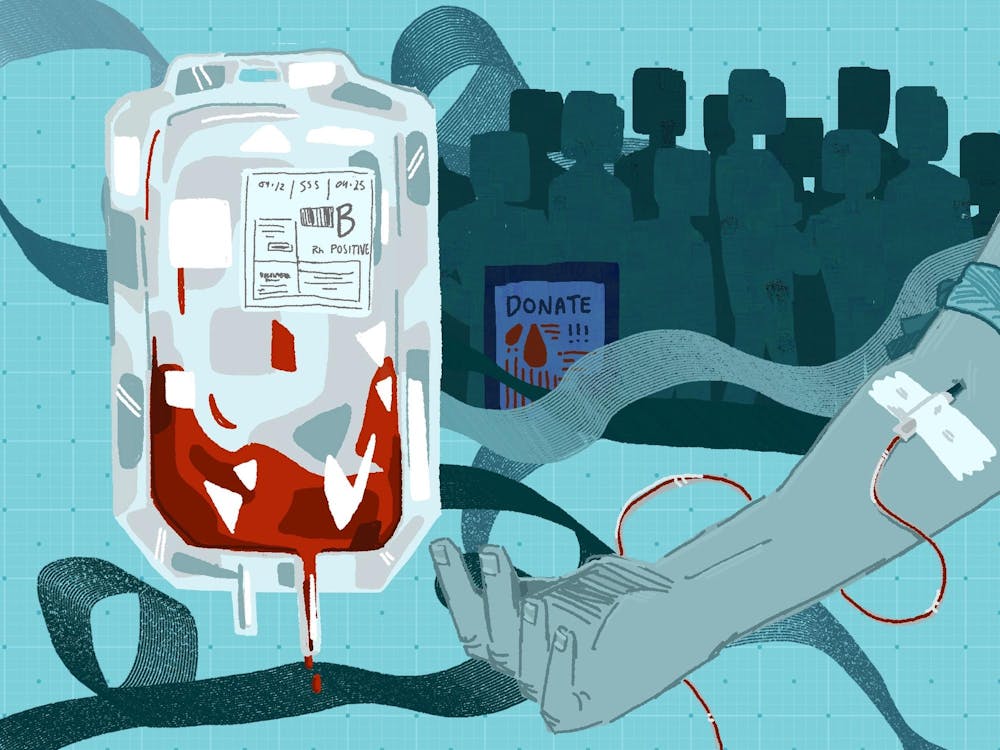
The Rhode Island Blood Center declared a blood emergency on March 5. Nearly two weeks later, this emergency status is still in effect, according to the RIBC’s website.
The blood emergency means that the RIBC has enough blood inventory for “under two days,” according to Hunter Shaffer, the vice president of operations at RIBC. The center typically aims to have a seven-day supply.
In the wake of the blizzard that swept across New England in late February — which paused all on-site operations for three days and mobile operations for a week — the RIBC experienced “a loss of over 1,500 blood products,” Shaffer explained.
As of March 10, the center had a high need for O positive, O negative and B negative blood, Shaffer said. As O negative blood, known as the universal blood type, can be donated to patients with a wide variety of blood types, the center is “always” looking for it, he added.
In a joint statement, Brown University Health spokespeople wrote in an email to The Herald that the hospital system especially needs platelets — cells that are essential for blood clotting — “as well as O positive and negative red cells.”
The RIBC delivers over 90,000 donations annually to over 50 hospitals, healthcare partners and emergency medical services, Shaffer wrote in an email to The Herald, noting that the center “needs more than 1,750 donations each week.”
BUH noted that blood donations can be used for patients undergoing cancer treatments that cause low levels of platelets and red blood cells, sickle cell disease and trauma. These donations are also used during surgery.
Shaffer noted that the current supply may not be enough in the face of an emergency, disaster or mass casualty event.
A donation takes an hour and “can save up to three lives,” Shaffer wrote. Healthy individuals who weigh at least 110 pounds can donate if they are 17 or older, among other requirements. If an individual is 16, they must be at least 130 pounds and have consent from a guardian.
Donations from donors under the age of 30 are particularly needed, as donations from this age category have fallen by 30% in recent years, Shaffer wrote. In 2024, the American Red Cross reported that while 62% of the U.S. population is able to donate blood, only about 3% donate.
The RIBC has called blood emergencies before, with a previous one occurring during the summer of 2025. The current emergency “requires us to be vigilant about our supplies,” according to the BUH statement.
Shaffer explained that since donors are giving a voluntary and “altruistic” donation, the U.S. blood supply fluctuates based on schedules — donations are typically stable when school is in session because blood centers can partner with schools to set up blood drives.
But Shaffer said that donations are necessary year-round, and called them “the industrial lubricant that keeps the great gears of medicine turning.”
Shaffer noted that more women donate blood than men, but women are also more likely to be ineligible to give blood due to restrictions based on hemoglobin levels, height and weight. “We really do need young men … because they’re able to donate at a larger frequency,” he said.
Nava Litt ’29 first donated blood with the encouragement of a friend and thought that “it was just really easy to do.” She continues to do so because “donating blood is just such a clearly and unequivocally effective way to do good.”
Litt said she donates essentially as often as allowed. She participated in the blood drive at Brown-RISD Hillel which was hosted from March 10-11 in partnership with the RIBC.
For those looking to donate, Litt said her advice is drink “two or three cups of water in advance” and eat beforehand. Though the needle can be imposing, she distracts herself with Instagram reels.
“If everyone donates blood in Rhode Island once a year … we wouldn’t have to call these disasters ever,” said Shaffer.
“Simply put, blood donations save lives,” according to the BUH statement.

Kelly Ding is a senior staff writer for the community and culture beat. She is from College Station, TX and plans to concentrate in IAPA on the policy and governance track. In her free time, she loves to explore new coffee shops, curl up with a good book, and be a gym rat.