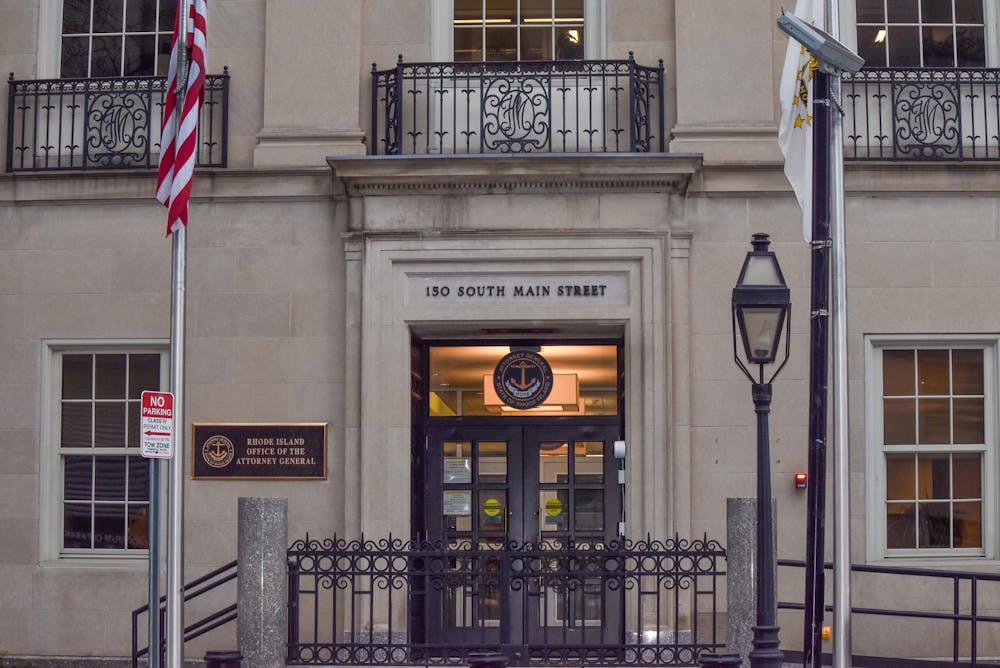
On Oct. 29, the Rhode Island Attorney General Office’s Cold Case Unit announced that it closed its first two cases since its inception in 2023 using DNA technology and a modern understanding of polygraph tests. Both cases were homicides involving female victims — 49-year-old Cynthia McKenna was killed in 2007, and 24-year-old Debra Stone was killed in 1984.
The CCU’s findings will not lead to any charges, as the respective suspects died several years ago.
Timothy Rondeau, a spokesperson for the office of R.I. Attorney General Peter Neronha P’19 P’22, wrote in an email to The Herald that in order to close a case, CCU prosecutors “evaluate all counter points that a defense attorney would likely raise, evaluate all case weaknesses and consider alternative suspects.”
The CCU has documented over 150 cold cases and has 21 active cold case homicide investigations, according to its website.
According to the report detailing the CCU’s investigation, McKenna was originally found unresponsive by a relative in her North Providence apartment on Feb. 21, 2007. Soon after the North Providence Police Department responded to the scene, the state medical examiner ruled the cause of death to be suffocation.
McKenna’s apartment complex manager told NPPD investigators that McKenna was “at odds” with a man named Robert Corry Jr. Corry became a primary suspect after investigators gathered various witness testimony, including attestations that Corry had previously assaulted McKenna and had told one witness that he was going to kill her.
Investigators also obtained two letters penned by “Bob Corry” containing language they believed amounted to a confession. The letters, addressed to an individual who was incarcerated at the Adult Correctional Institution, were intercepted by ACI officials, the report reads.
In 2008, the R.I. Department of Health tested DNA taken from the envelope of one of the letters. While the test found male DNA, it did not produce a match in the Combined DNA Index System — the U.S. national DNA database maintained by the FBI.
When the NPPD and the CCU reopened the investigation in 2024, they found that Corry’s DNA profile was not in the CODIS database, according to the report.
The relaunched investigation attempted to use modern DNA technology to identify Corry as the author of the two letters. Assistant Attorney General Jim Baum, leader of the CCU, explained the process in an Oct. 29 press conference announcing the McKenna case’s closure.
Investigators identified a male relative of Corry and conducted a “trash pull,” retrieving a bottle from the relative’s garbage, Baum explained. Tests indicated a close familial relationship between DNA found on the bottle and DNA found on the envelope containing one of the letters sent by “Bob Corry.”
In addition to the DNA match, a handwriting analyst determined that the letters were written by Corry and investigators secured corroborating information from reinterviewed witnesses. Taken together, the evidence proved “beyond a reasonable doubt that Corry was Cynthia’s killer,” the investigative report reads.
The other case was first opened when the body of Debra Stone was found in Narragansett’s Narrow River on Sept. 2, 1984. The Narragansett Police Department responded to the scene, and the state medical examiner determined the cause of death to be asphyxiation due to strangulation, according to the investigative report.
Robert Geremia was immediately identified as a suspect, as investigators learned that Stone had visited Geremia’s sister’s apartment on Aug. 29, 1984, the day she was last heard from. In an interview with the police on Sept. 6, Geremia claimed that he had brought Stone back to her apartment that night.
But investigators ruled Geremia out after corroborating some of his claims and interviewing multiple other witnesses who claimed to have seen Stone alive on Aug. 31, two days after Stone had been at Geremia’s apartment, the report reads.
In January 1986, investigators found a potential breakthrough: a confidential informant who had been at Geremia’s apartment on the night of Aug. 29 and morning of Aug. 30.
The informant told investigators that he had seen Stone lying still in Geremia’s bed on the morning of Aug. 30. In initial interviews, he said that a friend of his had helped dispose of Stone’s body. Later, he admitted that the so-called friend was a cover for himself, according to the report.
Yet investigators remained unable to bring charges against Geremia because the informant failed one question on a polygraph test about whether he was present during Stone’s killing.
Today, polygraph tests are recognized as unreliable by R.I. courts. However, “back in the ’80s, polygraphs were relied upon much more,” NPD Detective James Wass wrote in an email to The Herald. Accordingly, no arrest was made.
Wass began investigating Stone’s case in 2018 following an audit of the NPD’s evidence room, he told The Herald. In December 2023, Wass heard of the newly founded CCU and requested its assistance in the case.
Along with helping Wass obtain access to evidence from the case, the CCU also assisted in conducting more interviews, Wass wrote. All statements remained consistent, including those of the original informant
Today, the investigators are confident that Geremia originally avoided arrest “due to the strong belief in the polygraph at the time,” Wass wrote.
The combination of case review, reaffirmed witness testimony and modern understandings of polygraph tests led the investigators to conclude that Geremia had committed first-degree murder, the investigative report reads.
The report also notes that the informant cannot be charged for not reporting Stone’s death because the statute of limitations for such a charge has expired.
Jaclyn McKenna, Cynthia McKenna’s daughter, was present at the press conference announcing the closure of the two cases.
“Today, there is accountability,” McKenna said. “Today, we begin to heal.”

Lev Kotler-Berkowitz is a senior staff writer covering city and state politics. He is from the Boston area and is a junior concentrating in Political Science and Economics. In his free time, Lev can be found playing baseball or running around with his dog.