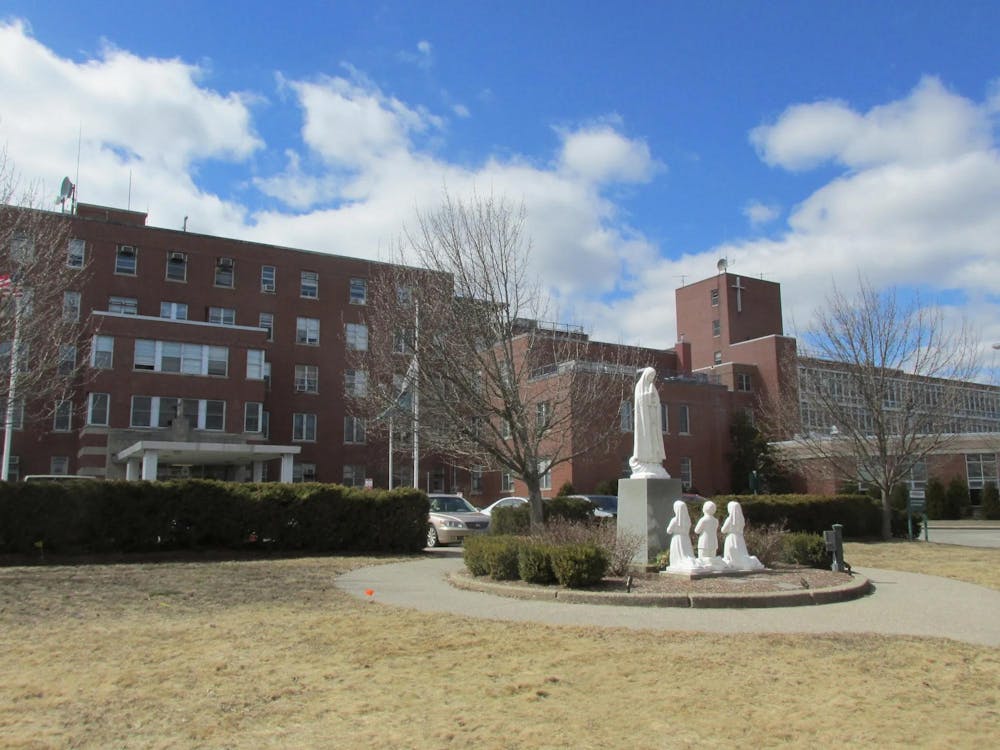
After a yearslong effort to sell two Rhode Island hospitals, the Centurion Foundation — a Georgia-based nonprofit — secured sufficient funding on Wednesday to finance the purchase of the Roger Williams Medical Center in Providence and Our Lady of Fatima Hospital in North Providence.
The foundation received signed bond purchase agreements of over $100 million in financing, R.I. Attorney General Peter Neronha P’19 P’22, Gov. Dan Mckee, the Rhode Island Department of Health, the Executive Office of Health and Human Services and Rhode Island General Assembly leadership wrote in a statement emailed to The Herald.
By returning the hospitals to nonprofit ownership, Centurion has estimated that they will save $75 million a year. The Georgia-based organization has never previously owned a hospital.
The agreement represents “significant and necessary progress towards ensuring that our critical safety-net hospitals remain open and able to serve Rhode Islanders,” the state’s statement reads.
Centurion received conditional approval for the purchase in June 2024. But the sale, which was originally meant to be closed in April 2025, has been delayed for nearly a year while the organization struggled to secure adequate funding.
In the meantime, the delay raised concerns of the hospitals shutting down, facing the prospect of state takeover or being sold to a new buyer.
California-based healthcare company Prospect Medical Holdings has long struggled to sell the two hospitals, which see 50,000 emergency room visits annually. Roger Williams also houses the only accredited bone marrow transplant unit in Rhode Island, The Herald previously reported.
In January 2025, Prospect declared bankruptcy amid allegations of not providing adequate medical supplies, underfunding facilities and mismanaging hospitals, The Herald previously reported.
But the R.I. legislature passed a bill in February to provide an $18 million backstop, with funds placed in a state account should Centurion prove unable to make its bond payments.
Centurion had previously secured verbal commitments from investors stating that they could finalize the sale so long as they had the $18 million in backup.
In January, a bankruptcy court judge set a deadline of Feb. 27 for the transfer of the hospitals to Centurion. Neronha plans to file a motion in court on Friday that would extend the transfer date until March 6 to finalize the purchases.
But taking over the hospitals may not be a straightforward process. The hospitals have been losing millions of dollars per year, according to the court filings.
When hospitals are unable to pay bills, they cannot purchase equipment, staff members leave and profits fall further, Emily Shearer, an assistant professor at Warren Alpert Medical School and an attending emergency medicine physician at Rhode Island Hospital, explained.
The two hospitals are in a “downward spiral,” she said.
She added that occupancy rates at both hospitals have fallen significantly in recent months. Low occupancy rates are “quite unusual” in Rhode Island, which has some of the highest occupancy rates in the nation, Shearer said.
Additionally, Prospect — which was under the partial ownership of a private equity firm — was accused of profiting while its hospitals lacked adequate patient-care resources in 2021, The Herald previously reported.
Shearer noted that the phenomenon of private equity companies owning hospitals is occurring on a nationwide scale. “These private equity companies are not interested in patient care. They’re not interested in keeping hospitals sustainable over the long term,” Shearer said.
She added that Roger Williams and Fatima Hospital serve a disproportionate amount of lower-paying patients — which makes them critical as safety net hospitals and less able to weather financial burdens. If the hospitals closed, there would have been “extremely severe system-wide shocks for the Rhode Island health care system,” she said.
Hayden Rooke-Ley, a senior fellow at the Center for Advancing Health Policy through Research, said that “there’s a potentially sustainable path” forward under new ownership.
“A new owner with potentially more competency could possibly help turn things around with the addition of some state support,” Rooke-Ley said.
Correction: An earlier version of this article misstated Emily Shearer’s title. The Herald regrets the error.

Talia is a metro section editor covering the health and environment and community and culture beats. She is a sophomore from Bethesda, MD studying history and international and public affairs. In her free time, she enjoys exploring Providence one wrong turn at a time.