Avery Nettles, a 12-year-old Girl Scout in Providence’s Troop 178, doesn’t remember why she joined Girl Scouts — she has been involved since she was four years old. But now, her favorite part is the time she gets to spend with her friends in her troop — and her favorite cookie is the Thin Mint.
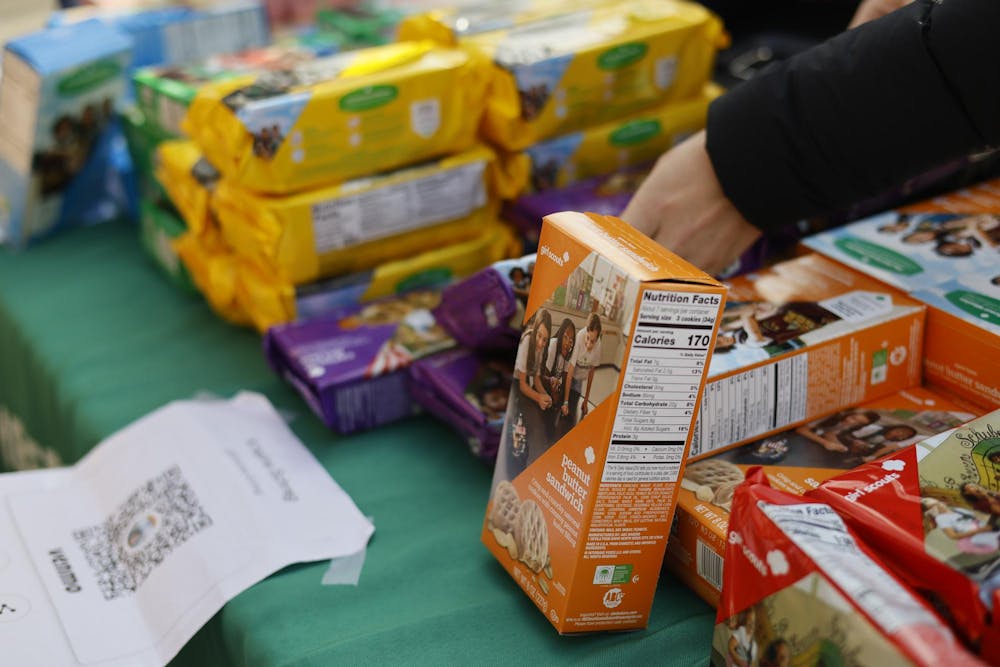
Every year, the Girl Scouts of Southeastern New England, which comprises 4,000 youths, sells hundreds of thousands of boxes of cookies, worth at least around $3 million. With a few weeks left in the 2026 cookie-selling season, the Girl Scouts of Southeastern New England is looking to make up for lost sales due to this winter’s heavy snow.
“It’s been a tough cookie sale this year,” Dana Borrelli-Murray, the CEO of Girl Scouts of Southeastern New England, told The Herald. The first three weekends of sales were impacted by the historic blizzard and other snowstorms this winter, which closed streets and reduced foot traffic.
Troop 178, a Providence Girl Scout troop, is saving their money — which cookie sales help support — to take a trip to Savannah, Georgia “because that’s the birthplace of Girl Scouts,” 12-year-old Eleanor Schrag told The Herald.
“We’ve been trying to do that for a few years,” said Matilda O’Connell, also aged 12 years old. Next year, the Girl Scouts are “good to go.”
Borrelli-Murray said that making up for the slow start in sales will be a challenge, but the business savvy of the Girl Scouts may help the Southeastern New England branch prevail over the snow-related delay.
“We cannot underestimate the power of Girl Scouts,” Borrelli-Murray said. “They are pretty creative and ingenious, and great business people” who employ their knowledge of math and the best places to sell cookies.
Percentages of the cookie revenue go to the Providence Service Unit, the Southeastern New England Council of Girl Scouts, different Girl Scout troops, the bakers and various other costs. Troops can use the money for programming of their choice, which may include activities like camping and rollerskating, Borrelli-Murray said.
Troop 178 has made birdhouses, went to camp in the summer, gone horseback riding and taken a trip to Great Wolf Lodge. The troop also volunteers at events like food and book drives, Schrag said.
“You just get to have a close bond with people in your troop, because you get to go to a lot of places together,” Nettles said. She added that “Girl Scouts has opened up a lot of opportunities” for her, such as making friends with girls in other troops.
O’Connell, who has been a Girl Scout for about six years, said she wanted to start because she “thought it’d be really fun.” Schrag joined Girl Scouts because her “mom’s a troop leader, so I just really kind of got signed up.” But “it was my choice to keep doing it,” she said.
The organization’s original mission was — and still is — “to grow girls of courage, confidence and character who make the world a better place,” Borrelli-Murray said.
The nonprofit organization was founded in 1912 by Juliette “Daisy” Gordon Low, who “wanted girls to be able to have all the same opportunities that boys had, which was a totally radical idea at the time,” said Borrelli-Murray. When Girl Scouts began selling cookies in 1917, women still could not open their own bank accounts, Borrelli-Murray noted.
“They were like, ‘No girls are not going to ask for permission. We’re going to raise our own money to do the things we want to do, so we’re going to sell cookies,’” Borrelli-Murray said.
Now — and when the organization first began — Girls Scouts learn “real-life skills,” which open up “incredible leadership opportunities for kids and for women,” Borrelli-Murray said.
O’Connell said that through cookie selling, she has learned how to manage and budget money.
Though selling cookies is a significant part of the organization’s tradition, Borrelli-Murray said that she strives to “release some of the pressure” on Girl Scouts to sell as many cookies as possible, adding that there are “lots of ways to show up to be a leader.”
“What I do care about is, are you joyous? Did you have fun? Did you make friends? Did you learn some new things? And did you learn how to advocate for things that you think are right?” she said. “That’s what we want for our future.”
Michaela Hanson is a senior staff writer covering community and culture.