When Aidan Simmons, the current herd manager at Gather Farm, was 10 years old, she used to wake up at 5 a.m. to milk her family’s goats.
“She wouldn’t even wake us up to say she was going out. She would just go outside and start doing it,” her father Brian Simmons, owner of Simmons Family Farm, which closed in 2024, told The Herald.
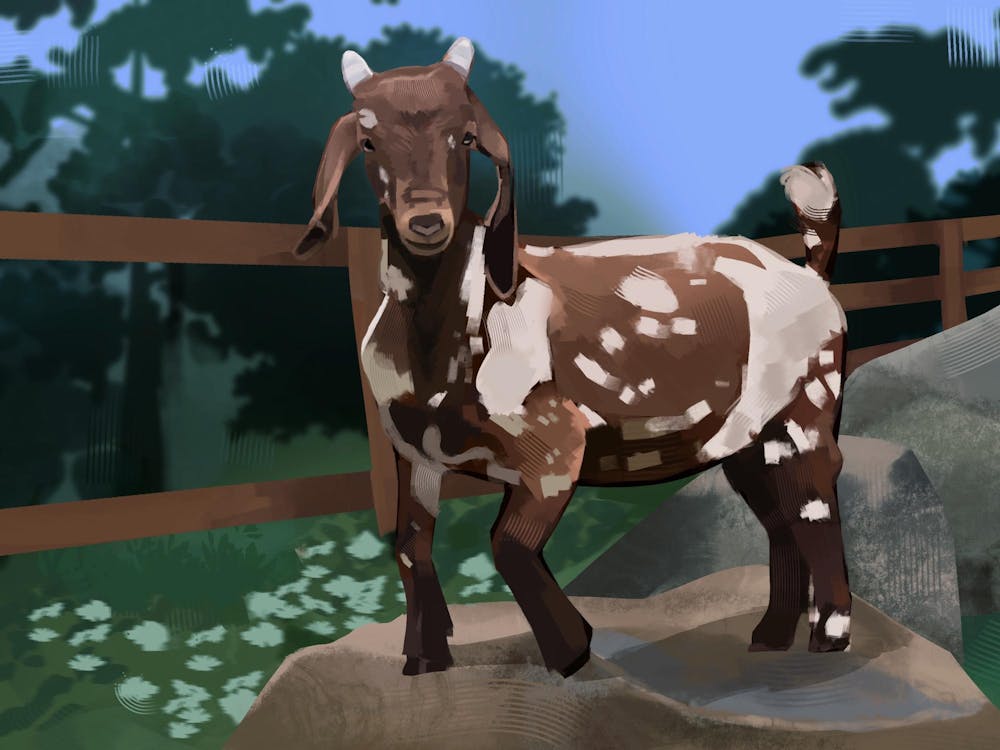
Aidan Simmons told The Herald that her goats are her “babies.”
“They’re my family,” they said. “They have been with me through everything, literally everything, the highs, the lows.”
Her family was one of the first to bring goat farming — which largely consists of breeding and milking — to Rhode Island, Aidan Simmons said. “That is why I continue to be a goat farmer. My parents worked for 25 years doing something incredibly unique.”
Brian Simmons, told The Herald that his family started a goat farm because they “wanted to do something different,” he said.
Goat farming is a distinct niche in the R.I. agriculture industry. In the most recent Agricultural Census data, just 661 goats were inventoried in R.I. The only animal with a smaller inventory was pullets, which are young female chickens.
Meredith Niles, a professor of behavioral and social sciences and environment and society, told The Herald that goats can provide many different benefits.
“Goats are a really versatile animal,” she said. Because they eat a lot of weeds, goats can serve as alternatives to herbicides or other chemicals.
Goats can also contribute to a farm’s agritourism, which is “increasingly really important for especially small farms,” Niles said.
Gather Farm hosts agritourist opportunities like “goat hikes” and “pet-and-cuddle” sessions, which are also beneficial to goats. The hikes stimulate “the goats in a social, emotional and physical way,” Aidan Simmons said.
But she said that goat farming does not come without its challenges.
Every goat farmer Brian Simmons knows has gone out of business, he said.
Aidan Simmons believes that goat farming is not particularly common in Rhode Island “because it’s hard.”
The pandemic was a particularly difficult time. Simmons Farm saw a decrease in goat cheese purchases because they were no longer able to offer samples at the farmer’s markets.
“People that had bought our cheese either forgot that they liked it or weren’t coming to the markets at that time,” he said.
Goats can be more difficult to milk than cows, according to Brian Simmons.
When his grandfather was working at a dairy farm with about 60 cows, “those cows knew exactly which stanchion to go into every day. You didn't have to do anything,” he said. But, “when we’re milking goats, you’re chasing half of them down. They do not want to come in.”
March would already be a busy month for Aidan Simmons — six of her goats are due to have their babies in the next month — and last week’s historic blizzard caused some “stressful times,” she said.
During the snowstorm, Aidan Simmons spent over 14 hours in the barn, watching the goats bond and support each other.
“It did literally make me cry happy tears,” they said. “One of them would get scared, and a couple others would come over, kind of huddle up with them and just nibble on each other’s collars or rub their faces against one another.”
“This is the year of perseverance and resilience, and this winter has really, really been putting that to the test,” Aidan Simmons added. “Not only are my goats resilient, but they have so much love in their heart that it kind of balances out the really, really hard times.”

Ava Stryker-Robbins is a sophomore and a Metro editor at The Herald.