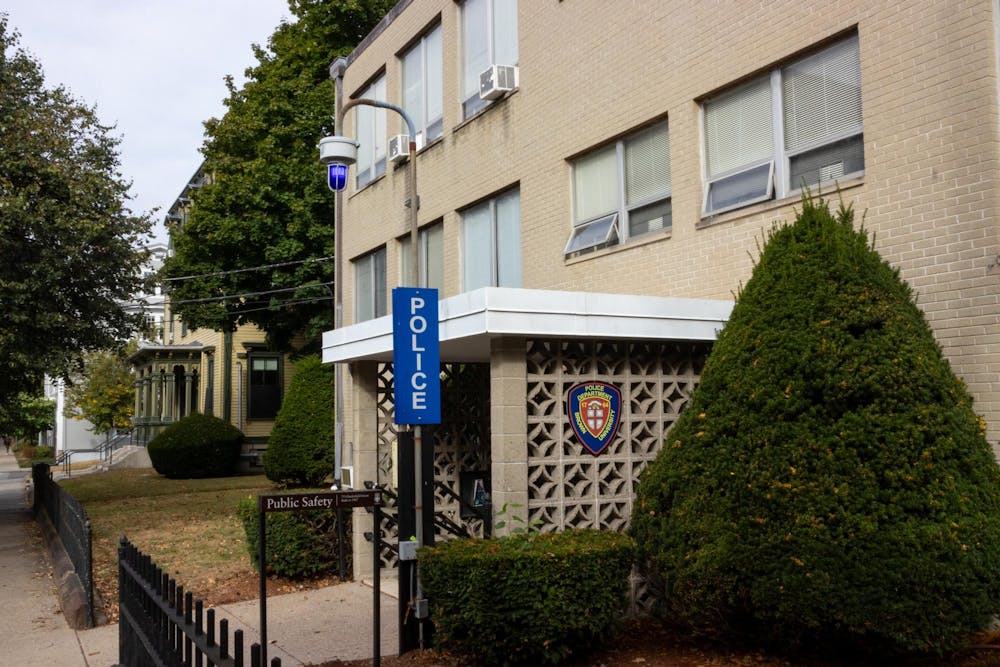
On March 24, a Rhode Island Superior Court judge denied the University’s request to dismiss a June 2025 lawsuit which aims to increase public access to Brown Department of Public Safety arrest records.
The lawsuit was filed by the American Civil Liberties Union of Rhode Island on behalf of two journalists who individually requested records — via the R.I. Access to Public Records Act — from unrelated DPS arrests and were both denied.
Under the APRA, a public body has 10 business days to respond to a records request, which can be extended to 20 for a “good cause,” the act reads. The APRA also states that records or reports of an initial arrest or charges brought against an adult are considered public.
Noble Brigham ’24, a former Herald staff writer, was one of the journalists in the lawsuit. In December 2022, Brigham requested DPS arrest reports for Thony Greene, who was charged for breaking into Wayland House after a near ten-year history of run-ins with DPS.
Brigham told The Herald in an interview that his APRA request was initially “ignored” by the University after sending at least one follow-up email.
DPS later declined Brigham’s request, stating that the APRA does not apply to DPS because Brown is a private university. Brigham then filed an APRA complaint in January 2023.
The other plaintiff in the case, Michael Bilow — a journalist for Motif Magazine — filed an APRA request with the City of Providence for copies of the arrest reports in connection with a Dec. 2023 protest in University Hall, the lawsuit states. The City responded that it had no “responsive records,” and Bilow filed an APRA request with DPS. When DPS did not respond to his request within 10 days, Bilow filed an APRA complaint.
R.I. Attorney General Peter Neronha’s response to the two APRA complaints held that DPS did not violate APRA because it is a private body and “a unit of Brown.”
“This has long been the case, and we are prepared to mount a strong effort to make clear the many reasons why,” University spokesperson Brian Clark wrote in an email to The Herald. He added that DPS’s jurisdiction is “limited to university buildings, adjacent streets and the protection of university students, faculty, staff and property.”
But the ACLU of R.I. asserts that DPS does fall under the jurisdiction of APRA. Steven Brown, the organization’s executive director, noted that the APRA’s definition of a “public body” also includes “any other public or private agency, person, partnership, corporation or business entity acting on behalf of and/or in place of any public agency.”
DPS is “clearly acting on behalf of and in place of a regular governmental police department,” Steven Brown told The Herald. “The idea that these individuals, who have arrest powers (and) the power to use deadly force, somehow are not subject to the key provisions of the open records law just seems outrageous to us.”
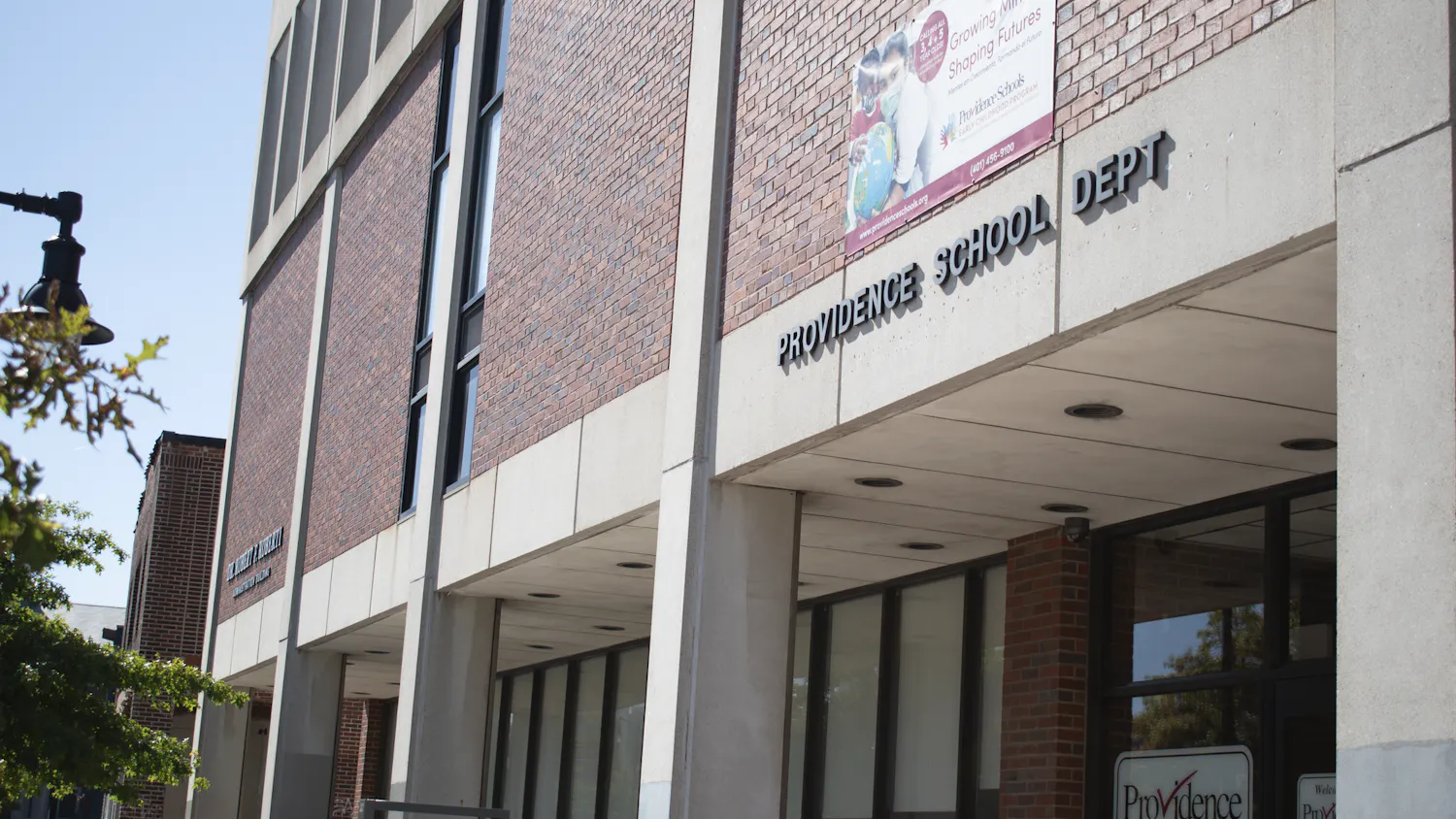
After the ACLU of R.I. filed its June 2025 lawsuit, attorneys representing the University filed a motion to dismiss the case in August. In addition to arguing that DPS is a private body, they also contended that the plaintiffs’ claim is moot because DPS arrest records can be obtained from the City of Providence.
Under state law, all DPS arrest records must be “transmitted” to the Providence Police Department “for inclusion in the City’s official records system,” Kristy dosReis — Providence’s chief public information officer for public safety — wrote in an email to The Herald. As a public body, the Providence Police Department is subject to APRA.
But according to Steven Brown, the arrest records in question in Bilow’s case were submitted to the City Solicitor’s office instead. DosReis confirmed that “PPD did not have the records at the time of the request.”
“After the initial request, it was discovered that the arrest reports had been received by the Law Department in paper form for prosecutorial purposes, rather than being routed through the PPD Records Division,” she wrote.
This occurrence “appears to be an unusual situation, and there is no indication that this is a regular alternative pathway for DPS records,” she added.
The R.I. Superior Court declined The Herald’s comment request due to the ongoing nature of the litigation.
“This court’s decision appears to reflect its interest in hearing further arguments, and Brown looks forward to presenting its case as this matter proceeds in the months ahead,” Clark wrote.
Steven Brown said that the ACLU of R.I. is “hoping we get a decision that will interpret the law as we think it should be interpreted,” he said.

Michelle Bi is a metro editor covering City Hall & Crime and State Politics & Justice. She is a sophomore from Oak Park, CA and studies English and IAPA. In her free time, you can find her playing guitar, the LA Times crossword or one of her 115 Spotify playlists.