
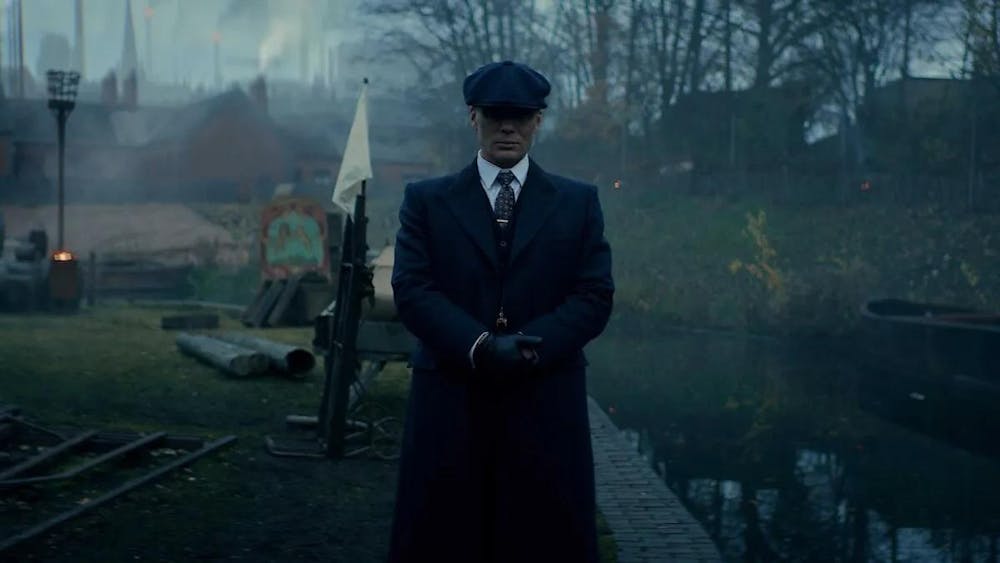
Tommy Shelby (Cillian Murphy) — the central character in the hit British series “Peaky Blinders” — is one of the most iconic television characters of the 2010s. After the BAFTA-award winning series ended its six-season run in 2022, his fate remained unclear.
But on March 20, the release of “Peaky Blinders: The Immortal Man” on Netflix brought Shelby’s story to a close.
Despite a runtime of just under two hours, the film has a slow start. With dense, expository dialogue and cringeworthy quips to remind the audience of Tommy’s magnificence, the opening is anything but enjoyable to watch. Set several years after the final series of “Peaky Blinders,” the former street gang kingpin has become a recluse in an old, English manor as World War II rages on. His son, Duke Shelby (Barry Keoghan), has taken over leadership of the Peaky Blinders in Birmingham, where his leadership is more chaotic than his father’s reign ever was. When Duke becomes embroiled in a plot that would destroy the British war effort, Tommy is forced to return to Birmingham and make things right.
Throughout its television run, “Peaky Blinders” was distinguished for its fast-paced action, complex storylines and morally gray heroes. While the film is not without jaw-dropping moments, the movie’s condensed format weakens its potential for depth. Instead, it’s rife with cliches — in one scene, Tommy is featured in an outfit-change better suited for a Disney movie — that render much of the story superficial.
Murphy, who won an Academy Award in 2024 for his role in “Oppenheimer,” offers a heartbreaking final performance as Shelby. He captures the heartbreak that has plagued Shelby’s life with a depth that can only come from years of embodying the character. Keoghan, on the other hand, is less impressive as Shelby’s prodigal son. Lacking subtlety, his conversations are awkward and his reactions are excessive. Rebecca Ferguson plays Kaulo Chiriklo, a Romani woman who guides Shelby over the course of the film. Perhaps typecast, Ferguson is cunning and sensual on screen, akin to her role as Lady Jessica Atreides in the “Dune” saga.
The film bears a slow start, but it quickly picks up pace. The brisk way in which the plot unfolds is a double-edged sword. On one hand, it offers fans a chance to see Shelby in action for the last time. On the other hand, the texture that characterized his missions in the original series is lost. Moments of betrayal during the film are over before they truly have a chance to develop.
Still, there is something captivating about “Peaky Blinders: The Immortal Man.” While the film’s plot largely falls flat, it does provide the landscape for familiar faces and storylines to reemerge. Family is a powerful motif throughout the franchise, and it remains important to the film. With the backdrop of an unremarkable action film, the characters’ relationships carry the emotional weight of the film and force viewers to confront the question: How much of our lives are shaped in the shadows of our loved ones?
With stunning visuals and a characteristically metal soundtrack, “Peaky Blinders: The Immortal Man” is a fitting end for the franchise. No question goes unanswered by the movie’s end, and Shelby is offered one final moment of glory. In a way, the movie brings fans something that the television show was unable to — peace for a character who was always denied it.

Alyssia Ouhocine is a Senior Staff Writer covering Arts & Culture. Hailing from Bayonne, New Jersey, she is concentrating in English and History with a particular interest in Algerian history and literature. When she’s not writing, she can be found listening to music and sending Google Calendar invites.


