
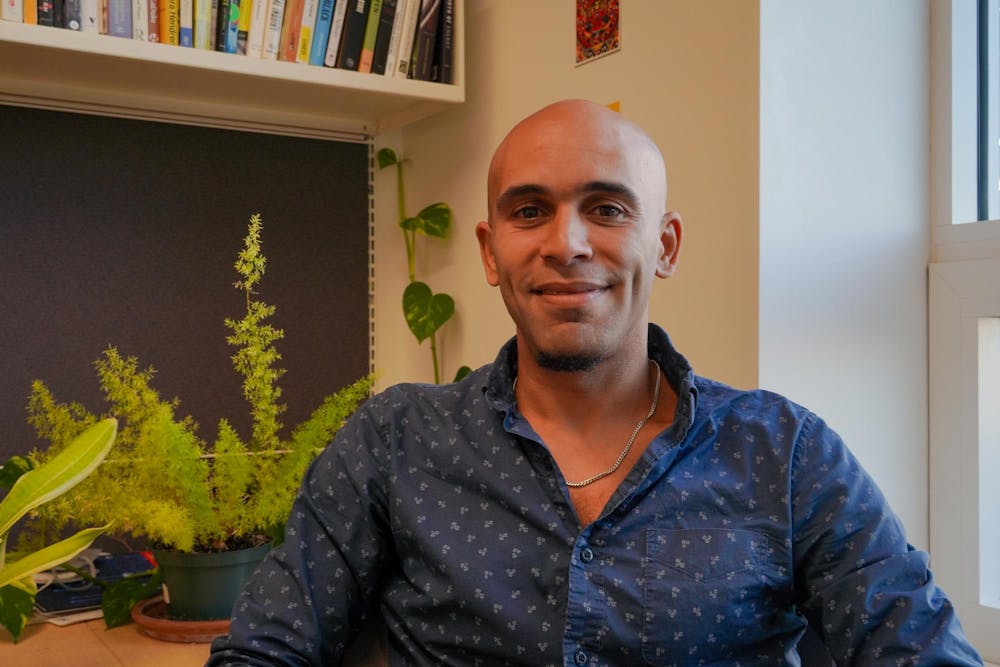
Solar power is often lauded by policymakers as an equitable solution to the climate crisis. But a recent book by Myles Lennon ’06, an assistant professor of environment and society and anthropology, argues that its implementation can still exploit marginalized communities.
The book, titled “Subjects of the Sun: Solar Energy in the Shadows of Racial Capitalism,” argues “not that renewable energy is bad, but that it’s more complicated than utopic visions might suggest it is,” Lennon said in an interview with The Herald.
Lennon warns against treating solar power like a “panacea” for the climate crisis. The fact that so much of the work to transform fossil fuel-based infrastructure to renewable energy systems happens behind the scenes, Lennon said, tends to “obscure the complex geopolitical and material dynamics” of those systems.
While the energy from solar panels may be clean, the process of constructing the infrastructure is not. For example, Lennon noted that the panels themselves are made from “toxic materials mined from the earth,” and fossil fuel energy is often used to manufacture and transport them.
In addition, improperly disposed panels could create “serious e-waste problems for Global South communities throughout the world,” Lennon said, adding that the workers who install them are also often paid low wages.
“And yet, all of these material dimensions are obscured when your whole relationship to solar energy” is defined by “the energy savings that you’ll get from solar,” he said.
Before turning his attention to solar power, Lennon worked for many years on energy efficiency policy to reduce carbon footprints of existing buildings, specifically for communities disproportionately affected by climate change. He recalled being struck by the dichotomy between his engagement in “environmental stewardship” and the unnoticed material impacts his day-to-day work had on the environment.
“That kind of paradox animated the lines of inquiry that then led to this book,” he said.
The growing solar economy in New York City, where Lennon grew up, drew him to investigating the impacts of solar power. To gain insight for “Subjects of the Sun,” Lennon conducted ethnographic research in the city through participant observation and semi-structured interviews at both clean tech corporations and environmental justice organizations.
“Subjects of the Sun” also explores how solar panel marketing employs natural imagery. Lennon described encountering often-reproduced visuals of an “empty pastoral field with no signs of human life other than solar panels” and wondering why such visuals were so common in an urban place like New York City.
“Part of what I began to notice is how these visuals aestheticize the shiny surface of solar panels, and how the shine of these panels are evocative of the sun,” he said.
Lennon highlighted how modern energy presents itself as an “abstract phenomenon” that one can access “simply by flipping a light switch.”
Depending on “energy sources that we have no physical relationship with” creates a fundamental distance that generates political decisions that are “untethered from the environmental limits and realities of the world,” Lennon said.
In the book, Lennon raises solutions for adopting solar energy in a cleaner and more equitable way. He points to BK Rot, a composting organization in Brooklyn run by young people of color that use solar-powered bikes to transport compost. He also suggests pooling demand for solar power across larger communities to pressure energy corporations into sourcing their solar energy more ethically.
Professor of International Studies Daniel Jordan Smith appreciated how the book brings attention to efforts to deliver solar energy to urban African American communities, “a population not typically associated with or served by solar energy initiatives,” he wrote in an email to The Herald.
“Lennon’s findings are a reminder that technology alone — including solar power — cannot solve our environmental problems because the problems and the solutions are primarily political and social,” Smith wrote.
In an email to The Herald, Associate Professor of History and Environment and Society Bathsheba Demuth ’06 MA’07 called Lennon’s book “really critical … in how it reminds readers that no technology is an apolitical ‘solution.’”
“I think it’s hard to write about how people are full of contradictions in a way that isn’t judgmental but is very clear about the outcomes,” Demuth wrote. “(Professor) Lennon does this really well.”
When it comes to improving the implementation of solar energy, Lennon emphasized the importance of using short-term improvements to work towards “a grand vision for how we want things to be.”
Lennon urged people to “continue to hold ourselves accountable to that greater vision, while also trying to make change in the here and now.”
Nishita Malhan is a senior staff writer covering science and research.


