After working at a biotechnology company for several years, Lisa Ramos-Rodriguez GS wanted to pursue a Ph.D. in pathobiology to expand her career opportunities. But she also knew that she wanted to start a family, and while looking for a doctoral program with support for parents, Brown was one of her top picks.
The University offers financial support and a variety of other resources to help graduate students with children balance their academic careers with parenting. The Herald spoke to four graduate student parents, who said they appreciate the University’s assistance and the flexibility of their programs but still face challenges finding child care.
For Ph.D. and MFA students with children aged six and under, Brown offers a stipend of up to $6,000 per child for up to three children per household. Master’s students who are not pursuing an MFA can receive stipends of up to $5,000. These stipends, though, are only available to students whose gross household incomes amount to $100,000 or less.

Lisa Ramos-Rodriguez GS was able to take advantage of Brown’s childcare stipend to support her daughter’s daycare costs last year.
Graduate students receiving stipends may also receive an extra semester or summer of “stipended support” if they are the primary caregiver for a “newborn infant or adopted child” during their time at Brown — a resource established after the University expanded parental support in 2016.
Ramos-Rodriguez took leave in fall 2024 after the birth of her daughter, Esther. She said she was “really surprised” that the University offered the resource, and she was grateful for the financial support.
Since Ramos-Rodriguez was on leave that fall, the directors in her program also told her that she could delay a mandatory exam slated for the end of the spring semester to the beginning of her third year. Ramos-Rodriguez still opted to take the test in the spring, but she appreciated the leniency, she said.
But the hurdles were far from over: When Ramos-Rodriguez returned from leave, she had to balance finishing her program with caring for her daughter.
Unlike other universities such as Columbia and Harvard, Brown does not have its own child care center, though it is affiliated with two local centers. Ramos-Rodriguez said she began to look at daycare facilities when she first found out she was pregnant, but the programs had long waitlists. Unable to secure a spot for her daughter, she had to look outside of Providence to find child care.
Last year, Ramos-Rodrigeuez was able to take advantage of Brown’s child care stipend to support her daughter’s daycare costs. But, since her partner is now employed after completing his master’s degree, their combined income has risen above the $100,000 threshold, rendering them ineligible for the program.
“The total cost of my daughter’s daycare is $20,000 per year,” she said. “That’s almost half of my (total doctoral) stipend.”
Nicole Casale GS, a master’s student in biotechnology and a mother of four, has been a parent for her entire academic career. Although Casale said that while her older kids can help out at home when she is busy at school, it can be difficult to find child care in a pinch.
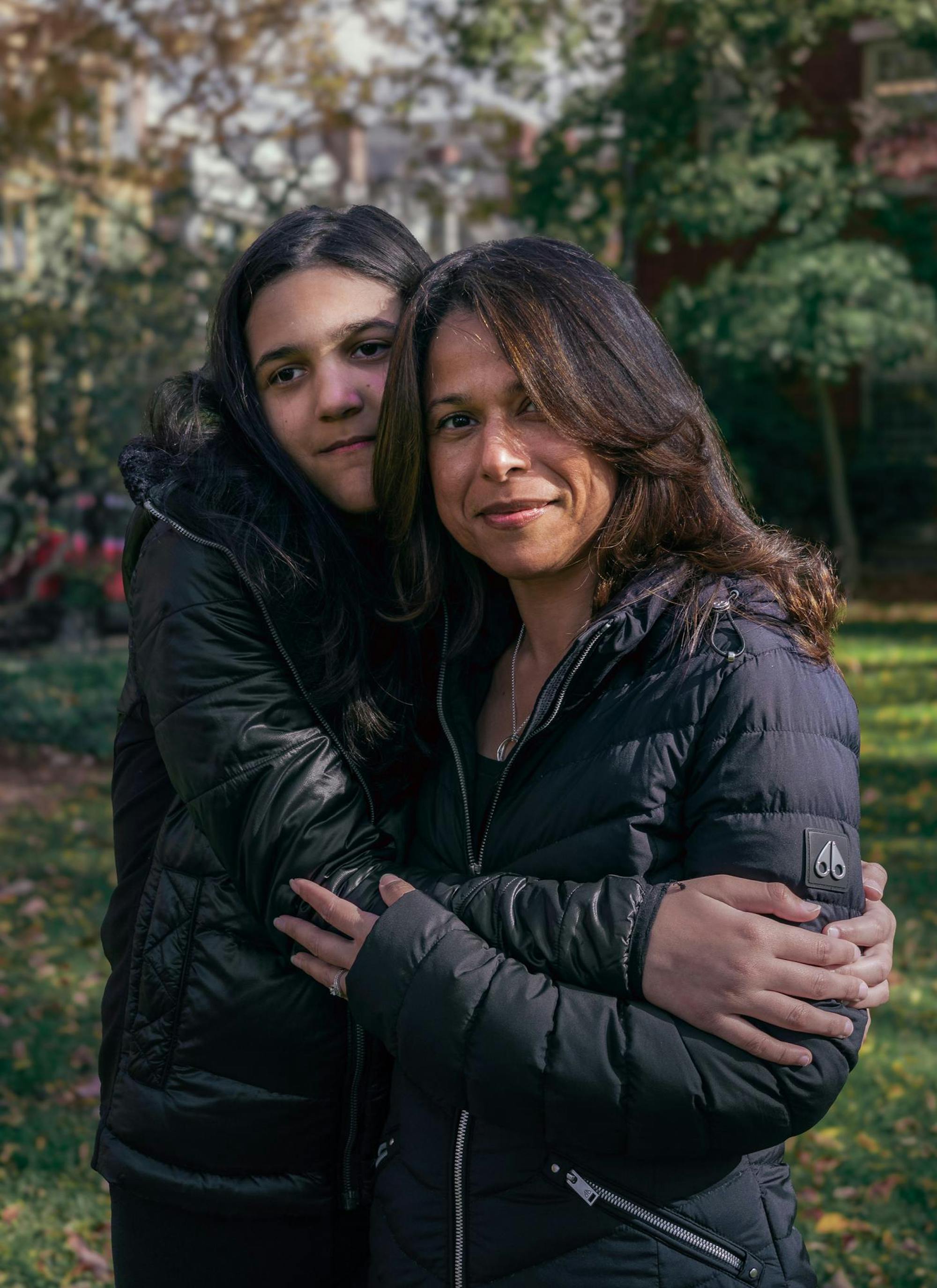
Nicole Casale GS, a master’s student in biotechnology and a mother of four, has been a parent for her entire academic career.
Brown has a partnership with Care.com, a website that vets child care services and helps pair parents with child care options. All graduate students are given premium memberships to the website.
But Ramos-Rodriguez said she has been unable to utilize the resource each time she has tried, as emergency child care on the site is not always available. When these situations arise, she and her partner often have to take additional time off work.
After facing similar issues finding last-minute child care in Providence, Casale said she hopes to start a STEM-based preschool to expand child care options. The school, which is still in development, will have emergency care options reserved for children of Brown students, she said.
For all Ph.D. and MFA students’ children who are under 18, the University also covers health insurance costs, according to Maria Suarez, associate dean of student support at the Graduate School.
Eric Stang GS, who is pursuing a Ph.D. in the School of Engineering, has taken advantage of this resource for his children. But unlike Ramos-Rodriguez, Stang opted not to take parental leave after the birth of his first child to avoid delaying his graduation date.
Now, over three years into his program, Stang said he has more flexibility with his research hours. His wife’s job as a medical doctor has very demanding hours, he added, so he works a strict 9-to-5 schedule so he can pick up his kids from school and daycare.
Stang also faced no issues finding child care in the area. Both of his children entered daycare shortly after they turned six months old, before which visiting family members assisted with any child care needs.
Casale expressed appreciation for her professors’ flexibility. Most of her professors at Brown, she said, are very accommodating to her schedule — more so than her professors at the University of Rhode Island were. One Brown professor, she recalled, allowed her to take a class online so that she could pick up her son from school.
Avery Morrow GS, a Ph.D. candidate in religious studies, has similarly found flexibility within his academic program. Since he commutes from the Boston area, he has limited availability to work as a teaching assistant in classes. But he said his department helped match him with a class that only met once a week, so his wife would not have to consistently leave work early to pick up his kids from daycare.
But science only affords so much flexibility, Ramos-Rodriguez said. “With science, you can’t just not show up.”
Due to the nature of her research, Ramos-Rodriguez sometimes finds herself going into the lab at 5 p.m. and working an eight-hour shift after caring for her daughter during the day.
A Ph.D., she added, is “not just a 9-to-5.” While managing a project, “you still have this whole other life raising a child.”

Ian Ritter is a university news and science & research editor, covering graduate schools and students. He is a junior concentrating in chemistry. When he isn’t at The Herald or exploding lab experiments, you can find him playing the clarinet or watching the Mets.