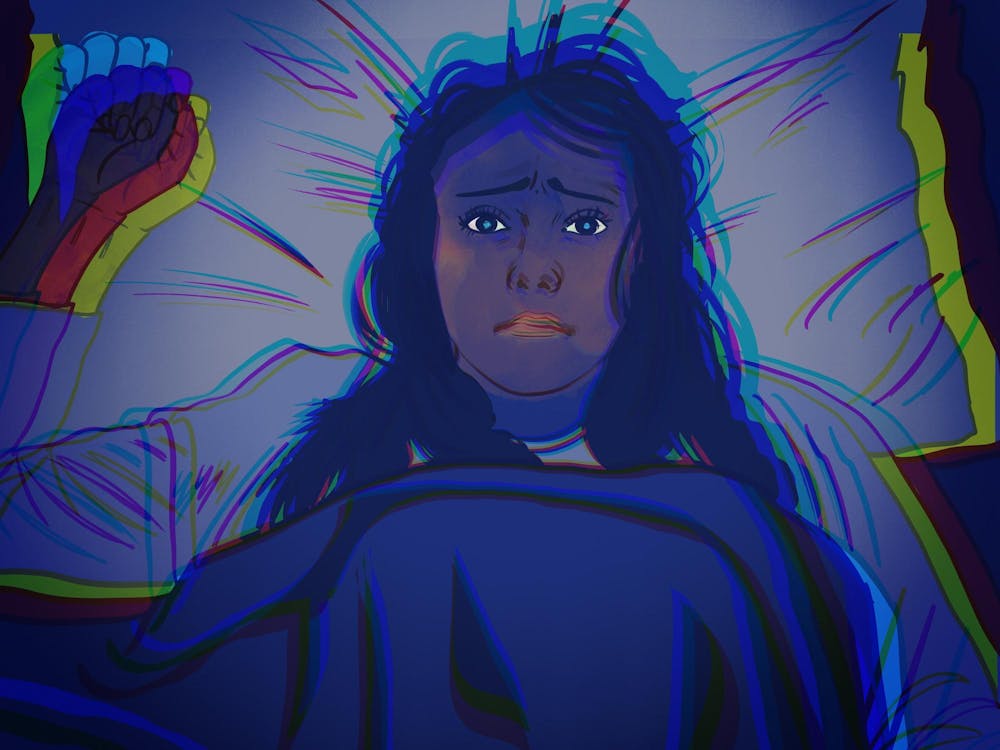
The American Academy of Sleep Medicine recommends that children between the ages of six and 12 years old should sleep around nine to 12 hours a night. Most parents believe their children fall squarely within that range. But a study conducted by Brown’s School of Public Health found otherwise.
The study is part of the larger parent study G-SPACE, which is looking to examine the influence of green spaces on mental health, sleep and physical activity among children, according to Associate Professor of Behavioral and Social Sciences Diana Grigsby-Toussaint.
Researchers also examined the differences between objective and subjective, parent-reported measures of sleep in children, with a particular focus on the comparison between Latino and non-Latino groups.
The study consisted of two critical pieces — a subjective measure, supplied by the parent surveys, and an objective measure, drawn from accelerometers, Grigsby-Toussaint said.
Participants wore an accelerometer — a device that tracks sleep through movement detection — for seven days, during which parents completed morning and nightly surveys. The surveys included questions from the Children’s Sleep Habits Questionnaire, and parents were asked to keep sleep diaries detailing how much they believed their child slept that night. After seven days, the devices were retrieved from the participants.
Results indicated a large discrepancy in the amount of sleep parents reported and what the accelerometer tracked, according to Aliana Rodriguez Acevedo GS, project coordinator and first author on the study.
“Eighty-three percent of parents believed their children were meeting national sleep guidelines, but only 14% actually were,” Acevedo said in an interview with The Herald. “This was certainly shocking, but it is what we hypothesized.”
Significant differences were seen in parent-reported sleep guidelines between the Latino and non-Latino subgroups, with 88.9% of Latino parents reporting that their child slept the adequate amount, compared to 78.9% of non-Latino parents, according to the study. A lower share of Latino children also met the sleep guidelines compared to non-Latino children.
Currently, “the literature looking at Latino children and sleep is pretty limited, especially using objective measures of sleep,” Acevedo added.
Many children who have trouble sleeping may be iron-deficient or have low ferritin levels, which can lead to restlessness, poor sleep quality and difficulty falling or staying asleep, according to Co-Director of Hasbro Children’s Hospital Sleep Medicine Program Richard Millman.
“Good sleep is important for kids and having things like a consistent bedtime routine, seeing green space throughout the day and being physically active are essential for health, especially for kids,” Grigsby-Toussaint said.
Millman said there are “always discrepancies between what the parent thinks and what the kid thinks” and “between subjective and objective measurements.”
But the study added that actigraphy-derived data, such as that calculated by the accelerometers, is less accurate. “Total sleep time and sleep efficiency tend to be overestimated in certain situations, like people who are in bed and haven’t fallen asleep yet,” Millman added.
“Sleep latency,” the time it takes to fall asleep, and “wake after sleep onset,” or how long someone is awake during the night, are not accurately measured by accelerometers. This is due to the difficulty of distinguishing between sleep and quiet restfulness, according to the study.
For future studies, Millman thinks parents could film their children on a phone or baby monitor to see if they are moving, snoring or showing signs of sleep apnea for a more detailed look at sleep quality.
“The question is, ‘Can you trust the actigraphy data without knowing what is actually going on sleep quality-wise, in regards to this phenomenon of a restless sleeper?’” Millman said.
Acevedo added that “it would be interesting to see what environmental factors, if any, play a role in the sleep outcomes that we are seeing.”
According to Grigsby-Toussaint, the research team plans to ask more in-depth questions of parents about their child’s sleep in the future, instead of using the metric-based CSHQ.
Amrita Rajpal is a senior staff writer covering science and research.