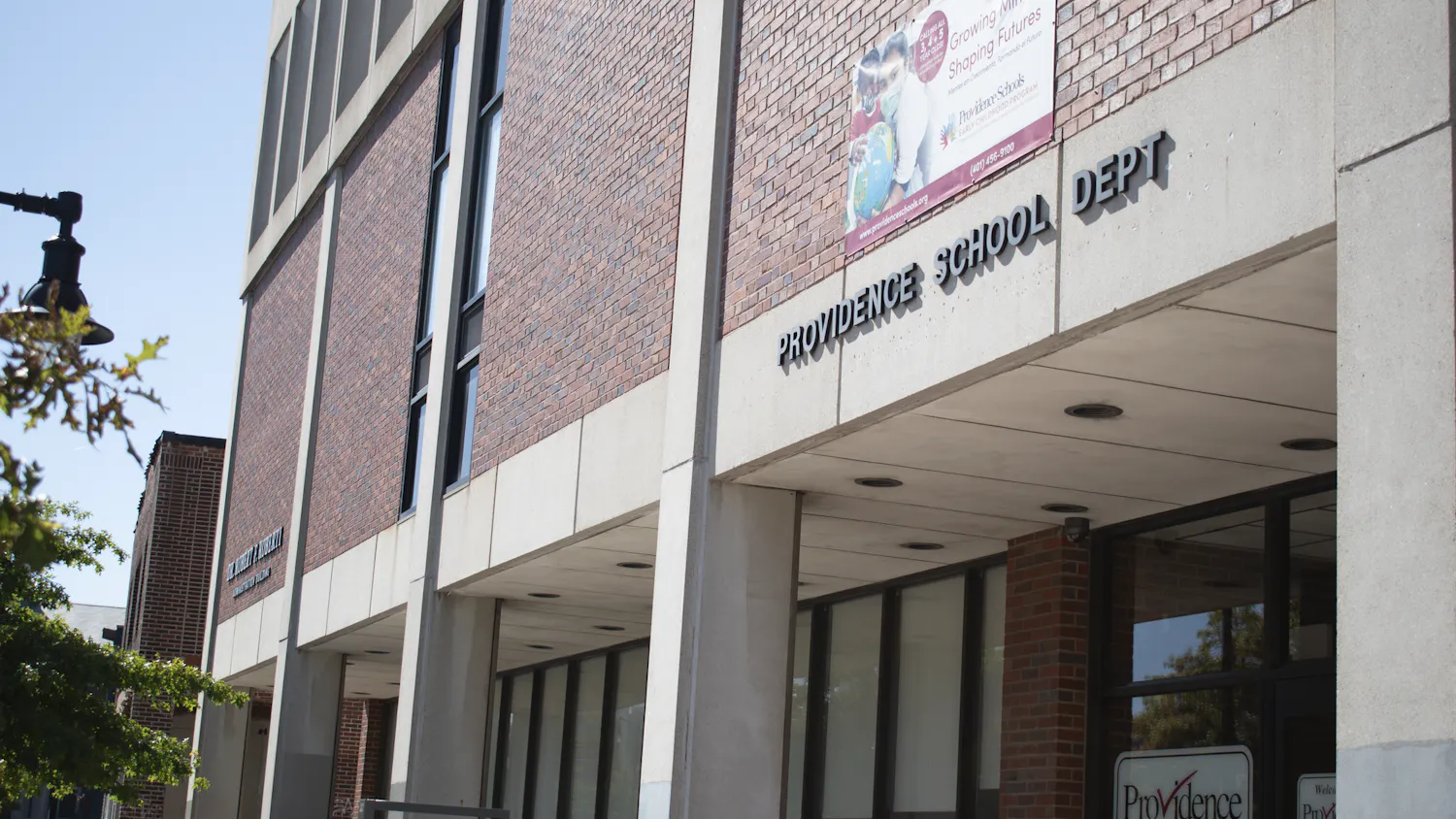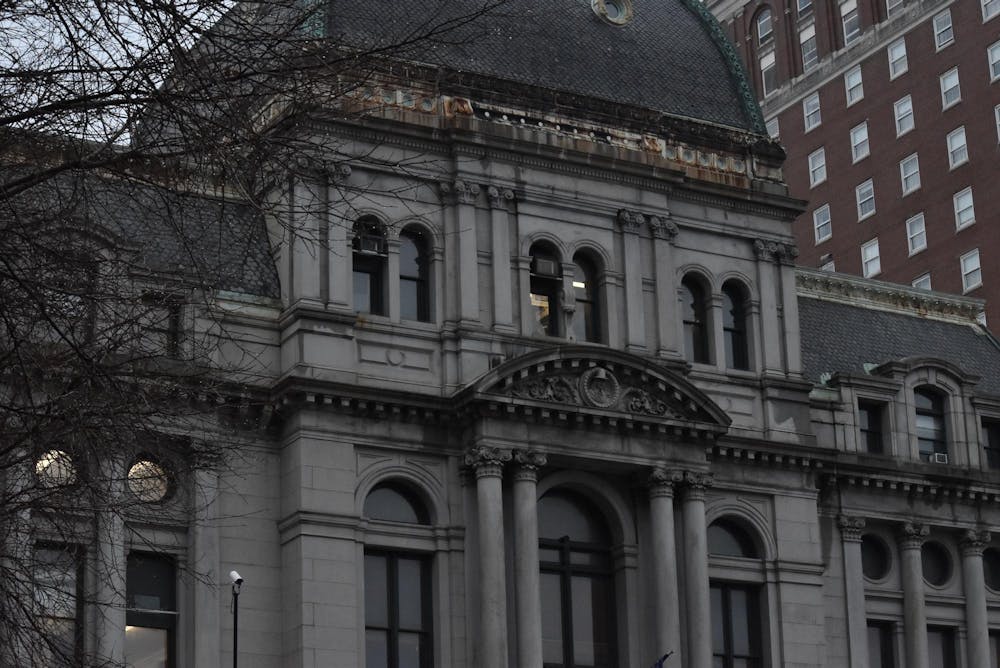
On Wednesday evening, Providence Mayor Brett Smiley unveiled his proposed budget for fiscal year 2027 in an address to the City Council. His package aims to address housing affordability and public safety without hiking taxes for residents.
The proposed $636.7 million budget represents a 1.75% increase from fiscal year 2026 — the lowest year-over-year increase in at least five years, city officials said at the Wednesday afternoon press briefing. The legislation proposes no changes to current tax rates and sets aside about 4% of the budget to be “flexible for adjustment to services, supplies and salaries,” according to the official proposal sent to The Herald.
In his address to the Council, Smiley condemned the Trump administration for threatening food security and neighborhood safety, thanked first responders at the Dec. 13 shooting and emphasized providing essential financial support to citizens.
The White House did not immediately respond to The Herald’s request for comment.
“Providence is and will remain a safe and welcoming community for all those who choose to live, work or visit our great city,” Smiley said. “We are tackling the issues our families care most about head-on.”
Although the budget does not propose any changes to tax rates, it anticipates a 2% increase in the city’s collection rate, resulting in an increase of $8.6 million in tax levy revenue. City officials stated that this year’s collection rate is expected to be 94.75%, an increase from last year’s 93.5%.
Smiley’s budget contains $2.04 million in “Housing and Human Service Supports.” These initiatives include $1 million for Smiley’s previously-announced Rental and Essential Needs Transition Fund, which aims to provide “emergency assistance grants of up to $3,000” to individual households to “prevent eviction, foreclosure and other housing loss caused by unexpected financial challenges.”
Besides the RENT Fund, the budget sets aside $500,000 for “no-cost eviction defense, mediation and housing counseling services,” as well as $500,000 more to be invested in the Department of Inspections and Standards Revolving Fund, which supports repairs for buildings that are not up to code and staff to respond to these housing quality concerns.
Smiley’s housing stabilization package was released amid the City Council’s ongoing push to pass a rent stabilization ordinance. While the City Council passed the ordinance in a 9-6 vote on April 2, it must make it through a second vote before being sent to Smiley. If the Mayor vetoes the ordinance as he has said he will, a two-thirds majority — 10 votes — in the Council can override him.
In his address to the City Council, Smiley also promised to put a $25 million housing bond proposal on this year’s ballot.
“Housing security is the foundation for community wellbeing, and that is why we are treating this crisis with urgency,” he said. “There is more work to be done, but we are making tremendous progress.”
Additionally, the budget proposes nearly $130,000 in funds to acquire “additional emergency response gear,” such as bulletproof equipment and Kevlar vests, for police special response units and fire stations. This proposal was developed in response to the Dec. 13 mass shooting at Brown, Smiley told reporters at the press briefing.
According to city officials, Providence’s emergency medical services teams currently only possess one set of this emergency response gear, located at the Brook Street fire station. While this particular set was used on Dec. 13, Smiley told reporters that this proposal aims to equip every firehouse in Providence with its own gear.
The budget notes that support from Rhode Island’s Payment in Lieu of Taxes program is expected to decline by $2.65 million in fiscal year 27, marking a 75% year-over-year decrease.
The state’s PILOT program works by requiring Rhode Island to partially reimburse cities and towns that are home to nonprofit organizations. But the reimbursement calculation rate is based on the city or town’s overall forgone funding. City officials explained that current state law requires Providence to raise its commercial tax rate, meaning that the amount of forgone funding is shrinking.
Both Smiley and the City Council have previously voted in support of a proposal to increase the state’s PILOT disbursement rate from 27% to 30%.
The city can also negotiate PILOT agreements directly with local nonprofits, where the organizations make voluntary payments to the city to compensate for the fact that they do not pay property taxes. Smiley said that once the Roger Williams Medical Center is converted into a nonprofit following its February purchase by the Georgia-based Centurion Foundation, he plans to negotiate a PILOT agreement with the organization.
In his council address, Smiley promised Providence residents that they can “look to local government to drive meaningful progress, deliver critical services and protect families.”
“In a moment where the world too often feels heavy and divided, we are investing in what brings us together,” he said.

Michelle Bi is a metro editor covering City Hall & Crime and State Politics & Justice. She is a sophomore from Oak Park, CA and studies English and IAPA. In her free time, you can find her playing guitar, the LA Times crossword or one of her 115 Spotify playlists.