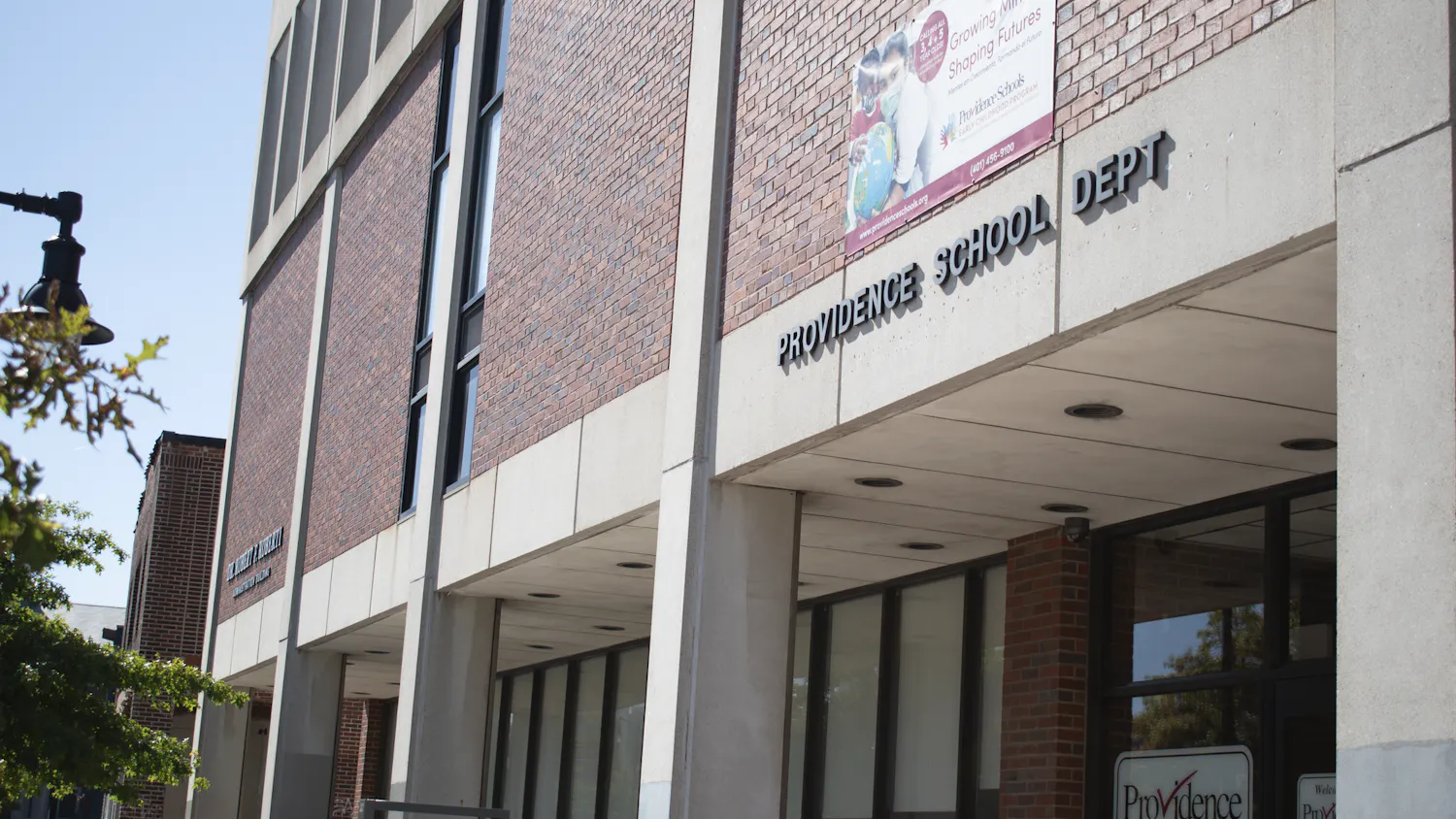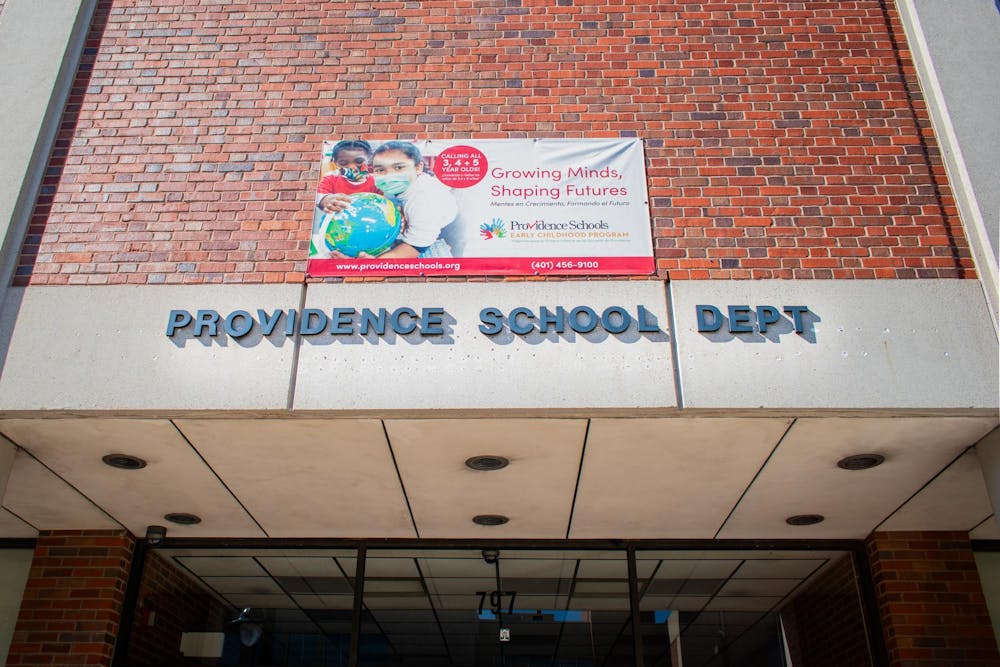
Since the 1970s, the Providence Public School District has offered bilingual education programs to students across the district. While advocates across the state are pushing to expand the availability of these initiatives, capacity remains limited.
“We have a lot of families who want this program, and we just don’t have enough seats yet, and that’s one of the reasons why we're trying to expand, just due to the demand in our community,” Senior Executive Director of Multilingual Learners at the PPSD Jennifer Efflandt ’09 said in an interview with The Herald.
But for students who can get into bilingual classes, the benefits are clear, according to education experts and PPSD leaders.
“The mission of the Providence Public School District’s dual language programs is for all students to reach high levels of academic achievement, develop biliteracy and bilingualism and cultivate global competency in order to succeed in a multicultural society and global economy,” Alex Torres-Perez, senior director of communications and external affairs for the PPSD, told The Herald.
The bilingual program, offered in two elementary schools in the district, begins instruction primarily in Spanish. “In kindergarten, you might go into a class, and almost the whole day, everything is taught in Spanish. And then every year, we gradually increase how much English the student receives,” Efflandt explained. By late elementary school, students are instructed half in English and half in Spanish daily, she added.
This is different from the district’s six dual language programs, which instruct students in both languages from the beginning. In dual language classes “we try our best to have 50% of the instruction in English and Spanish, but at a minimum, we are looking to at least give students two periods where the content is taught in Spanish,” Efflandt said.
Both of these programs aim to have a mix of native Spanish and English speakers.
“We know that being in a bilingual environment affirms (student) language and culture, and it gives them a sense of cultural pride,” said Laura Hamman-Ortiz, assistant professor of bilingual education at the University of Rhode Island. “Being in an only-English space often strips that from students, and we’ve seen again and again the damage that can be done when students are in spaces where their home culture and home languages are not affirmed.”
While there is a “misconception” that multilingual learners learn best when in English-only environments, “we have over 40 years of research showing that that’s not actually the case,” Hamman-Ortiz said. “Students benefit from instruction in their home language,” she added.
Research shows that students in bilingual programs academically outperform those in monolingual classrooms, she added. In an article Hamman-Ortiz helped draft in support of bilingual education legislation, she found that students who learn in two languages at school are more likely to take advanced courses and graduate from high school compared to their peers.
Torres-Perez wrote in an email to The Herald that “elementary students in PPSD’s Two Way Dual Language and Bilingual programs showed the greatest average growth in English acquisition and English Language Arts” compared to their peers in monolingual environments.
But finding bilingual curricula can pose a challenge for instruction, program monitoring and assessment, Efflandt added. “There aren’t very many choices of curriculum that come in English and Spanish,” she said.
Hammon-Ortiz is involved in a statewide push to increase bilingual education. “In an ideal world, we would have bilingual programs in every district in Rhode Island, especially in districts with multilingual learners. I think it’s important to be strategic about resources,” Hammon-Ortiz said.
She has advocated for two bills related to bilingual education — one that would fund bilingual programs and one that would support teacher preparation.
“Both of those are high needs. When you have a bilingual program, there are certain resources that you will need in addition to or that are different from a traditional mainstream English-only environment,” she added.
“Bilingual programs can sometimes be hard to fill with qualified teachers,” Torres-Perez wrote. “We are fortunate to exist in a very diverse and accepting community that values the benefits that a dual language education brings to students.”

Ava Stryker-Robbins is a sophomore and a Metro editor at The Herald.