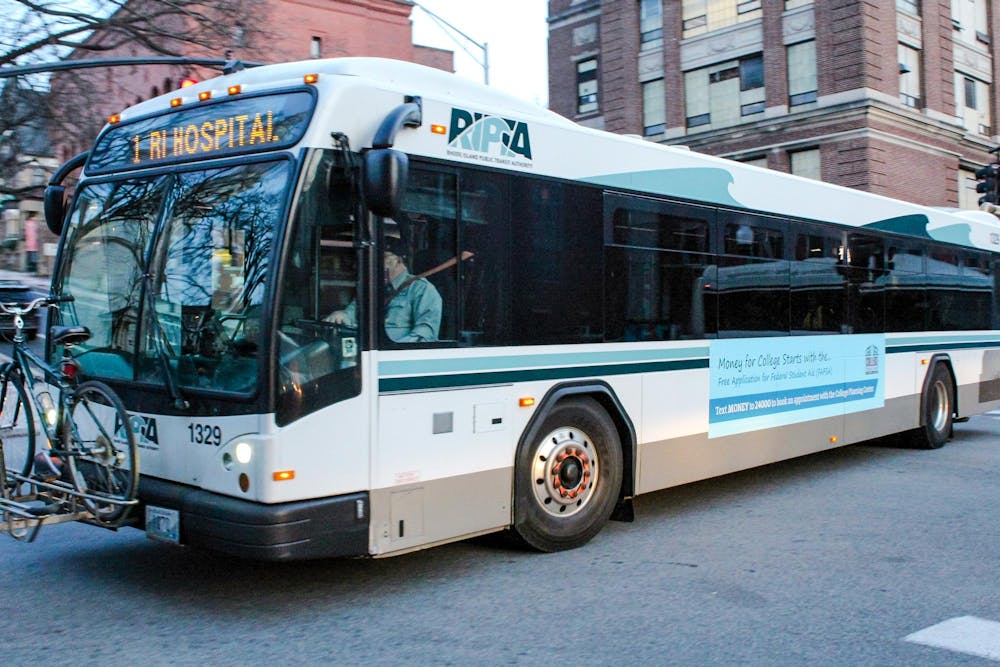
On Nov. 10, the Rhode Island Public Transit Authority launched a new Residential Transit Pilot Program that provides transportation benefits to Rhode Island tenants.
Through this program, RIPTA seeks to offer select state residents free monthlong transportation passes for December 2025 and January 2026. Owners and managers of multifamily properties with at least 10 units in a location near a bus route were eligible to apply online for the program and request free passes for their tenants.
“RIPTA launched this pilot as part of its ongoing efforts to increase ridership and engage community partners,” Cristy Raposo Perry, the director of communications and public outreach at RIPTA, wrote in an email to The Herald.
The program “also gives RIPTA an opportunity to learn about potential travel demand from residents who live near bus routes and may have limited access to affordable parking,” she added.
The application is now closed for submissions “due to the high volume of applications,” Raposo Perry wrote. Joelle Kanter, a human services transportation planner at RIPTA, told The Herald that the agency is now following up with applicants.
Kanter expressed hopes that residents will find the pilot program “enjoyable” and will be incentivized to take RIPTA more frequently.
“I think this (program) is positive … we should be encouraging new ridership,” Dylan Giles, the operations manager with the Providence Streets Coalition and a spokesperson for the Save RIPTA Coalition, told The Herald.
Raposo Perry said RIPTA is trying to make public transportation more affordable through this program. Currently, the standard fare for a RIPTA ticket is $2 in cash per trip or $2 for an hour of unlimited rides with the Wave smart card, RIPTA’s rechargeable bus fare card. A Wave monthly pass is $70.
After the pilot program ends, property managers will be able to “choose to continue using the accounts and paying for their tenants’ trips,” wrote Raposo Perry. RIPTA hopes the program will have lasting impacts and recipients of the passes “will continue riding into the new year,” she added.
“Residents in large properties could really benefit from having a property manager pay for transportation,” Kanter said. “It’s like an incentive to move into a certain complex.”
The program also attempts to encourage sustainable modes of travel and minimize reliance on personal vehicles. “Sometimes people need an incentive or they need a bit more support to shift away from driving, and this is a way to encourage it,” Kanter said.
But, according to a recent RIPTA rider survey, over 85% of riders don’t have access to a car.
“What that illustrates is that they’re primarily serving people who have no other choice,” Giles said.
While this program aims to increase ridership, RIPTA has recently made drastic service cuts to 45 of their bus routes, leading to longer wait times and reported overcrowding.
“The service we continue to operate remains reliable, accessible and fully usable for riders across the state,” Raposo Perry wrote. “We’re actively working to grow ridership and strengthen the system through initiatives such as this pilot program.”
But according to Giles, “the best way to grow ridership is to make the product something people want to use.”
“I think increasing the quality of service is the best way to grow,” he said.
Nate Barkow is a senior staff writer for the Youth and Education beat and a co-chief of The Herald's social media team. He is from New York City and plans on concentrating in International and Public Affairs and Education Studies. In his free time, he loves trying new restaurants and watching Survivor.