
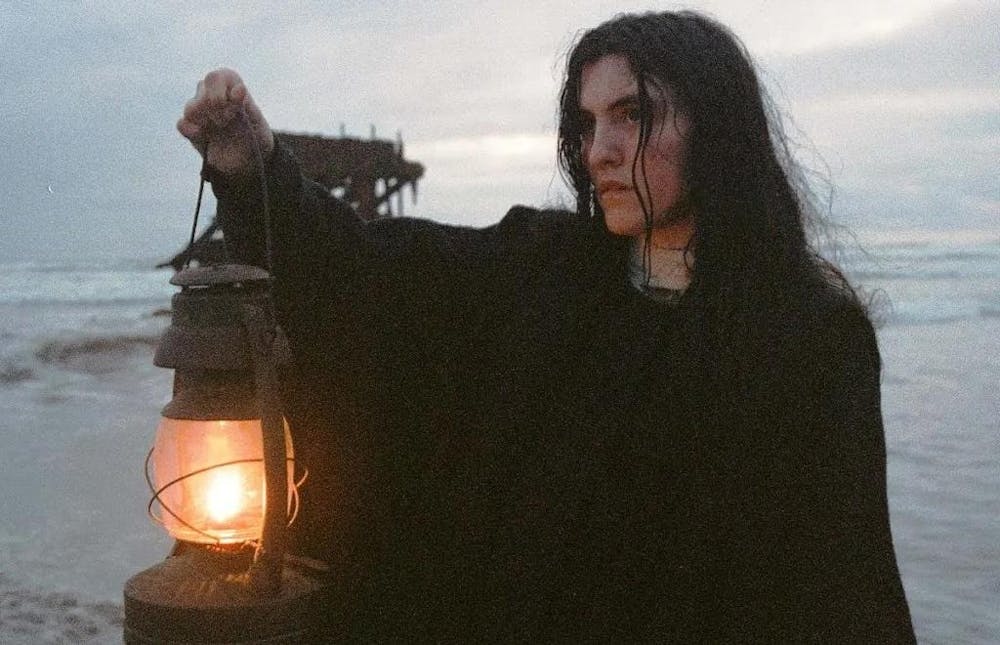
Stomachs, the sea and repentance aren’t typically grouped together — that is, unless you’re reading the Bible or listening to Searows’s sophomore album, “Death in the Business of Whaling.” Released on Jan. 23, the 42-minute record that takes its title from a “Moby Dick” quote explores vulnerability in a masterfully indie fashion.
Alec Duckart, who performs under the stage name Searows, is an American singer-songwriter who went viral on TikTok with his 2023 single, “House Song.” But he excels beyond TikTok stardom, consistently making introspective additions to the indie music genre — akin to powerhouses like Bon Iver and Phoebe Bridgers.
His latest album opens with “Belly of the Whale,” situating listeners in the record’s feeling of guilt and stagnation. Across an eerie soundscape, Searows seamlessly reaches listeners through simple, thoughtful production. While not the most interesting track on the album, it certainly sets up the world that “Death in the Business of Whaling” forms.
“Kill What You Eat” follows and pulls no punches on introspection. Lyrics like “I want my body back / And do you always kiss the ground / When somebody lets you down?” ground their abstract nature in the rawness of Searows’s vocals.
“Photograph of a Cyclone” communicates in lyrical vignettes, drawn up by Searows’s unique use of language. The drums take the lead on the track, maintaining the urgency in Searows’s vocals. It’s joined in ranks by “Hunter,” an indie-rock song that boasts a lush production. Whereas a sense of disjointed meaning underpins “Photograph of A Cyclone,” “Hunter” is better proofed for casual listening.
“Dirt” is a poignant folk ballad with a strings-forward sound and a dark atmosphere, but its position in the middle of the album causes it to buckle under its own weight. Blending into the background, “Dirt” is less of a standout track and more of a support to the record’s overall atmosphere.
Luckily, “Death in the Business of Whaling” strikes gold three consecutive times in the songs that follow. Critics have homed in on “Dearly Missed” as the highlight of the album — and they’re not wrong. The song’s electric guitar and explosive drums reach their peak synthesis in the chorus. The effect is utterly devastating, carrying listeners along a nerve-wracking narrative until the bridge of the song. There, Searows holds onto tension until the last second, painting vivid images in lyrics like “And just by some sort of coincidence / He drove his car off of the river bridge / They never found him, and they haven’t since / He’s dearly missed.”
“Junie” is subdued in comparison to “Dearly Missed,” but it packs a similar punch. The song is the embodiment of emptiness: Searows comes up listless and the track carries a melancholic, dizzying sound. It’s not just lines like “I made this mess from a distance, / it’s gonna take me next” that convey what it means to feel like nothing, but the pleading itself in Searows’s voice.
“In Violet” employs an eerie, electric sound in its opening, which quickly melts into the record’s distinct folk elements. The track brings a vitality to the album and is the closest listeners will get to an explicitly romantic song. The chorus is buoyant, yet the song is weighed down by emotions elsewhere. It’s a lesson in temperance: Searows understands that the joy of love can never stand on its own.
The album ends with “Geese,” a song rife with references to the iconic 1986 poem “Wild Geese” by Mary Oliver. The song leaves the cycle of “Junie,” choosing to run towards self-acceptance instead of apathy. The lines “I will not lay me down in front of the tracks / If I swore that I meant it, then I take it back” cut to the core of the album: The feeling of being swallowed up by sadness — or, in this case, a whale — never lasts forever.
The beauty of “Death in the Business of Whaling” is its lack of judgement. Searows’s vocals crystallize the endless and ephemeral nature of pain into a potent approach to folk that occasionally diverges to rock. With his latest album, Searows makes an impressive step into the cavernous genre of indie music.

Alyssia Ouhocine is a Senior Staff Writer covering Arts & Culture. Hailing from Bayonne, New Jersey, she is concentrating in English and History with a particular interest in Algerian history and literature. When she’s not writing, she can be found listening to music and sending Google Calendar invites.


